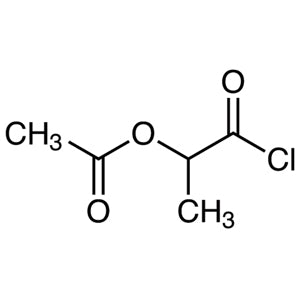
2-Phenoxypropionyl Chloride from TCI (product code P0638, CAS 122-35-0) is an acyl chloride. Its structure has a phenoxy group attached to the alpha carbon of propionic acid, and the carbonyl group has been activated as an acid chloride. In organic chemistry laboratories it serves as a non-heterocyclic building block and a reactive acylating agent. Its main job is to introduce the 2-phenoxypropionyl unit into target molecules by forming esters, amides, or ketones, which makes it a practical intermediate in multistep synthetic routes.
Researchers choose this compound because its acid chloride group reacts strongly with nucleophiles such as amines, alcohols, and phenols. These reactions usually proceed quickly under mild conditions and need no extra coupling reagents, which simplifies workup and reduces the number of reagents in a synthesis. The phenoxypropionate framework is also a well-known structural motif in many bioactive compounds, including the aryloxyphenoxypropionate class of herbicides and several pharmaceutical compounds. The chiral centre at the alpha carbon makes the compound useful for stereochemistry studies and enantiomer resolution work as well.
In Indonesia, 2-Phenoxypropionyl Chloride is relevant to organic synthesis, medicinal chemistry, and agrochemical research laboratories in universities and in industry. Academic groups can use it in teaching and research on acylation chemistry and on building derivative libraries. Industrial R&D teams developing new active ingredients can use it to prepare phenoxypropionate analogues for screening. AMI Scientific supplies this TCI reagent to support these laboratories in their synthesis and product development work.
Related TCI products
- TCI D2382 10076-48-9 Methyl 2,2-Dimethoxypropionate
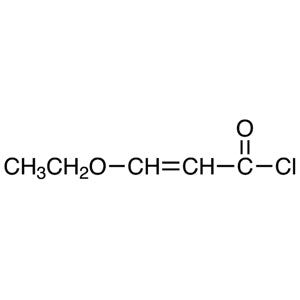
- TCI E1066 6191-99-7 3-Ethoxyacryloyl Chloride
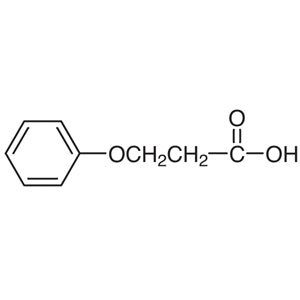
- TCI P1400 7170-38-9 3-Phenoxypropionic Acid
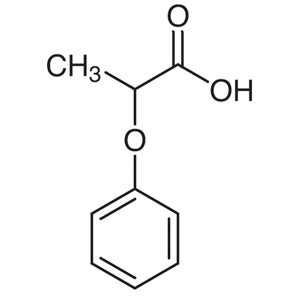
- TCI P0318 940-31-8 2-Phenoxypropionic Acid
- TCI M2984 943-45-3 2-Methyl-2-phenoxypropionic Acid
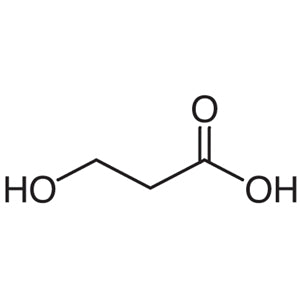
- TCI H0297 503-66-2 3-Hydroxypropionic Acid (contains varying amounts of 3,3'-Oxydipropionic Acid) (ca 30% in Water, ca 36mol/L)
- Amide synthesis: the reactive acid chloride group couples readily with primary and secondary amines under mild conditions, giving 2-phenoxypropionamides without the need for additional coupling reagents.
- Ester formation: alcohols and phenols react quickly with this acyl chloride, so it is well suited to preparing 2-phenoxypropionate esters for structure-activity studies and as intermediates in further synthesis.
- Agrochemical research: the phenoxypropionate framework is a known motif in aryloxyphenoxypropionate herbicides, which makes this compound a logical starting point for building and screening related analogues.
- Medicinal chemistry: as a non-heterocyclic building block, it lets chemists introduce the 2-phenoxypropionyl unit into drug-like scaffolds when exploring pharmaceutical candidates that carry this structural motif.
- Stereochemistry and enantiomer resolution: the chiral centre at the alpha carbon makes it suitable for studies of stereoselective reactions, diastereomer formation with chiral nucleophiles, and resolution of enantiomers.
| Brand | TCI (product code P0638) |
|---|---|
| CAS number | 122-35-0 |
| Molecular formula | — |
| Purity | — |
| Category | Chemistry > Building Blocks > Non-Heterocyclic Building Blocks |
| Pack sizes | Available in the pack sizes offered by TCI; please contact AMI Scientific to confirm the options |
| Physical form | — |
| Storage | Keep tightly closed, protected from moisture, according to the manufacturer's label and Safety Data Sheet |
- Chemical class: Acyl chloride (acid chloride)
Like other acyl chlorides, 2-Phenoxypropionyl Chloride reacts with water and atmospheric moisture, which can release hydrogen chloride and break down the reagent. Keep it in its original tightly sealed container, preferably under a dry or inert atmosphere, in a cool, dry, well-ventilated area away from water, alcohols, amines, bases, and oxidising agents. Always follow the storage temperature given on the TCI label and Safety Data Sheet. Handle it in a fume hood while wearing chemical-resistant gloves, safety goggles, and a lab coat. Use dry glassware and reseal the container promptly after each use. Dispose of residues and contaminated materials according to local regulations for hazardous chemical waste.
—
Produk Terkait
-
Methyl2,2-Dimethoxypropionate TCI D2382
Regular price Rp 6.465.900,00Regular price -
3-EthoxyacryloylChloride TCI E1066
Regular price Rp 3.630.900,00Regular price -
3-PhenoxypropionicAcid TCI P1400
Regular price Rp 2.016.000,00Regular price -
2-PhenoxypropionicAcid TCI P0318
Regular price From Rp 477.750,00Regular price -
2-Methyl-2-phenoxypropionicAcid TCI M2984
Regular price Rp 2.121.000,00Regular price -
3-HydroxypropionicAcid(containsvaryingamountsof3,3'-OxydipropionicAcid)(ca30%inWater,ca36mol/L) TCI H0297
Regular price From Rp 3.738.000,00Regular price -
3-PhenoxypropylBromide TCI P1027
Regular price From Rp 1.908.900,00Regular price -
2-AcetoxypropionylChloride TCI A2932
Regular price From Rp 2.677.500,00Regular price