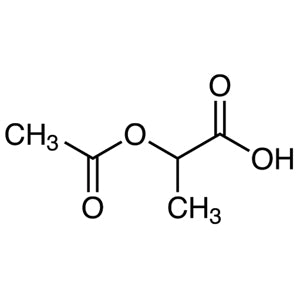
2-Acetoxypropionyl Chloride (TCI A2932) is a chemical compound widely used as a building block in the synthesis of complex organic compounds. This reagent plays a crucial role in laboratory settings where high reactivity and functional group compatibility are essential. Its ability to participate in various chemical reactions makes it a versatile tool for chemists working on synthetic pathways. In the context of Indonesian laboratories, this compound is particularly valued for its reliability and effectiveness in achieving precise molecular structures.
The compound's reactivity and compatibility with a wide range of functional groups make it a preferred choice for substitution reactions and carbon-carbon bond formation. Its stability under certain conditions ensures that it remains effective throughout the synthesis process without undergoing excessive degradation. These properties contribute to its widespread use in both academic and industrial research environments. The compound's reliability and consistent performance make it a trusted component in the chemical synthesis toolkit.
In Indonesian laboratories, 2-Acetoxypropionyl Chloride is commonly used by researchers and students in organic chemistry projects. Its availability in the local market ensures that it is accessible to those conducting chemical research in various fields such as pharmaceuticals, food chemistry, and synthetic chemistry. Its role in creating specific molecular structures is vital for advancing research and development in these areas.
Related TCI products
- Organic synthesis is a key application where this compound is used to create complex molecular structures through substitution and carbon-carbon bond formation.
- Pharmaceutical research benefits from its reactivity, allowing the synthesis of compounds used in drug development and medicinal chemistry.
- Industrial chemical production relies on its stability and functional group compatibility for the creation of specialty chemicals and intermediates.
- Academic research in chemistry utilizes this compound for teaching and experimental purposes in synthetic organic chemistry courses.
- Food chemistry applications involve its use in the development of flavor compounds and food additives through controlled chemical reactions.
| Brand | TCI |
|---|---|
| CAS number | 38939-83-2 |
| Molecular formula | — |
| Purity | — |
| Category | Chemistry > Building Blocks > Non-Heterocyclic Building Blocks |
| Pack sizes | Available in standard laboratory quantities as per supplier specifications |
| Physical form | Liquid |
| Storage | Store in a cool, dry place away from moisture and direct sunlight |
This compound should be stored in a cool, dry environment to maintain its stability and reactivity. It is recommended to keep it in a tightly sealed container to prevent exposure to moisture and air. Due to its reactivity, it should be handled in a well-ventilated area, preferably under a fume hood. Avoid contact with incompatible materials such as strong bases or reducing agents. Proper personal protective equipment, including gloves and safety goggles, should be worn during handling. The compound should not be stored near heat sources or in direct sunlight to prevent degradation. Regular inspection of storage conditions is advised to ensure the integrity of the material.
—
Produk Terkait
-
2-AcetoxypropionicAcid TCI A2931
Regular price From Rp 1.272.600,00Regular priceRp 905.100,00Sale price From Rp 1.272.600,00 -
(R)-(+)-2-AcetoxypropionylChloride TCI A3085
Regular price From Rp 2.332.050,00Regular priceRp 1.646.400,00Sale price From Rp 2.332.050,00 -
(S)-(-)-2-AcetoxypropionylChloride TCI A1297
Regular price From Rp 1.458.450,00Regular priceRp 1.035.300,00Sale price From Rp 1.458.450,00 -
2-PhenoxypropionylChloride TCI P0638
Regular price From Rp 1.351.350,00Regular priceRp 960.750,00Sale price From Rp 1.351.350,00 -
Ethyl3-Methoxypropionate TCI M1001
Regular price From Rp 1.192.800,00Regular priceRp 849.450,00Sale price From Rp 1.192.800,00 -
Methyl3-Methoxypropionate TCI M0962
Regular price Rp 689.850,00Regular priceRp 497.700,00Sale price Rp 689.850,00 -
Ethyl3-Ethoxypropionate TCI E0319
Regular price From Rp 637.350,00Regular priceRp 460.950,00Sale price From Rp 637.350,00 -
Methyl2,2-Dimethoxypropionate TCI D2382
Regular price Rp 6.518.400,00Regular priceRp 4.573.800,00Sale price Rp 6.518.400,00