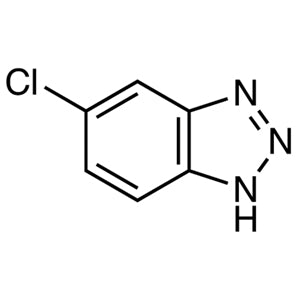
5-Chlorobenzotriazole is a benzotriazole derivative carrying a chlorine atom on the benzene ring, producing a heterocyclic compound with three consecutive nitrogen atoms in the triazole ring. It is widely recognised both as a building block for organic synthesis and as an active ingredient in metal corrosion inhibitor formulations. In the laboratory its role is quite varied, ranging from an auxiliary reagent in amide bond formation, to a nitrogen-donor ligand in coordination chemistry, through to a starting scaffold for the synthesis of more complex heterocyclic compounds in pharmaceutical and materials research.
The most prominent property of this compound is the relatively high acidity of the triazole nitrogen proton, which is further increased by the electron-withdrawing effect of the chlorine atom. That property facilitates formation of the benzotriazolate anion, which acts as a good leaving group — the foundation of benzotriazole chemistry as a synthetic activating group. The triazole ring is also able to coordinate with metal ions, particularly copper, forming a protective surface layer that very effectively inhibits oxidation. In addition, the compound shows good thermal stability and adequate solubility in organic solvents.
In Indonesian laboratories, 5-Chlorobenzotriazole is typically handled in synthetic organic chemistry groups, coordination chemistry work, and corrosion research programmes at universities, government research institutes, and industrial R&D units. It is generally ordered in research-scale quantities for method development and repeat preparations rather than for production use. Because it functions as an activating agent and ligand precursor, it is usually stocked alongside coupling reagents and organic solvents on the same bench.
Related TCI products
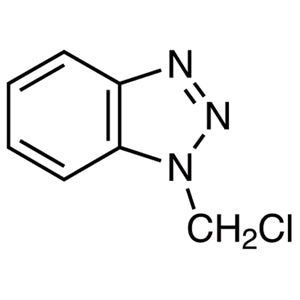
- TCI C1526 54187-96-1 1-(Chloromethyl)-1H-benzotriazole
- TCI D1529 3864-99-1 2-(3,5-Di-tert-butyl-2-hydroxyphenyl)-5-chlorobenzotriazole
- TCI B1967 124337-34-4 9-(1H-Benzotriazol-1-ylmethyl)-9H-carbazole
- TCI B1903 28539-02-8 1H-Benzotriazole-1-methanol
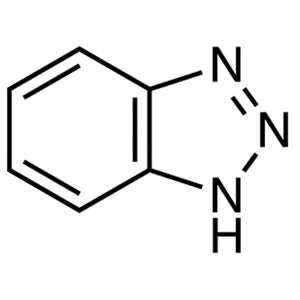
- TCI B0094 95-14-7 1,2,3-Benzotriazole
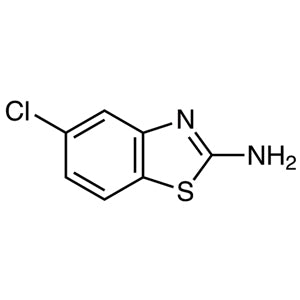
- TCI A3177 20358-00-3 2-Amino-5-chlorobenzothiazole
- Amide bond formation — serves as an auxiliary reagent whose benzotriazolate anion acts as a good leaving group, activating carboxyl partners for coupling under controlled laboratory conditions.
- Heterocyclic synthesis — provides a chlorinated benzotriazole scaffold that researchers elaborate into more complex heterocyclic compounds for pharmaceutical and materials chemistry investigations.
- Coordination chemistry — acts as a nitrogen-donor ligand through its triazole ring, allowing preparation and study of metal complexes in structural and mechanistic work.
- Metal corrosion inhibition studies — coordinates with metal ions, particularly copper, forming a protective surface layer that effectively inhibits oxidation in inhibitor screening experiments.
- Synthetic activating group chemistry — the enhanced nitrogen proton acidity from the electron-withdrawing chlorine substituent supports methodology work exploring benzotriazole-based activation strategies.
| Brand | TCI |
|---|---|
| CAS number | 94-97-3 |
| Molecular formula | — |
| Purity | — |
| Category | Chemistry > Building Blocks > Heterocyclic Building Blocks |
| Pack sizes | available in standard TCI research-scale packaging; please confirm the currently listed pack options when ordering |
| Physical form | — |
| Storage | keep in a tightly closed original container, in a cool, dry, well-ventilated place away from light and incompatible materials |
- Product code: C0137
Store 5-Chlorobenzotriazole in its original tightly closed container in a cool, dry, well-ventilated area, protected from light, moisture, and sources of ignition or heat. Keep it separated from strong oxidising agents and other incompatible materials. Handle the compound in a fume hood using appropriate personal protective equipment, including safety goggles, chemical-resistant gloves, and a laboratory coat, and avoid generating or inhaling dust. Weigh and transfer the solid carefully, reclose the container immediately after use, and label any prepared solutions clearly. Always consult the manufacturer's safety data sheet before first use and follow institutional procedures for chemical waste disposal.
—
Produk Terkait
-
1-(Chloromethyl)-1H-benzotriazole TCI C1526
Regular price Rp 1.298.850,00Regular priceRp 924.000,00Sale price Rp 1.298.850,00 -
2-(3,5-Di-tert-butyl-2-hydroxyphenyl)-5-chlorobenzotriazole TCI D1529
Regular price Rp 1.378.650,00Regular priceRp 979.650,00Sale price Rp 1.378.650,00 -
9-(1H-Benzotriazol-1-ylmethyl)-9H-carbazole TCI B1967
Regular price Rp 1.378.650,00Regular priceRp 979.650,00Sale price Rp 1.378.650,00 -
1H-Benzotriazole-1-methanol TCI B1903
Regular price Rp 1.749.300,00Regular priceRp 1.239.000,00Sale price Rp 1.749.300,00 -
1,2,3-Benzotriazole TCI B0094
Regular price Rp 557.550,00Regular priceRp 405.300,00Sale price Rp 557.550,00 -
2-Amino-5-chlorobenzothiazole TCI A3177
Regular price Rp 822.150,00Regular priceRp 590.100,00Sale price Rp 822.150,00 -
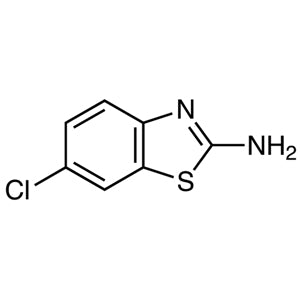
2-Amino-6-chlorobenzothiazole TCI A1216
Regular price Rp 900.900,00Regular priceRp 645.750,00Sale price Rp 900.900,00 -
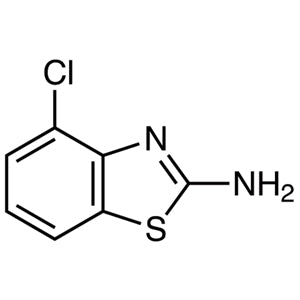
2-Amino-4-chlorobenzothiazole TCI A1087
Regular price Rp 1.272.600,00Regular priceRp 905.100,00Sale price Rp 1.272.600,00