TCI C0714 Carbazole Potassium Salt is the potassium salt of carbazole, a form of carbazole in which the nitrogen atom has been deprotonated and paired with a potassium ion. Carbazole itself is a tricyclic heterocyclic framework that is extremely popular in materials chemistry, particularly for hole-transporting materials and host materials in organic electroluminescent devices. In its potassium salt form, this compound arrives as a ready-to-use nitrogen nucleophile, so researchers no longer need to carry out a separate deprotonation step with a strong base before performing N-alkylation or N-arylation reactions.
The properties that make this material attractive are its reaction readiness and the procedural simplification it offers. The carbazolyl anion is nucleophilic and reasonably basic, allowing it to attack electrophiles such as alkyl halides directly under relatively mild conditions. This approach reduces the number of experimental variables, because the outcome no longer depends on an in-situ deprotonation that is sometimes incomplete. The consequence of this reactivity is that the material is sensitive to moisture and to carbon dioxide in air, since contact with water converts it back into neutral carbazole.
In Indonesian laboratories, this building block is typically used in university and institutional research groups working on organic materials and synthetic heterocyclic chemistry. Because the salt form removes a preparation step, it suits teaching and research settings where reagent handling time and base-handling procedures are worth minimising. Handling is normally carried out under a dry atmosphere, with the container opened only when necessary and resealed promptly to preserve the reactive anion.
TCI brochures (PDF)
- Carbazoles 2025-06-27 · p. 2
Related TCI products
- TCI T3882 6558-85-6 1,3,6,8-Tetramethyl-9H-carbazole
- TCI T3642 1630723-98-6 N,N,N',N'-Tetrakis(4-methoxyphenyl)-9H-carbazole-3,6-diamine
- TCI T2227 19264-73-4 9-(p-Tolyl)carbazole
- TCI B5183 84359-61-5 9-(3-Bromopropyl)carbazole
- TCI B1967 124337-34-4 9-(1H-Benzotriazol-1-ylmethyl)-9H-carbazole
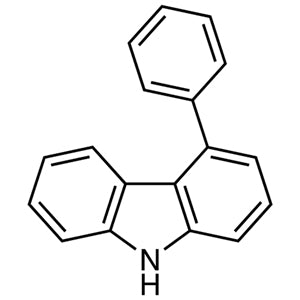
- TCI P2601 1201561-34-3 4-Phenyl-9H-carbazole
- N-Alkylation of carbazole: the pre-formed carbazolyl anion reacts directly with alkyl halides, removing the separate strong-base deprotonation step and its associated uncertainty.
- N-Arylation chemistry: the ready nucleophilic nitrogen centre allows coupling with aryl electrophiles without first generating the anion in situ, simplifying the overall reaction sequence.
- Synthesis of hole-transporting materials: carbazole is a widely used framework for hole transport, and the salt provides a direct entry point for building substituted derivatives.
- Preparation of host materials for organic electroluminescent devices: the tricyclic carbazole core is a standard host scaffold, and this salt shortens the route to N-substituted variants.
- Heterocyclic building block chemistry: as a reactive nitrogen nucleophile, it serves general synthetic work where a carbazolyl group must be introduced under relatively mild conditions.
| Brand | TCI |
|---|---|
| CAS number | 6033-87-0 |
| Molecular formula | — |
| Purity | — |
| Category | Chemistry > Building Blocks > Heterocyclic Building Blocks |
| Pack sizes | — |
| Physical form | — |
| Storage | sensitive to moisture and atmospheric carbon dioxide; keep tightly sealed |
- Product code: C0714
- Chemical nature: potassium salt of carbazole; deprotonated nitrogen paired with a potassium ion
Store the container tightly closed in a dry location, away from moisture and from prolonged exposure to open air, since contact with water converts the carbazolyl anion back into neutral carbazole and the material is also sensitive to carbon dioxide. Weighing and transfer are best performed under a dry inert atmosphere, for example in a glovebox or under a nitrogen line, using clean and thoroughly dried spatulas and glassware. Keep the original container sealed between uses and minimise the time it stays open. Handle in a well-ventilated area or fume hood with standard laboratory personal protective equipment, including gloves, safety glasses, and a laboratory coat.
—
Produk Terkait
-
1,3,6,8-Tetramethyl-9H-carbazole TCI T3882
Regular price Rp 4.108.650,00Regular priceRp 2.888.550,00Sale price Rp 4.108.650,00 -
N,N,N',N'-Tetrakis(4-methoxyphenyl)-9H-carbazole-3,6-diamine TCI T3642
Regular price Rp 9.778.650,00Regular priceRp 6.853.350,00Sale price Rp 9.778.650,00 -
9-(p-Tolyl)carbazole TCI T2227
Regular price Rp 1.856.400,00Regular priceRp 1.313.550,00Sale price Rp 1.856.400,00 -
9-(3-Bromopropyl)carbazole TCI B5183
Regular price From Rp 1.988.700,00Regular price -
9-(1H-Benzotriazol-1-ylmethyl)-9H-carbazole TCI B1967
Regular price From Rp 1.326.150,00Regular price -
4-Phenyl-9H-carbazole TCI P2601
Regular price Rp 7.499.100,00Regular priceRp 5.259.450,00Sale price Rp 7.499.100,00 -
9-Phenyl-9H-carbazole-3-carboxaldehyde TCI P2351
Regular price Rp 3.419.850,00Regular priceRp 2.406.600,00Sale price Rp 3.419.850,00 -
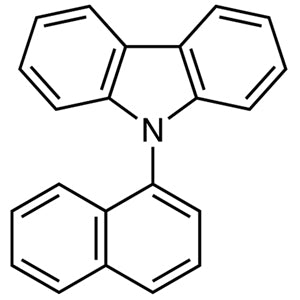
9-(1-Naphthyl)carbazole TCI N1012
Regular price Rp 900.900,00Regular priceRp 645.750,00Sale price Rp 900.900,00