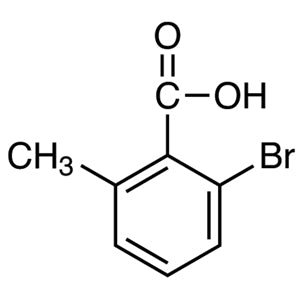
3-Chloro-2-methylbenzoic Acid is an organic compound widely used in chemical reactions for the synthesis of complex molecules. It serves as a key building block in organic chemistry, providing a versatile platform for functional group modifications and structural transformations. In laboratory settings, this compound is essential for a variety of synthetic pathways, including substitution reactions, esterification, and other processes requiring aromatic structures with chloro and methyl substituents. Its role is critical in the development of new compounds and materials, making it a staple in both academic and industrial research environments.
The chemical properties of 3-Chloro-2-methylbenzoic Acid make it a preferred choice for synthetic chemists. Its molecular structure, featuring a carboxylic acid group and a chloro substituent, provides both reactivity and stability. These characteristics allow it to participate in a wide range of reactions while maintaining control over reaction outcomes. The compound’s polarity and solubility properties also facilitate its use in purification and separation techniques, enhancing its utility in laboratory workflows. These features contribute to its reliability and effectiveness in various chemical applications.
In Indonesian laboratories, 3-Chloro-2-methylbenzoic Acid is commonly used in organic chemistry, pharmaceutical, and materials research. It is a fundamental reagent in the synthesis of new compounds and the modification of molecular structures. Its availability in the local market supports research activities, enabling scientists and students to conduct experiments with high precision and reproducibility. Its consistent performance and well-documented properties make it a trusted choice for both educational and research purposes.
Related TCI products
- Organic synthesis is a primary application, as this compound serves as a versatile building block for creating complex molecules through substitution and esterification reactions.
- Pharmaceutical research benefits from its use in the development of new drugs, where it contributes to the synthesis of aromatic derivatives with specific functional groups.
- Materials science applications include the creation of polymers and functional materials, where its reactivity and structural versatility are highly valued.
- Analytical chemistry utilizes this compound for standardization and calibration in various spectroscopic and chromatographic techniques.
- Educational institutions use it in teaching laboratories to demonstrate key chemical reactions and synthetic methodologies to students.
| Brand | TCI |
|---|---|
| CAS number | 7499-08-3 |
| Molecular formula | — |
| Purity | — |
| Category | Chemistry > Building Blocks > Non-Heterocyclic Building Blocks |
| Pack sizes | Available in various quantities to meet different research needs |
| Physical form | Solid, crystalline appearance |
| Storage | Store in a cool, dry place away from direct sunlight and moisture |
This compound should be stored in a cool, dry environment, away from direct sunlight and moisture to maintain its chemical integrity. It is recommended to use airtight containers made of glass or polyethylene to prevent contamination and degradation. Due to its reactivity, it should be handled with appropriate personal protective equipment, including gloves and safety goggles. In laboratory settings, it is important to ensure proper ventilation when working with this material. Avoid exposure to incompatible substances such as strong bases or oxidizing agents. Regular monitoring of storage conditions is essential to ensure the compound remains stable and suitable for use in chemical experiments.
—
Produk Terkait
-
2-Chloro-6-methylbenzoicAcid TCI C2776
Regular price From Rp 664.650,00Regular price -
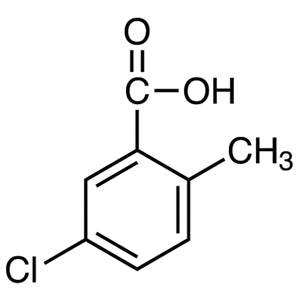
5-Chloro-2-methylbenzoicAcid TCI C2509
Regular price From Rp 795.900,00Regular price -
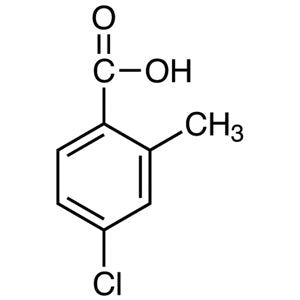
4-Chloro-2-methylbenzoicAcid TCI C2508
Regular price From Rp 1.140.300,00Regular price -
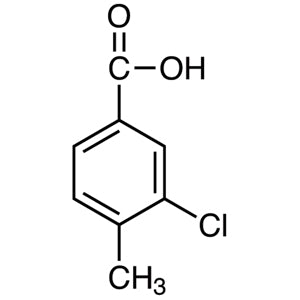
3-Chloro-4-methylbenzoicAcid TCI C2462
Regular price From Rp 955.500,00Regular price -
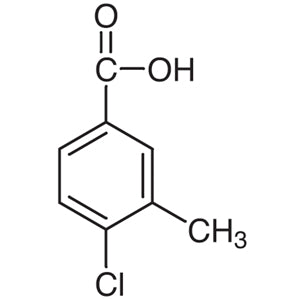
4-Chloro-3-methylbenzoicAcid TCI C2115
Regular price Rp 795.900,00Regular price -
2-Bromo-5-methylbenzoicAcid TCI B4145
Regular price From Rp 1.510.950,00Regular price -
2-Bromo-6-methylbenzoicAcid TCI B4097
Regular price From Rp 1.431.150,00Regular price -
2-Bromo-4-methylbenzoicAcid TCI B3879
Regular price From Rp 795.900,00Regular price