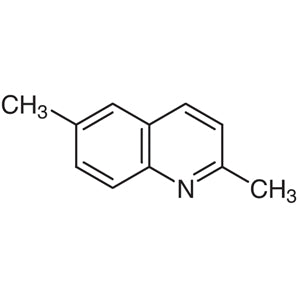
2,6-Dimethylquinoline is a chemical compound classified under the heterocyclic category, featuring a quinoline core with two methyl groups attached at positions 2 and 6. This compound plays a crucial role in laboratory settings as a building block for the synthesis of complex molecules, particularly in organic and pharmaceutical research. Its structural versatility allows researchers to design and develop new compounds with specific functionalities, making it an essential tool for innovation in chemical and medicinal fields.
The compound is valued for its chemical stability and controlled reactivity, which make it suitable for a wide range of synthetic reactions. Its resistance to evaporation and relatively high boiling point ensure safe handling and long-term storage under normal conditions. These properties contribute to its popularity among chemists and researchers who require reliable and consistent reagents for their experiments. Additionally, its molecular complexity opens up possibilities for its use in the development of bioactive compounds, including potential pharmaceuticals and other biologically active substances.
In Indonesian laboratories, 2,6-Dimethylquinoline is commonly used in research projects focused on organic synthesis, drug development, and chemical innovation. Its availability and reliability make it a preferred choice for both academic and industrial research settings. The compound supports the creation of new materials and compounds, contributing to the advancement of scientific knowledge and technological applications.
- Organic synthesis: 2,6-Dimethylquinoline is widely used in the synthesis of complex organic molecules due to its stable structure and reactivity.
- Pharmaceutical research: The compound serves as a building block for the development of bioactive compounds, including potential drug candidates.
- Heterocyclic chemistry: Its quinoline core makes it ideal for studying and modifying heterocyclic structures in various chemical reactions.
- Industrial chemical production: It is employed in the manufacturing of specialty chemicals and intermediates for diverse applications.
- Academic research: The compound is frequently used in university and research institutions for teaching and experimental studies in chemistry.
| Brand | TCI |
|---|---|
| CAS number | 877-43-0 |
| Molecular formula | — |
| Purity | — |
| Category | Chemistry > Building Blocks > Heterocyclic Building Blocks |
| Pack sizes | Available in various quantities as per standard laboratory supply |
| Physical form | Liquid |
| Storage | Store in a cool, dry place away from direct sunlight |
2,6-Dimethylquinoline should be stored in a cool, dry environment, away from direct sunlight and sources of heat. It is recommended to use sealed containers to prevent contamination and maintain its chemical integrity. Due to its relatively high boiling point, it is not prone to evaporation under normal storage conditions. While it is chemically stable, it should be handled with care, using appropriate personal protective equipment such as gloves and safety goggles. The compound is not flammable but may react with strong acids or bases, so it should be stored separately from incompatible materials. Proper ventilation is advised during handling to ensure a safe laboratory environment.
—
Produk Terkait
-
2,4-Dimethylquinoline TCI D1237
Regular price From Rp 2.199.750,00Regular price -
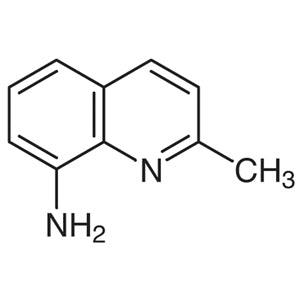
8-Amino-2-methylquinoline TCI A0416
Regular price From Rp 1.273.650,00Regular price -
4,6,8-Trimethylquinoline TCI T1409
Regular price Rp 5.644.800,00Regular price -
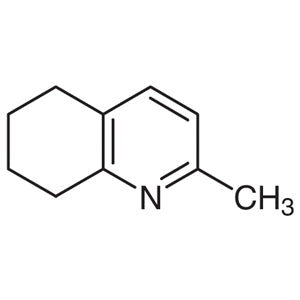
5,6,7,8-Tetrahydro-2-methylquinoline TCI T1408
Regular price Rp 2.016.000,00Regular price -
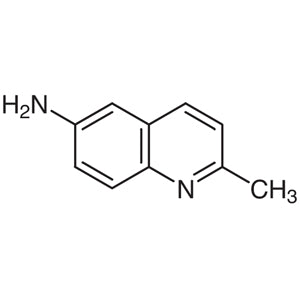
6-Amino-2-methylquinoline TCI A1047
Regular price Rp 3.976.350,00Regular price -
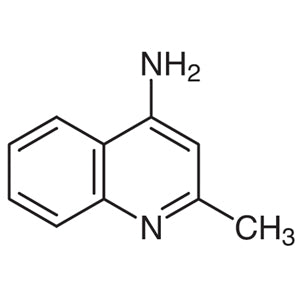
4-Amino-2-methylquinoline TCI A0415
Regular price Rp 3.207.750,00Regular price -
2-Methylquinoline TCI Q0005
Regular price From Rp 452.550,00Regular price -
1-Methylquinolin-2(1H)-one TCI M3591
Regular price From Rp 3.127.950,00Regular price