TCI D2112 Ethyl 2,2-Dimethyl-3-(2-methyl-1-propenyl)cyclopropane-1-carboxylate (CAS 97-41-6) is a cyclopropane ester bearing a gem-dimethyl substitution pattern together with a propenyl group, and it is more widely known among researchers as the ethyl ester of the chrysanthemate framework. The compound is supplied as a non-heterocyclic building block and serves as an essential starting material in research on pyrethroid-class compounds and other cyclopropane derivatives. Its role in the laboratory is to provide a fully formed cyclopropane skeleton complete with its substitution pattern, so that researchers do not have to carry out the cyclopropanation step themselves — a transformation that generally demands specialised reagents and difficult stereochemical control.
The characteristics that make this compound so valuable are the highly strained cyclopropane ring flanked by two methyl groups, together with the trisubstituted double bond on its side chain. The cyclopropane ring imparts a distinctive conformational rigidity and holds the orientation of the surrounding groups in place, while the ester group provides a reaction handle that is readily modified through hydrolysis, reduction, transesterification, or amidation. The double bond of the propenyl chain can likewise be exploited for addition reactions, epoxidation, and further modification, giving synthetic chemists several independent points of entry on a single molecule.
In Indonesian laboratories, this building block is typically used in university and institutional research groups working on organic synthesis, natural product chemistry, and the chemistry of pyrethroid-related compounds. Because the cyclopropane core arrives ready-made, small research groups that do not have access to specialised cyclopropanation reagents can still pursue projects built around this framework. It is normally ordered in research-scale quantities for method development, derivative preparation, and the synthesis of reference materials used in subsequent analytical work.
- Pyrethroid-related research — the compound supplies the chrysanthemate ester core that defines this class, allowing researchers to prepare and study derivatives without building the cyclopropane ring from scratch.
- Cyclopropane derivative synthesis — the pre-formed, gem-dimethyl-substituted three-membered ring lets chemists explore ring reactivity and substituent effects while avoiding the specialised reagents cyclopropanation normally requires.
- Ester group transformations — the carboxylate handle can be converted through hydrolysis, reduction, transesterification, or amidation, making the material a convenient starting point for preparing families of related compounds.
- Alkene functionalisation studies — the trisubstituted double bond on the propenyl side chain is available for addition reactions and epoxidation, supporting selectivity studies on a sterically defined substrate.
- Conformationally rigid scaffold work — the strained cyclopropane ring holds surrounding groups in fixed orientations, which is useful when researchers need a rigid framework for structure-activity or stereochemical investigations.
| Brand | TCI (Tokyo Chemical Industry) |
|---|---|
| CAS number | 97-41-6 |
| Molecular formula | — |
| Purity | — |
| Category | Chemistry > Building Blocks > Non-Heterocyclic Building Blocks |
| Pack sizes | available in standard TCI research-scale packaging; please confirm the currently available sizes when ordering |
| Physical form | — |
| Storage | store according to the conditions stated on the manufacturer's label and product documentation |
- Chemical name: Ethyl 2,2-Dimethyl-3-(2-methyl-1-propenyl)cyclopropane-1-carboxylate
Store the container tightly closed in a cool, dry, well-ventilated area away from heat, open flame, direct sunlight, and incompatible materials, following the storage conditions specified on the manufacturer's label and Safety Data Sheet. Keep the material in its original supplier container, or in a chemically compatible sealed glass container that is clearly labelled with the product name and CAS number. Handle the compound in a fume hood, wearing safety goggles, chemical-resistant gloves, and a laboratory coat. Avoid inhalation of vapours and contact with skin and eyes, close the container immediately after each use to limit exposure to air and moisture, and dispose of residues and contaminated materials through the laboratory's chemical waste procedures. Always consult the Safety Data Sheet supplied with the product before first use.
—
Produk Terkait
-
2,2,3,3-TetramethylcyclopropanecarboxylicAcid TCI T2350
Regular price From Rp 1.140.300,00Regular price -
1-[(tert-Butoxycarbonyl)amino]cyclopropanecarboxylicAcid TCI B3138
Regular price From Rp 3.155.250,00Regular price -
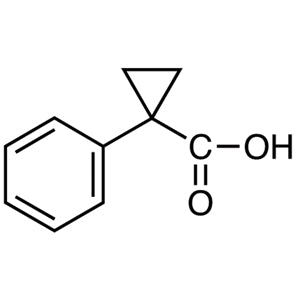
1-Phenyl-1-cyclopropanecarboxylicAcid TCI P2324
Regular price Rp 1.565.550,00Regular price -
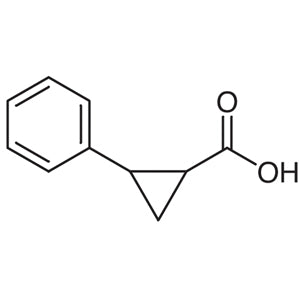
trans-2-Phenyl-1-cyclopropanecarboxylicAcid TCI P0750
Regular price From Rp 1.908.900,00Regular price -
Methyl1-Formylcyclopropane-1-carboxylate TCI M3045
Regular price From Rp 4.188.450,00Regular price -
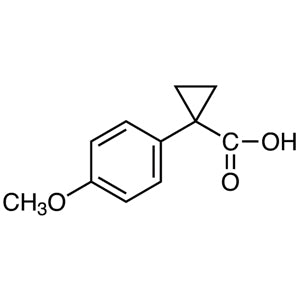
1-(4-Methoxyphenyl)-1-cyclopropanecarboxylicAcid TCI M2837
Regular price Rp 4.028.850,00Regular price -
Methyl1-Methylcyclopropane-1-carboxylate TCI M1111
Regular price Rp 6.070.050,00Regular price -
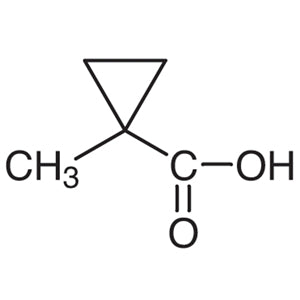
1-Methylcyclopropane-1-carboxylicAcid TCI M0885
Regular price From Rp 3.048.150,00Regular price

![88950-64-5 1-[(tert-Butoxycarbonyl)amino]cyclopropanecarboxylic Acid - AMI Scientific](http://amiscientific.com/cdn/shop/files/TCI2510B3138_3da4dad5-c988-4e8e-86d8-9751f23eec24.jpg?v=1767431495&width=533)