Trans-2-Phenyl-1-cyclopropanecarboxylic Acid is a chemical compound widely used as a building block in the synthesis of complex molecules. This compound plays a crucial role in organic chemistry laboratories, where it serves as a foundational material for the development of new compounds, including pharmaceuticals, industrial chemicals, and organic substances. Its unique structure combines a cyclopropane ring with a phenyl group, making it a versatile reagent for various synthetic pathways. In research settings, it is essential for creating derivatives and functional groups that are integral to advanced chemical processes.
The compound is valued for its structural stability and reactivity. The tight cyclopropane ring contributes to its unique chemical properties, enabling efficient substitution and electrophilic reactions. The presence of the phenyl group enhances its solubility in organic solvents and increases its reactivity in different reaction conditions. These characteristics make it a preferred choice for chemists seeking reliable and effective building blocks for complex molecule synthesis. Its predictable behavior and compatibility with various reaction conditions further support its use in both academic and industrial research.
In Indonesian laboratories, Trans-2-Phenyl-1-cyclopropanecarboxylic Acid is commonly used in organic chemistry research, particularly in the synthesis of complex compounds and the development of new chemical materials. It is a key component in experiments aimed at innovation and discovery, supporting the work of researchers and students in universities and research institutions across Indonesia. Its relevance in these settings underscores its importance as a fundamental reagent in chemical synthesis.
Related TCI products
- TCI T2350 15641-58-4 2,2,3,3-Tetramethylcyclopropanecarboxylic Acid
- TCI B3138 88950-64-5 1-[(tert-Butoxycarbonyl)amino]cyclopropanecarboxylic Acid
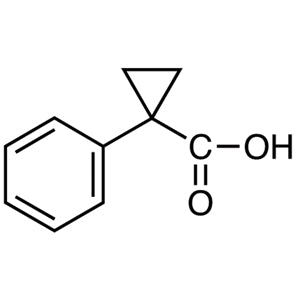
- TCI P2324 6120-95-2 1-Phenyl-1-cyclopropanecarboxylic Acid
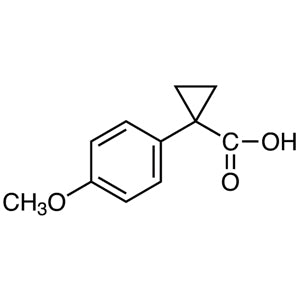
- TCI M2837 16728-01-1 1-(4-Methoxyphenyl)-1-cyclopropanecarboxylic Acid
- TCI H1664 17994-25-1 1-Hydroxycyclopropanecarboxylic Acid
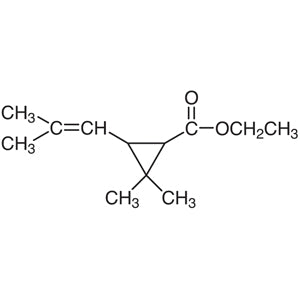
- TCI D2112 97-41-6 Ethyl 2,2-Dimethyl-3-(2-methyl-1-propenyl)cyclopropane-1-carboxylate
- Organic synthesis applications benefit from this compound's ability to form stable intermediates in complex molecule creation.
- Pharmaceutical research utilizes it as a building block for developing new drug compounds and medicinal derivatives.
- Industrial chemical production relies on its reactivity and solubility for creating specialized chemical products.
- Academic research in Indonesian universities uses it for teaching and experimental purposes in organic chemistry courses.
- Advanced chemical innovation projects employ it to explore new synthetic pathways and functional group modifications.
| Brand | TCI |
|---|---|
| CAS number | 939-90-2 |
| Molecular formula | — |
| Purity | — |
| Category | Chemistry > Building Blocks > Non-Heterocyclic Building Blocks |
| Pack sizes | Available in various quantities as per standard laboratory supply standards |
| Physical form | Solid |
| Storage | Store in a cool, dry place away from direct sunlight and moisture |
This compound should be stored in a cool, dry environment to maintain its chemical integrity. It is recommended to keep it in a sealed container to prevent exposure to moisture and air. Due to its reactivity, it should be handled with care in a well-ventilated area. Suitable containers include glass or high-density polyethylene vessels to ensure chemical stability. Always use appropriate personal protective equipment when handling this material. Regular monitoring of storage conditions is essential to ensure safety and maintain the compound's effectiveness in laboratory applications.
—
Produk Terkait
-
2,2,3,3-TetramethylcyclopropanecarboxylicAcid TCI T2350
Regular price From Rp 1.140.300,00Regular price -
1-[(tert-Butoxycarbonyl)amino]cyclopropanecarboxylicAcid TCI B3138
Regular price From Rp 3.155.250,00Regular price -
1-Phenyl-1-cyclopropanecarboxylicAcid TCI P2324
Regular price Rp 1.565.550,00Regular price -
1-(4-Methoxyphenyl)-1-cyclopropanecarboxylicAcid TCI M2837
Regular price Rp 4.028.850,00Regular price -
1-HydroxycyclopropanecarboxylicAcid TCI H1664
Regular price From Rp 1.140.300,00Regular price -
Ethyl2,2-Dimethyl-3-(2-methyl-1-propenyl)cyclopropane-1-carboxylate TCI D2112
Regular price From Rp 1.298.850,00Regular price -
Cyclopropanecarbohydrazide TCI C3879
Regular price From Rp 3.021.900,00Regular price -
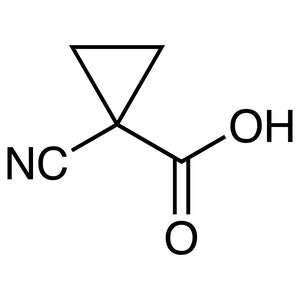
1-CyanocyclopropanecarboxylicAcid TCI C3490
Regular price From Rp 1.485.750,00Regular price

![88950-64-5 1-[(tert-Butoxycarbonyl)amino]cyclopropanecarboxylic Acid - AMI Scientific](http://amiscientific.com/cdn/shop/files/TCI2510B3138_3da4dad5-c988-4e8e-86d8-9751f23eec24.jpg?v=1767431495&width=533)