1-(4-Methoxyphenyl)-1-cyclopropanecarboxylic Acid is a chemical compound widely used as a building block in organic synthesis. This compound plays a crucial role in laboratories by enabling the construction of complex molecular structures through controlled chemical reactions. It is particularly valuable in the development of cyclic and heterocyclic compounds, where precise functional group manipulation is essential. Its presence in various synthetic pathways allows chemists to explore new chemical transformations with reliability and consistency.
The compound is known for its stable molecular structure and controlled reactivity, making it a preferred choice in synthetic chemistry. These properties ensure that it participates in reactions without introducing unwanted side products, thus maintaining the integrity of the final synthesis. Its predictable behavior under different reaction conditions contributes to the efficiency and reproducibility of laboratory experiments. This reliability is especially important in research settings where precision and accuracy are paramount.
In Indonesian laboratories, this compound is commonly used in organic chemistry research, both in academic institutions and research centers. Its availability in various packaging formats supports its use in experiments of different scales. The compound's consistent performance and ease of handling make it a go-to material for chemists working on complex molecular synthesis projects.
Related TCI products
- TCI T2350 15641-58-4 2,2,3,3-Tetramethylcyclopropanecarboxylic Acid
- TCI B3138 88950-64-5 1-[(tert-Butoxycarbonyl)amino]cyclopropanecarboxylic Acid
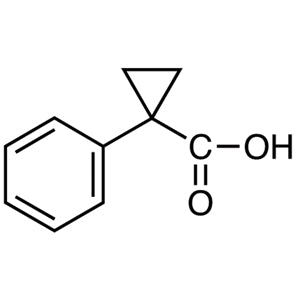
- TCI P2324 6120-95-2 1-Phenyl-1-cyclopropanecarboxylic Acid
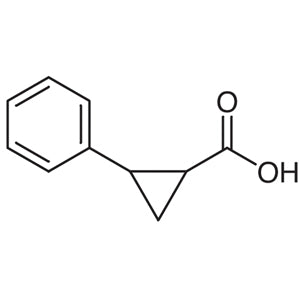
- TCI P0750 939-90-2 trans-2-Phenyl-1-cyclopropanecarboxylic Acid
- TCI H1664 17994-25-1 1-Hydroxycyclopropanecarboxylic Acid
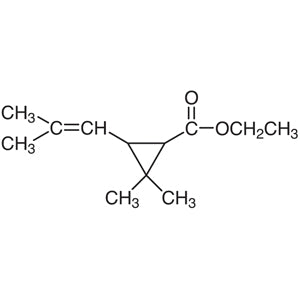
- TCI D2112 97-41-6 Ethyl 2,2-Dimethyl-3-(2-methyl-1-propenyl)cyclopropane-1-carboxylate
- Organic Synthesis: This compound is ideal for constructing complex organic molecules due to its stable structure and controlled reactivity, allowing for precise functional group modifications.
- Heterocyclic Compound Development: Its ability to participate in cyclization reactions makes it a valuable tool in the synthesis of heterocyclic compounds, which are essential in pharmaceutical and agrochemical research.
- Functional Group Transformation: The compound is frequently used in reactions that involve substitution or rearrangement of functional groups, providing versatility in synthetic strategies.
- Molecular Scaffold Design: It serves as a foundational building block for designing molecular scaffolds, which are crucial in drug discovery and materials science.
- Structural Elucidation Studies: Its well-defined structure makes it useful in studies aimed at understanding molecular interactions and reaction mechanisms.
| Brand | TCI |
|---|---|
| CAS number | 16728-01-1 |
| Molecular formula | — |
| Purity | — |
| Category | Chemistry > Building Blocks > Non-Heterocyclic Building Blocks |
| Pack sizes | Available in various packaging options to suit different experimental needs |
| Physical form | Solid |
| Storage | Store in a cool, dry place away from direct sunlight |
This compound should be stored in a cool, dry environment, away from direct sunlight and sources of heat. It is recommended to keep it in a sealed container to prevent moisture absorption and maintain its chemical integrity. Due to its solid form, it is best stored in airtight containers made of materials such as glass or polyethylene to avoid contamination. In laboratory settings, it is important to handle the compound with care, using appropriate personal protective equipment to ensure safety. Regular monitoring of storage conditions is advised to maintain the compound's stability and usability over time.
—
Produk Terkait
-
2,2,3,3-TetramethylcyclopropanecarboxylicAcid TCI T2350
Regular price From Rp 1.140.300,00Regular price -
1-[(tert-Butoxycarbonyl)amino]cyclopropanecarboxylicAcid TCI B3138
Regular price From Rp 3.155.250,00Regular price -
1-Phenyl-1-cyclopropanecarboxylicAcid TCI P2324
Regular price Rp 1.565.550,00Regular price -
trans-2-Phenyl-1-cyclopropanecarboxylicAcid TCI P0750
Regular price From Rp 1.908.900,00Regular price -
1-HydroxycyclopropanecarboxylicAcid TCI H1664
Regular price From Rp 1.140.300,00Regular price -
Ethyl2,2-Dimethyl-3-(2-methyl-1-propenyl)cyclopropane-1-carboxylate TCI D2112
Regular price From Rp 1.298.850,00Regular price -
Cyclopropanecarbohydrazide TCI C3879
Regular price From Rp 3.021.900,00Regular price -
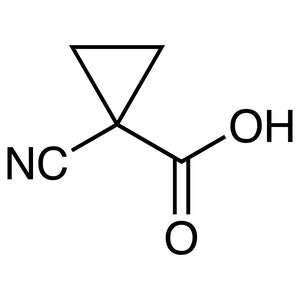
1-CyanocyclopropanecarboxylicAcid TCI C3490
Regular price From Rp 1.485.750,00Regular price

![88950-64-5 1-[(tert-Butoxycarbonyl)amino]cyclopropanecarboxylic Acid - AMI Scientific](http://amiscientific.com/cdn/shop/files/TCI2510B3138_3da4dad5-c988-4e8e-86d8-9751f23eec24.jpg?v=1767431495&width=533)