TCI M1111 is Methyl 1-Methylcyclopropane-1-carboxylate, an ester compound carrying a cyclopropane framework substituted at a quaternary position. The material belongs to the non-heterocyclic building block family used by synthetic chemists to introduce a cyclopropane ring into target molecules. That three-membered ring is a structural motif applied with increasing frequency in the design of bioactive compounds, because it is able to lock conformation and modify the metabolic properties of the parent molecule. In the laboratory, this compound serves as a starting material that is readily converted into carboxylic acids, alcohols, amides, or other derivatives through ester group transformations whose procedures are already very well established.
The characteristic that makes this compound a preferred choice lies in the combination of controlled ester reactivity and the rigidity of the cyclopropane ring. The methyl group on the quaternary carbon provides steric hindrance that helps direct reactions while increasing the stability of that centre against side reactions. The methyl ester is relatively easy to hydrolyse, to reduce, or to convert through transesterification, so users have a wide range of onward routes available to them. The cyclopropane ring itself contributes a defined geometry that is difficult to reproduce with open-chain fragments, giving the chemist a dependable way to fix the spatial arrangement of substituents in a synthetic sequence.
In Indonesian laboratories, this building block is typically encountered in organic synthesis research groups at universities, in medicinal chemistry programmes exploring new scaffolds, and in development work at companies formulating fine chemicals and agrochemical intermediates. It is normally purchased in research quantities for route scouting and small-scale preparation rather than production use, and is handled on the bench alongside other ester and cyclopropane reagents under standard synthetic laboratory practice.
Related TCI products
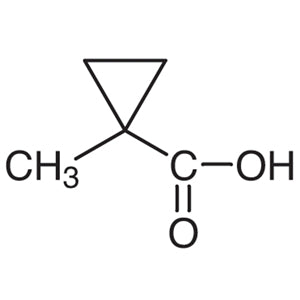
- TCI M0885 6914-76-7 1-Methylcyclopropane-1-carboxylic Acid
- TCI T2350 15641-58-4 2,2,3,3-Tetramethylcyclopropanecarboxylic Acid
- TCI M3045 88157-41-9 Methyl 1-Formylcyclopropane-1-carboxylate
- TCI E1442 32933-03-2 Ethyl 1-Acetylcyclopropane-1-carboxylate
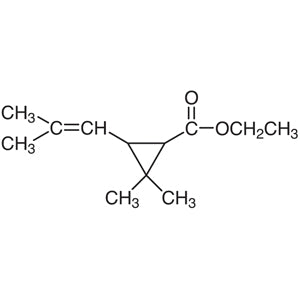
- TCI D2112 97-41-6 Ethyl 2,2-Dimethyl-3-(2-methyl-1-propenyl)cyclopropane-1-carboxylate
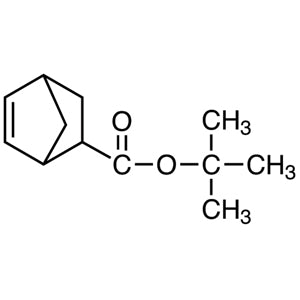
- TCI B4267 154970-45-3 tert-Butyl 5-Norbornene-2-carboxylate (endo- and exo- mixture)
- Cyclopropane ring introduction in target molecule synthesis, since the compound already carries the intact three-membered ring and removes the need for a separate, often demanding, cyclopropanation step.
- Preparation of carboxylic acid derivatives by ester hydrolysis, because the methyl ester group responds reliably to well-documented saponification and acidic hydrolysis procedures used routinely on the bench.
- Reduction chemistry leading to the corresponding alcohol, where the accessible methyl ester allows chemists to obtain a hydroxymethyl-substituted cyclopropane fragment for further functionalisation work.
- Amide bond construction in medicinal chemistry route scouting, as the ester can be converted to amides that place a conformationally locked cyclopropane unit adjacent to the amide linkage.
- Conformational design studies in bioactive compound research, because the rigid cyclopropane ring restricts rotation and lets researchers probe how fixed geometry influences activity and metabolic behaviour.
| Brand | TCI |
|---|---|
| CAS number | 6206-25-3 |
| Molecular formula | — |
| Purity | — |
| Category | Chemistry > Building Blocks > Non-Heterocyclic Building Blocks |
| Pack sizes | available in research-scale laboratory pack sizes; please confirm the current catalogue options when ordering |
| Physical form | — |
| Storage | keep in the tightly closed original container, in a cool and well-ventilated place away from ignition sources |
- Chemical name: Methyl 1-Methylcyclopropane-1-carboxylate
Store the material in its original tightly closed container in a cool, dry and well-ventilated area, away from heat, open flames, and other ignition sources, and separated from strong oxidising agents, strong acids, and strong bases. Glass bottles with chemically resistant closures are suitable for storage and for decanting small working quantities. All handling, weighing, and transfer operations should be carried out in a functioning fume hood, using safety glasses, chemically resistant gloves, and a laboratory coat. Keep containers properly labelled, close them immediately after use to limit vapour release, and collect residues and rinsings as organic chemical waste in line with the laboratory's disposal procedures. Always consult the manufacturer's safety data sheet before first use.
—
Produk Terkait
-
1-Methylcyclopropane-1-carboxylicAcid TCI M0885
Regular price From Rp 3.048.150,00Regular price -
2,2,3,3-TetramethylcyclopropanecarboxylicAcid TCI T2350
Regular price From Rp 1.140.300,00Regular price -
Methyl1-Formylcyclopropane-1-carboxylate TCI M3045
Regular price From Rp 4.188.450,00Regular price -
Ethyl1-Acetylcyclopropane-1-carboxylate TCI E1442
Regular price From Rp 2.386.650,00Regular price -
Ethyl2,2-Dimethyl-3-(2-methyl-1-propenyl)cyclopropane-1-carboxylate TCI D2112
Regular price From Rp 1.298.850,00Regular price -
tert-Butyl5-Norbornene-2-carboxylate(endo-andexo-mixture) TCI B4267
Regular price From Rp 1.485.750,00Regular price -
Methyl1-Oxo-2,3-dihydro-1H-indene-2-carboxylate TCI M3689
Regular price Rp 3.843.000,00Regular price -
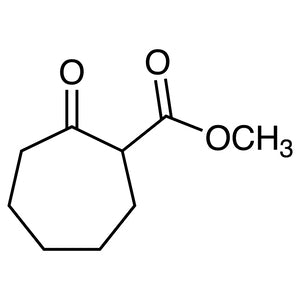
Methyl2-Oxocycloheptane-1-carboxylate TCI M3625
Regular price Rp 2.359.350,00Regular price