1-Methylcyclopropane-1-carboxylic Acid is a versatile organic compound widely used in chemical synthesis to create complex molecules. Its unique structure combines a cyclopropane ring with a carboxylic acid group and a methyl substituent, making it a valuable building block in organic chemistry. In the laboratory, this compound serves as a key reagent for the development of heterocyclic compounds, pharmaceuticals, and industrial chemicals. Its reactivity and structural flexibility make it an essential tool for chemists working on synthetic pathways that require precise functional group manipulation.
The compound’s chemical properties, including its stability under certain conditions and sensitivity to oxidation and hydrolysis, make it a preferred choice for specialized chemical reactions. The cyclopropane ring provides structural rigidity, while the carboxylic acid group allows for substitution and esterification reactions. These characteristics enable researchers to tailor the compound for various synthetic applications. Its ability to participate in a wide range of chemical transformations makes it highly sought after in both academic and industrial research settings.
In Indonesian laboratories, 1-Methylcyclopropane-1-carboxylic Acid is commonly used in organic chemistry research, particularly in universities and research institutions. It plays a crucial role in the synthesis of complex molecules, supporting both teaching and experimental work. Its availability and chemical versatility make it a standard component in many laboratory workflows, especially in projects involving drug development and material science.
Related TCI products
- TCI M1111 6206-25-3 Methyl 1-Methylcyclopropane-1-carboxylate
- TCI T2350 15641-58-4 2,2,3,3-Tetramethylcyclopropanecarboxylic Acid
- TCI M3045 88157-41-9 Methyl 1-Formylcyclopropane-1-carboxylate
- TCI E1442 32933-03-2 Ethyl 1-Acetylcyclopropane-1-carboxylate
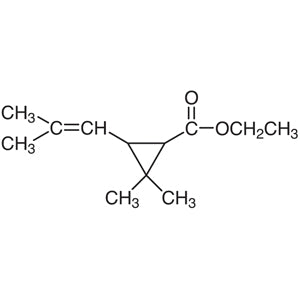
- TCI D2112 97-41-6 Ethyl 2,2-Dimethyl-3-(2-methyl-1-propenyl)cyclopropane-1-carboxylate
- TCI A0504 117-78-2 Anthraquinone-2-carboxylic Acid
- Organic synthesis of heterocyclic compounds due to its cyclopropane ring and carboxylic acid functionality.
- Pharmaceutical research for the development of new drugs requiring functional group modification.
- Industrial chemical production as a building block for specialty chemicals and polymers.
- Teaching and research in academic institutions for demonstrating chemical reactivity and synthetic strategies.
- Development of novel materials through controlled chemical reactions and functional group transformations.
| Brand | TCI |
|---|---|
| CAS number | 6914-76-7 |
| Molecular formula | — |
| Purity | — |
| Category | Chemistry > Building Blocks > Non-Heterocyclic Building Blocks |
| Pack sizes | Available in various quantities as per standard laboratory supply formats |
| Physical form | Solid or liquid, depending on the specific product variant |
| Storage | Store in a cool, dry place away from light and incompatible materials |
This compound should be stored in a cool, dry environment, away from direct sunlight and sources of heat. It is recommended to use airtight containers to prevent exposure to moisture and air, which can lead to hydrolysis. Due to its sensitivity to oxidation, it should be kept away from strong oxidizing agents. In a laboratory setting, it is important to handle the compound with appropriate personal protective equipment, such as gloves and safety goggles, to ensure safe handling. Proper labeling and storage conditions are essential to maintain its chemical integrity and ensure safe use in experimental procedures.
—
Produk Terkait
-
Methyl1-Methylcyclopropane-1-carboxylate TCI M1111
Regular price Rp 6.070.050,00Regular price -
2,2,3,3-TetramethylcyclopropanecarboxylicAcid TCI T2350
Regular price From Rp 1.140.300,00Regular price -
Methyl1-Formylcyclopropane-1-carboxylate TCI M3045
Regular price From Rp 4.188.450,00Regular price -
Ethyl1-Acetylcyclopropane-1-carboxylate TCI E1442
Regular price From Rp 2.386.650,00Regular price -
Ethyl2,2-Dimethyl-3-(2-methyl-1-propenyl)cyclopropane-1-carboxylate TCI D2112
Regular price From Rp 1.298.850,00Regular price -
Anthraquinone-2-carboxylicAcid TCI A0504
Regular price From Rp 2.889.600,00Regular price -
1,2,3,4-Tetrahydronaphthalene-2-carboxylicAcid TCI T4149
Regular price From Rp 2.359.350,00Regular price -
2,2,5-Trimethyl-1,3-dioxane-5-carboxylicAcid TCI T3839
Regular price From Rp 2.809.800,00Regular price