


TCI D2179 2-Chloro-5-methyl-1,4-phenylenediamine is a substituted aromatic diamine carrying two amino groups in the para positions of the benzene ring, together with a chlorine atom and a methyl group on the same ring. This combination of four substituents produces a building block that is simultaneously difunctional and electronically asymmetric, which is exactly what makes it valuable in organic synthesis and materials chemistry. In the laboratory it serves as a starting material for preparing coloured intermediates, for constructing nitrogen-containing heterocyclic frameworks, and as a monomer in the preparation of aromatic polymers that require two reactive amino sites.
The properties that make this compound a preferred choice begin with the nucleophilicity of its two amino groups, which allows the formation of amides, imines, or heterocyclic rings through condensation reactions. The presence of the chlorine atom lowers the electron density on one side of the ring while also acting as a potential reaction site for substitution or coupling chemistry. The methyl group contributes both steric and electronic influence that helps direct the course of a reaction. The para arrangement of the two amino groups makes the compound well suited as a difunctional monomer for linear polymer chains, and its solid form makes accurate weighing straightforward.
In Indonesian laboratories, this building block is typically used in university and institutional synthetic chemistry groups, in polymer and materials research, and in industrial R&D units that develop coloured intermediates or specialty aromatic polymers. It is normally handled at the bench scale, weighed out as a solid for condensation or coupling steps, and treated with the same care applied to other aromatic diamines. Supplied under the TCI brand within the Chemistry > Building Blocks > Non-Heterocyclic Building Blocks category, it fits routine research-scale synthetic work.
Related TCI products
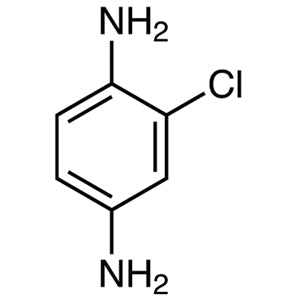
- TCI C3054 615-66-7 2-Chloro-1,4-phenylenediamine
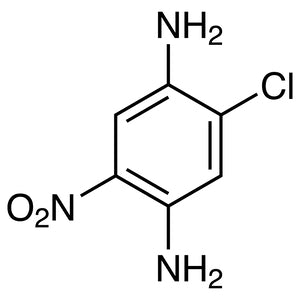
- TCI C1501 26196-45-2 2-Chloro-5-nitro-1,4-phenylenediamine
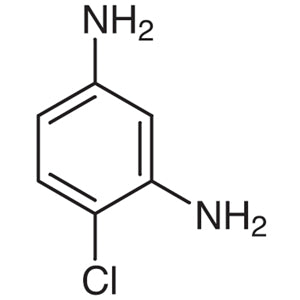
- TCI C0710 5131-60-2 4-Chloro-1,3-phenylenediamine
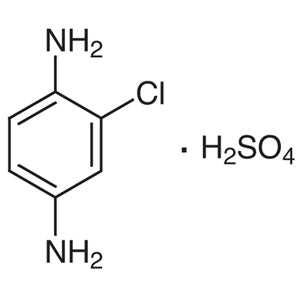
- TCI C0256 61702-44-1 2-Chloro-1,4-phenylenediamine Sulfate
- TCI C0255 95-83-0 4-Chloro-1,2-phenylenediamine
- TCI T3770 485831-34-3 N,N,N',N'-Tetrakis[4-(diisobutylamino)phenyl]-1,4-phenylenediamine
- Preparation of coloured intermediates — the electron-rich para-diamine core combined with the chlorine substituent supports the formation of chromophoric products used in dye and pigment research.
- Construction of nitrogen-containing heterocyclic frameworks — the two nucleophilic amino groups readily undergo condensation to close rings, giving access to heterocyclic scaffolds from a single starting material.
- Aromatic polymer synthesis — the para arrangement of the amino groups makes this a difunctional monomer suited to building linear polymer chains that require two amino reaction points.
- Amide and imine formation — both amino groups react with carbonyl and acyl partners, allowing controlled introduction of amide or imine linkages in multi-step synthetic routes.
- Substitution and coupling chemistry — the chlorine atom provides an additional potential reaction site, so the ring can be further functionalised after the amino groups have been used.
| Brand | TCI |
|---|---|
| CAS number | 5307-03-9 |
| Molecular formula | — |
| Purity | — |
| Category | Chemistry > Building Blocks > Non-Heterocyclic Building Blocks |
| Pack sizes | available in standard TCI research-scale packaging; please confirm the required size when ordering |
| Physical form | solid, which allows convenient and accurate weighing |
| Storage | keep tightly closed in a cool, dry place away from light and air |
- Product code: D2179
Store the container tightly closed in a cool, dry, well-ventilated place, protected from light and from prolonged contact with air, since aromatic diamines are generally sensitive to oxidation and may darken over time. Keep the material in its original tightly sealed container, or in a clean amber glass or other chemically compatible container that is clearly labelled. Handle the solid inside a fume hood, using gloves, safety glasses, and a laboratory coat, and avoid raising or inhaling dust during weighing. Keep the compound away from strong oxidising agents and acids, close the container promptly after use, and clean the weighing area afterwards. Always consult the manufacturer's safety data sheet before use, and dispose of residues and contaminated materials through the laboratory's chemical waste procedures.
—
Produk Terkait
-
2-Chloro-1,4-phenylenediamine TCI C3054
Regular price Rp 4.957.050,00Regular price -
2-Chloro-5-nitro-1,4-phenylenediamine TCI C1501
Regular price Rp 3.100.650,00Regular price -
4-Chloro-1,3-phenylenediamine TCI C0710
Regular price From Rp 2.279.550,00Regular price -
2-Chloro-1,4-phenylenediamineSulfate TCI C0256
Regular price From Rp 477.750,00Regular price -
4-Chloro-1,2-phenylenediamine TCI C0255
Regular price From Rp 848.400,00Regular price -
N,N,N',N'-Tetrakis[4-(diisobutylamino)phenyl]-1,4-phenylenediamine TCI T3770
Regular price From Rp 2.094.750,00Regular price -
5-Trifluoromethyl-1,3-phenylenediamine TCI T3239
Regular price Rp 1.273.650,00Regular price -
2,3,5,6-Tetramethyl-1,4-phenylenediamine TCI T1457
Regular price From Rp 1.881.600,00Regular price

![485831-34-3 N,N,N',N'-Tetrakis[4-(diisobutylamino)phenyl]-1,4-phenylenediamine - AMI Scientific](http://amiscientific.com/cdn/shop/files/TCI2510T3770.jpg?v=1767144326&width=533)

