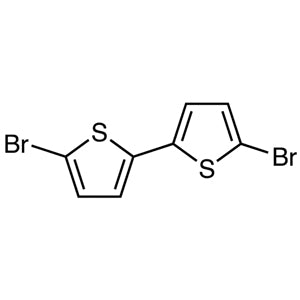
TCI D2755 5,5'-Dibromo-2,2'-bithiophene is a heterocyclic building block that serves as a key material in conjugated materials chemistry. The molecule consists of two thiophene rings joined directly to each other to form a bithiophene unit, with bromine atoms attached at both terminal ends of the ring system. The bithiophene unit itself is one of the most important cores in organic semiconductors because it provides a delocalised pi-electron system. The presence of two bromine atoms at the terminal positions makes this compound a difunctional monomer, ready to enter a wide range of cross-coupling reactions that extend the conjugation length of the resulting chain.
The reason this material is selected is its symmetry and its reactivity, both of which are very well suited to controlled polymerisation. The carbon–bromine bonds at the alpha positions of the thiophene rings are readily activated by palladium as well as nickel catalysts, so this monomer can be reacted through Suzuki, Stille or Kumada coupling, or through direct arylation, to produce conjugated polymers with a regular and well-defined structure. The electron-donating character of the thiophene rings helps to lower the band gap of the resulting material, while the difunctional substitution pattern makes it possible to build alternating polymers in which donor and acceptor units follow one another along the backbone.
In Indonesian laboratories, this building block is typically used in university and institutional research groups working on organic electronics and conjugated polymer synthesis. It is normally handled on a small synthetic scale under an inert atmosphere, as part of catalyst-driven coupling work directed toward organic semiconductor thin films and related device materials. Because it comes from TCI as a defined catalogue building block, it fits research programmes that need a consistent, reproducible starting material for repeated polymerisation runs.
- Conjugated polymer synthesis — the two terminal bromine atoms allow chain extension in a controlled, regular manner, giving polymer backbones with predictable and repeatable structure.
- Suzuki cross-coupling — the alpha carbon–bromine bonds are readily activated by palladium catalysts, making this monomer a straightforward partner for boron-containing comonomers.
- Stille and Kumada coupling — the same difunctional bromide pattern works with organotin and organomagnesium partners, giving research groups several complementary routes to the same polymer target.
- Direct arylation polymerisation — the reactive terminal positions permit coupling without pre-functionalised organometallic partners, which simplifies monomer preparation in the synthetic workflow.
- Donor–acceptor copolymer design — the electron-donating thiophene rings lower the band gap, so this unit is used as the donor block alternating with acceptor comonomers.
| Brand | TCI |
|---|---|
| CAS number | 4805-22-5 |
| Molecular formula | — |
| Purity | — |
| Category | Chemistry > Building Blocks > Heterocyclic Building Blocks |
| Pack sizes | available in the catalogue pack sizes offered by TCI for this product code |
| Physical form | — |
| Storage | keep in the closed original container under the conditions stated on the manufacturer's label |
- Chemical name: 5,5'-Dibromo-2,2'-bithiophene
Store the container tightly closed in a cool, dry and well-ventilated place, away from direct sunlight, heat sources and incompatible reagents, and follow the storage conditions printed on the manufacturer's label. Keep the material in its original supplier container, or in a clean, chemically compatible and clearly labelled glass container if it must be transferred. Handle in a fume hood using gloves, safety glasses and a laboratory coat, avoiding dust formation, skin contact and inhalation. Because this compound is normally used in catalytic coupling reactions, weigh and transfer it under dry, inert conditions where the reaction protocol requires it, and close the container immediately after use. Dispose of residues and contaminated consumables through the laboratory's chemical waste stream, and consult the supplier safety data sheet before first use.
—
Produk Terkait
-
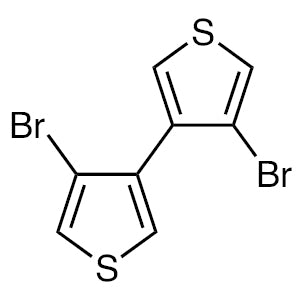
4,4'-Dibromo-3,3'-bithiophene TCI D5374
Regular price Rp 5.830.650,00Regular price -
5,5'-Dibromo-4,4'-dihexyl-2,2'-bithiophene TCI D4184
Regular price From Rp 3.180.450,00Regular price -
5,5'-Dibromo-3,3'-dihexyl-2,2'-bithiophene TCI D4183
Regular price From Rp 8.745.450,00Regular price -
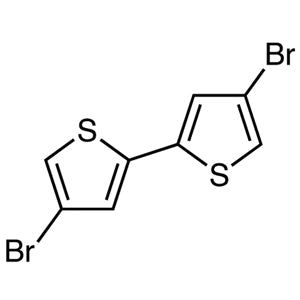
4,4'-Dibromo-2,2'-bithiophene TCI D4181
Regular price From Rp 4.718.700,00Regular price -
3,3'-Dibromo-5,5'-bis(trimethylsilyl)-2,2'-bithiophene TCI D3941
Regular price From Rp 3.419.850,00Regular price -
3,3'-Dibromo-2,2'-bithiophene TCI D3798
Regular price From Rp 1.590.750,00Regular price -
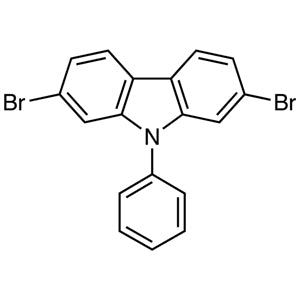
2,7-Dibromo-9-phenylcarbazole TCI D4832
Regular price From Rp 903.000,00Regular price -
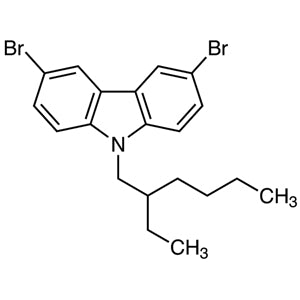
3,6-Dibromo-9-(2-ethylhexyl)carbazole TCI D4830
Regular price From Rp 2.147.250,00Regular price