2,7-Dibromo-9-phenylcarbazole is a chemical compound widely used as a building block in the synthesis of complex heterocyclic compounds. It plays a crucial role in organic chemistry laboratories where researchers aim to create new molecular structures through controlled chemical reactions. This compound is particularly valuable for its ability to undergo substitution and modification reactions, making it an essential tool for synthetic chemists. Its unique chemical properties allow it to interact with various functional groups, enabling the development of a wide range of chemical derivatives.
The compound’s stable molecular structure and controlled reactivity make it a preferred choice for advanced chemical research. Its ability to participate in multiple reaction pathways enhances its versatility in laboratory settings. Additionally, its availability in solid form ensures ease of handling and storage, which is critical for maintaining the integrity of chemical experiments. These characteristics make it a reliable and efficient material for both academic and industrial research purposes.
In Indonesian laboratories, 2,7-Dibromo-9-phenylcarbazole is commonly used in organic chemistry, pharmacology, and materials science research. It is particularly favored for its role in synthesizing complex compounds with potential applications in pharmaceuticals and advanced materials. Its use is widespread in scientific studies that require precise chemical modifications and structural transformations. Its reliability and effectiveness have made it a staple in many research facilities across Indonesia.
TCI brochures (PDF)
- Carbazoles 2025-06-27 · p. 5
- Building Blocks for Organic Semiconductor 2026-03-24 · p. 20
Related TCI products
- TCI D4543 57103-21-6 3,6-Diiodo-9-phenylcarbazole
- TCI D2981 57103-20-5 3,6-Dibromo-9-phenylcarbazole
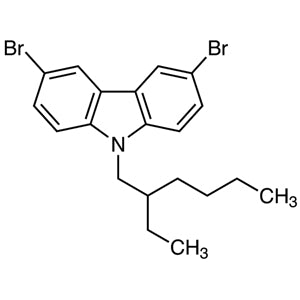
- TCI D4830 173063-52-0 3,6-Dibromo-9-(2-ethylhexyl)carbazole
- TCI D4563 73087-83-9 3,6-Dibromo-9-(4-bromophenyl)carbazole
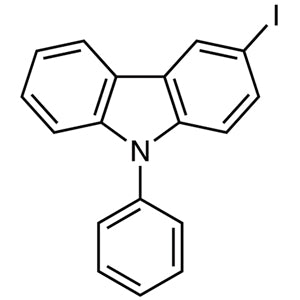
- TCI I0913 502161-03-7 3-Iodo-9-phenylcarbazole
- TCI B4795 1160294-85-8 3-Bromo-6,9-diphenylcarbazole
- Organic synthesis research benefits from this compound due to its ability to undergo substitution and modification reactions, enabling the creation of complex molecular structures.
- Pharmaceutical development utilizes this compound for the synthesis of novel drug candidates, leveraging its reactivity and structural versatility.
- Materials science applications rely on this compound for the development of advanced polymers and functional materials with unique properties.
- Analytical chemistry experiments use this compound as a standard reference for testing reaction mechanisms and chemical behavior under various conditions.
- Environmental chemistry studies incorporate this compound to investigate its behavior in different chemical environments and its potential for degradation processes.
| Brand | TCI |
|---|---|
| CAS number | 444796-09-2 |
| Molecular formula | — |
| Purity | — |
| Category | Chemistry > Building Blocks > Heterocyclic Building Blocks |
| Pack sizes | Available in various quantities as per standard laboratory requirements |
| Physical form | Solid |
| Storage | Store in a cool, dry place away from direct sunlight and moisture |
This compound should be stored in a cool, dry environment to maintain its chemical stability and prevent degradation. It is recommended to use airtight containers made of glass or high-density polyethylene to protect it from moisture and air exposure. Proper labeling of containers is essential to ensure safe handling and prevent accidental contamination. Laboratory personnel should wear appropriate personal protective equipment, such as gloves and safety goggles, when handling this compound. It should be kept away from incompatible substances, such as strong oxidizers, to avoid any potential chemical reactions. Regular inspection of storage conditions is advised to ensure the compound remains in optimal condition for use in research applications.
—
Product Categories
Produk Terkait
-
3,6-Diiodo-9-phenylcarbazole TCI D4543
Regular price From Rp 1.565.550,00Regular price -
3,6-Dibromo-9-phenylcarbazole TCI D2981
Regular price From Rp 1.035.300,00Regular price -
3,6-Dibromo-9-(2-ethylhexyl)carbazole TCI D4830
Regular price From Rp 2.147.250,00Regular price -
3,6-Dibromo-9-(4-bromophenyl)carbazole TCI D4563
Regular price From Rp 664.650,00Regular price -
3-Iodo-9-phenylcarbazole TCI I0913
Regular price From Rp 955.500,00Regular price -
3-Bromo-6,9-diphenylcarbazole TCI B4795
Regular price From Rp 689.850,00Regular price -
3-(4-Bromophenyl)-9-phenylcarbazole TCI B4452
Regular price From Rp 477.750,00Regular price -
2-Bromo-9-phenylcarbazole TCI B4439
Regular price From Rp 1.961.400,00Regular price