3-Bromo-6,9-diphenylcarbazole is a chemical compound classified under the heterocyclic category, featuring a carbazole core with bromine and phenyl substituents. This compound plays a crucial role in laboratory settings as a building block for the synthesis of more complex molecules. Its structural versatility makes it a valuable resource for chemists seeking to modify molecular frameworks for various applications. In research environments, it is widely used to develop compounds with specific biological activities, particularly in organic chemistry and pharmacology.
The chemical properties of 3-Bromo-6,9-diphenylcarbazole make it a preferred choice for synthetic chemists. The presence of the bromo group enhances its reactivity, allowing for substitution or electrophilic reactions with various reagents. This reactivity enables the creation of new compounds with tailored properties. Additionally, its stability under controlled conditions ensures reliable performance in laboratory experiments. These characteristics make it an essential tool for researchers aiming to explore molecular modifications and functional group transformations.
In Indonesian laboratories, 3-Bromo-6,9-diphenylcarbazole is commonly used in organic chemistry research, especially in academic and research institutions. Its role in synthesizing bioactive compounds supports advancements in pharmaceutical and chemical research. The compound is also utilized in studies related to heterocyclic chemistry, where structural modifications are key to developing new materials and drugs. Its availability and chemical properties make it a go-to reagent for many research projects in Indonesia.
TCI brochures (PDF)
- Carbazoles 2025-06-27 · p. 5
- Building Blocks for Organic Semiconductor 2026-03-24 · p. 18
Related TCI products
- Organic synthesis projects benefit from this compound's reactivity and structural versatility, enabling the creation of complex molecules with specific functionalities.
- Pharmaceutical research utilizes it to develop compounds with targeted biological activities, supporting drug discovery and development efforts.
- Heterocyclic chemistry studies rely on its stable core structure, allowing for precise modifications to explore new chemical properties.
- Academic laboratories use it as a teaching tool to demonstrate synthetic strategies and molecular transformations in undergraduate and graduate courses.
- Industrial research and development applications leverage its chemical flexibility for the design of new materials and functional compounds.
| Brand | TCI |
|---|---|
| CAS number | 1160294-85-8 |
| Molecular formula | — |
| Purity | — |
| Category | Chemistry > Building Blocks > Heterocyclic Building Blocks |
| Pack sizes | Available in various quantities as per supplier specifications |
| Physical form | Solid |
| Storage | Store in a cool, dry place away from light and incompatible materials |
This compound should be stored in a cool, dry environment, away from direct sunlight and sources of heat. It is recommended to use airtight containers to prevent moisture absorption and contamination. Due to its reactivity, it should be kept separate from strong oxidizing agents and incompatible substances. Proper labeling and safe handling are essential to ensure laboratory safety. Always use appropriate personal protective equipment when handling this material. Regular inspection of storage conditions is advised to maintain its chemical integrity and ensure safe usage in laboratory settings.
—
Produk Terkait
-
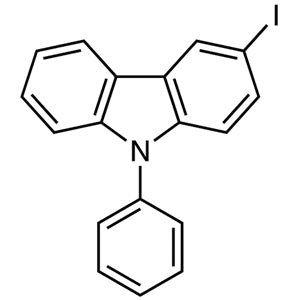
3-Iodo-9-phenylcarbazole TCI I0913
Regular price From Rp 1.008.000,00Regular priceRp 720.300,00Sale price From Rp 1.008.000,00 -
3-(4-Bromophenyl)-9-phenylcarbazole TCI B4452
Regular price From Rp 530.250,00Regular priceRp 386.400,00Sale price From Rp 530.250,00 -
2-Bromo-9-phenylcarbazole TCI B4439
Regular price From Rp 2.013.900,00Regular priceRp 1.423.800,00Sale price From Rp 2.013.900,00 -
3-Bromo-9-phenylcarbazole TCI B3908
Regular price From Rp 1.033.200,00Regular priceRp 738.150,00Sale price From Rp 1.033.200,00 -
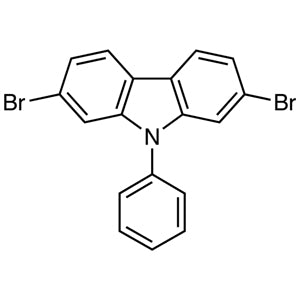
2,7-Dibromo-9-phenylcarbazole TCI D4832
Regular price From Rp 955.500,00Regular priceRp 683.550,00Sale price From Rp 955.500,00 -
3,6-Diiodo-9-phenylcarbazole TCI D4543
Regular price From Rp 1.618.050,00Regular priceRp 1.146.600,00Sale price From Rp 1.618.050,00 -
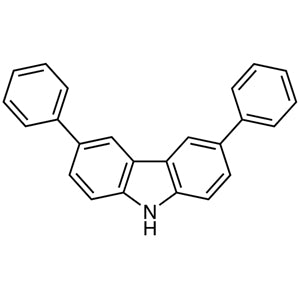
3,6-Diphenylcarbazole TCI D4433
Regular price Rp 2.252.250,00Regular priceRp 1.590.750,00Sale price Rp 2.252.250,00 -
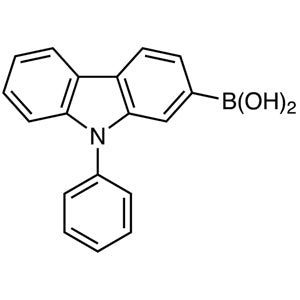
9-Phenylcarbazole-2-boronicAcid(containsvaryingamountsofAnhydride) TCI P2169
Regular price From Rp 530.250,00Regular priceRp 386.400,00Sale price From Rp 530.250,00