3,6-Diphenylcarbazole is a chemical compound widely used as a building block in the synthesis of heterocyclic compounds. Its complex molecular structure enables it to participate in various chemical reactions, particularly in the formation of cyclic structures. In the laboratory, it serves as a key reagent for the development of complex molecules, including dyes, pharmaceuticals, and industrial chemicals. Due to its stability and controlled reactivity, it is a preferred choice for experiments requiring precision and accuracy. This compound plays a vital role in organic chemistry, especially in the design and synthesis of compounds with specific structural features.
The compound's chemical stability under certain conditions, combined with its ability to react with various reagents in a laboratory setting, makes it a versatile tool for chemists. Its molecular structure allows for participation in substitution reactions and ring-forming processes, which are essential in the creation of new chemical entities. The predictable behavior of 3,6-Diphenylcarbazole in different reaction conditions ensures reliable results, making it a trusted component in synthetic chemistry workflows. Its reactivity and structural versatility are key factors in its widespread use across multiple research areas.
In Indonesian laboratories, 3,6-Diphenylcarbazole is commonly used in chemical research, particularly in the synthesis of heterocyclic compounds. It is a staple in academic and industrial research settings where the development of new compounds is required. Its role in creating pigments, drugs, and other specialized chemicals makes it an essential material for both teaching and applied research. The compound's reliability and effectiveness have made it a standard in many laboratory environments across Indonesia.
TCI brochures (PDF)
- 2,7-Substituted and 3,6-Substituted Carbazoles 2024-05-31 · p. 1
- Carbazoles 2025-06-27 · p. 3
- Building Blocks for Organic Semiconductor 2026-03-24 · p. 20
Related TCI products
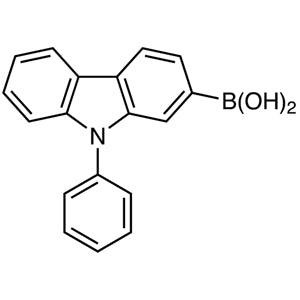
- TCI P2169 1001911-63-2 9-Phenylcarbazole-2-boronic Acid (contains varying amounts of Anhydride)
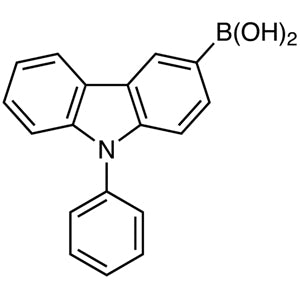
- TCI P2001 854952-58-2 9-Phenylcarbazole-3-boronic Acid (contains varying amounts of Anhydride)
- TCI B4795 1160294-85-8 3-Bromo-6,9-diphenylcarbazole
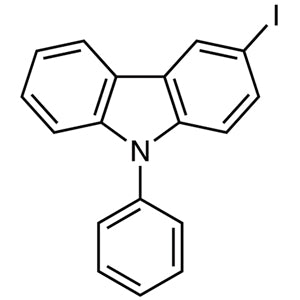
- TCI I0913 502161-03-7 3-Iodo-9-phenylcarbazole
- TCI B4452 1028647-93-9 3-(4-Bromophenyl)-9-phenylcarbazole
- TCI B4439 94994-62-4 2-Bromo-9-phenylcarbazole
- Synthesis of Heterocyclic Compounds: 3,6-Diphenylcarbazole is ideal for creating complex ring structures, which are fundamental in pharmaceutical and industrial chemistry.
- Dye and Pigment Development: Its molecular structure allows for the formation of colored compounds, making it useful in the production of dyes and pigments.
- Pharmaceutical Research: The compound's reactivity and structural versatility make it a valuable tool in the development of new drug molecules.
- Organic Chemistry Education: It is frequently used in academic settings to teach students about synthetic pathways and molecular transformations.
- Industrial Chemical Synthesis: Its stability and controlled reactivity make it suitable for large-scale chemical manufacturing processes.
| Brand | TCI |
|---|---|
| CAS number | 56525-79-2 |
| Molecular formula | — |
| Purity | — |
| Category | Chemistry > Building Blocks > Heterocyclic Building Blocks |
| Pack sizes | Available in various quantities as per standard laboratory supply |
| Physical form | Solid, typically in crystalline or powder form |
| Storage | Store in a cool, dry place away from direct sunlight and moisture |
3,6-Diphenylcarbazole should be stored in a cool, dry environment to maintain its chemical stability. It is recommended to keep it in airtight containers to prevent exposure to moisture and air. Due to its potential reactivity, it should be handled with care, using appropriate personal protective equipment such as gloves and safety goggles. The compound is generally non-hazardous under normal conditions but should be stored away from incompatible substances to avoid unintended reactions. In laboratory settings, it is important to follow standard safety protocols to ensure safe handling and storage practices. Proper labeling and storage conditions are essential to maintain the integrity and usability of the compound over time.
—
Produk Terkait
-
9-Phenylcarbazole-2-boronicAcid(containsvaryingamountsofAnhydride) TCI P2169
Regular price From Rp 477.750,00Regular price -
9-Phenylcarbazole-3-boronicAcid(containsvaryingamountsofAnhydride) TCI P2001
Regular price From Rp 1.670.550,00Regular price -
3-Bromo-6,9-diphenylcarbazole TCI B4795
Regular price From Rp 689.850,00Regular price -
3-Iodo-9-phenylcarbazole TCI I0913
Regular price From Rp 955.500,00Regular price -
3-(4-Bromophenyl)-9-phenylcarbazole TCI B4452
Regular price From Rp 477.750,00Regular price -
2-Bromo-9-phenylcarbazole TCI B4439
Regular price From Rp 1.961.400,00Regular price -
3-Bromo-9-phenylcarbazole TCI B3908
Regular price From Rp 980.700,00Regular price -
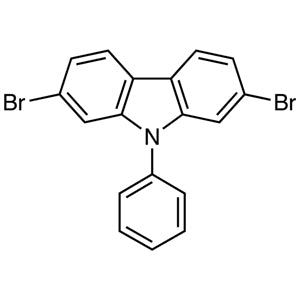
2,7-Dibromo-9-phenylcarbazole TCI D4832
Regular price From Rp 903.000,00Regular price