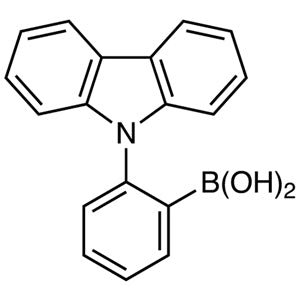
9-Phenylcarbazole-2-boronic Acid is a chemical compound widely used in laboratory settings for its versatility in organic synthesis. It serves as a key building block in the creation of complex heterocyclic compounds, playing a crucial role in various chemical reactions. This compound is particularly valuable in the development of new materials, pharmaceuticals, and industrial chemicals due to its unique molecular structure and reactivity. Its presence in the lab supports advanced research in chemistry and related fields, making it an essential tool for scientists and researchers.
The compound’s ability to participate in specific chemical reactions, such as Suzuki-Miyaura and Heck coupling, makes it a preferred choice for synthetic chemists. Its stability under certain conditions and compatibility with a variety of reaction environments enhance its utility in laboratory applications. These properties allow it to be used effectively in both academic and industrial research, contributing to the synthesis of a wide range of compounds. Its reliability and performance in controlled environments further solidify its importance in modern chemical research.
In Indonesian laboratories, 9-Phenylcarbazole-2-boronic Acid is commonly used by researchers in the fields of chemistry, pharmacy, and materials science. It is a critical component in the development of new compounds and is frequently employed in academic and research institutions. Its relevance in these contexts underscores its importance as a fundamental reagent in the pursuit of scientific innovation and discovery.
TCI brochures (PDF)
- Carbazoles 2025-06-27 · p. 5
- Suzuki-Miyaura Cross Coupling Reaction 2025-12-01 · p. 14
- Boron Compounds 2025-10-07 · p. 13
- Building Blocks for Organic Semiconductor 2026-03-24 · p. 21
Related TCI products
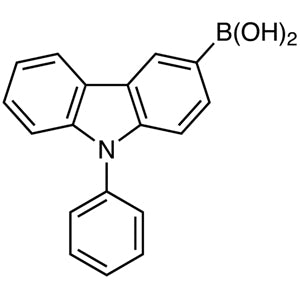
- TCI P2001 854952-58-2 9-Phenylcarbazole-3-boronic Acid (contains varying amounts of Anhydride)
- TCI C2967 864377-33-3 3-(9H-Carbazol-9-yl)phenylboronic Acid (contains varying amounts of Anhydride)
- TCI C2926 419536-33-7 4-(9H-Carbazol-9-yl)phenylboronic Acid (contains varying amounts of Anhydride)
- TCI N1098 1133057-98-3 [9-(Naphthalen-2-yl)-9H-carbazol-3-yl]boronic Acid (contains varying amounts of Anhydride)
- TCI F0549 4347-33-5 5-Formyl-2-thiopheneboronic Acid (contains varying amounts of Anhydride)
- TCI E1153 669072-93-9 9-Ethylcarbazole-3-boronic Acid (contains varying amounts of Anhydride)
- Organic synthesis is a key application where this compound is used to build complex heterocyclic structures due to its reactivity in coupling reactions.
- Pharmaceutical research benefits from its role in the development of new drugs, as it contributes to the synthesis of bioactive compounds.
- Material science applications rely on its ability to form stable chemical bonds, aiding in the creation of advanced organic materials.
- Academic research utilizes this compound for teaching and experimental purposes, supporting the training of future chemists.
- Industrial chemical production incorporates it in the manufacture of specialty chemicals and polymers due to its structural versatility.
| Brand | TCI |
|---|---|
| CAS number | 1001911-63-2 |
| Molecular formula | — |
| Purity | — |
| Category | Chemistry > Building Blocks > Heterocyclic Building Blocks |
| Pack sizes | — |
| Physical form | — |
| Storage | Store in a cool, dry place away from moisture and direct sunlight. |
This compound should be stored in a cool, dry environment to maintain its stability and prevent degradation. It is recommended to use airtight containers to protect it from moisture and air exposure. As it contains varying amounts of anhydride, it should be handled with care to avoid potential chemical reactions. Proper ventilation is essential when working with this material to ensure a safe laboratory environment. Always follow standard safety protocols, including the use of personal protective equipment, to minimize risks during handling and experimentation.
—
Product Categories
Produk Terkait
-
9-Phenylcarbazole-3-boronicAcid(containsvaryingamountsofAnhydride) TCI P2001
Regular price From Rp 1.670.550,00Regular price -
3-(9H-Carbazol-9-yl)phenylboronicAcid(containsvaryingamountsofAnhydride) TCI C2967
Regular price From Rp 1.246.350,00Regular price -
4-(9H-Carbazol-9-yl)phenylboronicAcid(containsvaryingamountsofAnhydride) TCI C2926
Regular price From Rp 1.485.750,00Regular price -
[9-(Naphthalen-2-yl)-9H-carbazol-3-yl]boronicAcid(containsvaryingamountsofAnhydride) TCI N1098
Regular price Rp 4.028.850,00Regular price -
5-Formyl-2-thiopheneboronicAcid(containsvaryingamountsofAnhydride) TCI F0549
Regular price From Rp 823.200,00Regular price -
9-Ethylcarbazole-3-boronicAcid(containsvaryingamountsofAnhydride) TCI E1153
Regular price From Rp 2.121.000,00Regular price -
[4'-(Carbazol-9-yl)-4-biphenylyl]boronicAcid(containsvaryingamountsofAnhydride) TCI C3353
Regular price From Rp 955.500,00Regular price -
2-(9H-Carbazol-9-yl)phenylboronicAcid(containsvaryingamountsofAnhydride) TCI C3352
Regular price Rp 4.743.900,00Regular price


![1133057-98-3 [9-(Naphthalen-2-yl)-9H-carbazol-3-yl]boronic Acid (contains varying amounts of Anhydride) - AMI Scientific](http://amiscientific.com/cdn/shop/files/TCI2510N1098.jpg?v=1769143156&width=533)


![[4'-(Carbazol-9-yl)-4-biphenylyl]boronic Acid (contains varying amounts of Anhydride) (CAS 858131-73-4) - TCI C3353 - AMI Scientific](http://amiscientific.com/cdn/shop/files/TCI2510C3353.jpg?v=1768204763&width=533)