5-Formyl-2-thiopheneboronic Acid from TCI (CAS 4347-33-5) is a thiophene-based heterocyclic compound with two key functional groups: a boronic acid group at the 2-position and an aldehyde (formyl) group at the 5-position. This combination makes it a versatile building block for modern organic synthesis. In the laboratory, its main role is as a coupling partner in palladium-catalysed cross-coupling reactions. Chemists use it to build molecular frameworks containing a thiophene ring, a structure common in organic electronic materials and in bioactive candidate compounds.
The main advantage of this material is that it is bifunctional. The boronic acid group can react selectively in Suzuki-Miyaura coupling, and the aldehyde group remains available for later transformations such as condensation, reductive amination, imine formation, or Wittig reactions. Researchers can therefore plan stepwise synthetic routes without adding extra functional groups. As the product name states, the material contains varying amounts of anhydride. This is a common property of boronic acids, which tend to form boroxines through dehydration, and it does not reduce the compound's usefulness as a coupling reagent.
In Indonesian laboratories, this compound is mostly used in university organic chemistry research groups, in pharmaceutical and medicinal chemistry research units, and in materials science laboratories working on organic semiconductors and conjugated systems. Postgraduate students and researchers use it to prepare thiophene-containing intermediates, to study new coupling methods, and to build compound libraries for screening. Because it comes from TCI, a supplier widely used in academic and industrial research, laboratories can rely on consistent product identification and documentation for their synthetic work.
TCI brochures (PDF)
- Thiophenes 2026-06-29 · p. 10
- Suzuki-Miyaura Cross Coupling Reaction 2025-12-01 · p. 13
- Boron Compounds 2025-10-07 · p. 13
Related TCI products
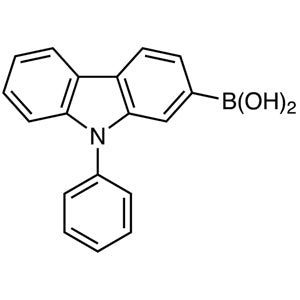
- TCI P2169 1001911-63-2 9-Phenylcarbazole-2-boronic Acid (contains varying amounts of Anhydride)
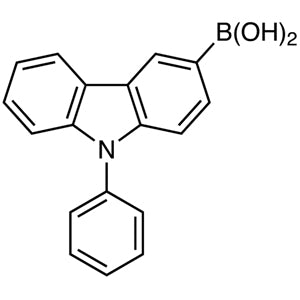
- TCI P2001 854952-58-2 9-Phenylcarbazole-3-boronic Acid (contains varying amounts of Anhydride)
- TCI C2967 864377-33-3 3-(9H-Carbazol-9-yl)phenylboronic Acid (contains varying amounts of Anhydride)
- TCI C2926 419536-33-7 4-(9H-Carbazol-9-yl)phenylboronic Acid (contains varying amounts of Anhydride)
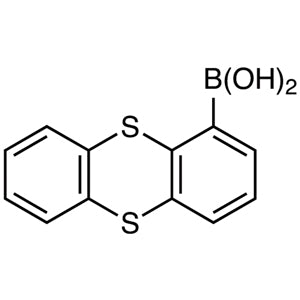
- TCI T3706 108847-76-3 1-Thianthrenylboronic Acid (contains varying amounts of Anhydride)
- TCI T2621 160032-40-6 Thieno[3,2-b]thiophene-2-boronic Acid (contains varying amounts of Anhydride)
- Suzuki-Miyaura cross-coupling: the boronic acid group at the 2-position reacts selectively with aryl or heteroaryl halides under palladium catalysis to give thiophene-containing biaryl frameworks.
- Synthesis of organic electronic materials: thiophene units are common in conjugated systems, so this reagent helps build precursors for semiconductors, dyes, and other functional organic materials.
- Medicinal chemistry and bioactive candidates: the thiophene core and the reactive aldehyde let researchers build and then diversify heterocyclic scaffolds for exploring bioactive compounds.
- Reductive amination and imine formation: after coupling, the formyl group at the 5-position stays available for reaction with amines, which makes it easy to add nitrogen-containing substituents.
- Condensation and Wittig reactions: the aldehyde group allows chain extension and alkene formation, so stepwise synthetic routes can proceed without adding extra functional groups.
| Brand | TCI (product code F0549) |
|---|---|
| CAS number | 4347-33-5 |
| Molecular formula | — |
| Purity | — |
| Category | Chemistry > Building Blocks > Heterocyclic Building Blocks |
| Pack sizes | see the available options on the product listing |
| Physical form | — |
| Storage | follow the conditions on the TCI label and Safety Data Sheet |
- Composition note: contains varying amounts of anhydride (boroxine), which is typical of boronic acids
Store this compound in its original, tightly closed container in a cool, dry, well-ventilated place, away from heat sources and direct sunlight. Follow the storage conditions given on the TCI label and Safety Data Sheet. Boronic acids can dehydrate to form anhydrides, and the aldehyde group may be sensitive to air and moisture, so reseal the container promptly after each use. Handle the material in a fume hood. Wear suitable gloves, safety glasses, and a laboratory coat, and avoid inhaling dust or letting it touch skin or eyes. Dispose of waste according to local regulations and your institution's chemical waste procedures.
—
Produk Terkait
-
9-Phenylcarbazole-2-boronicAcid(containsvaryingamountsofAnhydride) TCI P2169
Regular price From Rp 530.250,00Regular priceRp 386.400,00Sale price From Rp 530.250,00 -
9-Phenylcarbazole-3-boronicAcid(containsvaryingamountsofAnhydride) TCI P2001
Regular price From Rp 1.723.050,00Regular priceRp 1.220.100,00Sale price From Rp 1.723.050,00 -
3-(9H-Carbazol-9-yl)phenylboronicAcid(containsvaryingamountsofAnhydride) TCI C2967
Regular price From Rp 1.298.850,00Regular priceRp 924.000,00Sale price From Rp 1.298.850,00 -
4-(9H-Carbazol-9-yl)phenylboronicAcid(containsvaryingamountsofAnhydride) TCI C2926
Regular price From Rp 1.538.250,00Regular priceRp 1.090.950,00Sale price From Rp 1.538.250,00 -
1-ThianthrenylboronicAcid(containsvaryingamountsofAnhydride) TCI T3706
Regular price From Rp 662.550,00Regular priceRp 478.800,00Sale price From Rp 662.550,00 -
Thieno[3,2-b]thiophene-2-boronicAcid(containsvaryingamountsofAnhydride) TCI T2621
Regular price Rp 5.883.150,00Regular priceRp 4.129.650,00Sale price Rp 5.883.150,00 -
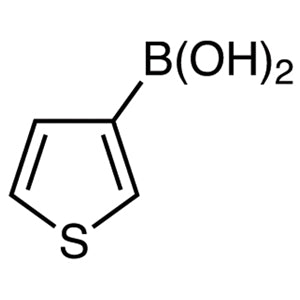
3-ThiopheneboronicAcid(containsvaryingamountsofAnhydride) TCI T1975
Regular price From Rp 875.700,00Regular priceRp 627.900,00Sale price From Rp 875.700,00