3-(4-Bromophenyl)-9-phenylcarbazole is a complex chemical compound widely used in laboratory settings, particularly in organic chemistry research. It serves as a building block for the synthesis of heterocyclic compounds, playing a crucial role in molecular modification and structural substitution reactions. This compound is essential in experiments that require the creation of molecules with specific functional groups or structural features, making it a versatile tool for chemists. Its presence in various research fields highlights its importance in advancing chemical knowledge and innovation.
The compound’s unique molecular structure, featuring bromine and phenyl groups, contributes to its high reactivity and specificity. These properties make it a preferred choice for researchers aiming to achieve controlled chemical transformations. The presence of bromine enhances its ability to participate in substitution reactions, while the phenyl groups provide stability and compatibility with a range of synthetic methods. These characteristics ensure that it remains a valuable resource in both academic and industrial laboratory environments.
In Indonesian laboratories, 3-(4-Bromophenyl)-9-phenylcarbazole is commonly used in organic chemistry research, especially in pharmacology, material science, and environmental chemistry. Local researchers frequently utilize this compound for the development of new substances or the modification of existing ones, aligning with the needs of various scientific investigations. Its application extends to both fundamental and applied research, supporting a wide array of experimental goals.
TCI brochures (PDF)
- Carbazoles 2025-06-27 · p. 5
- Building Blocks for Organic Semiconductor 2026-03-24 · p. 18
Related TCI products
- Organic synthesis research benefits from this compound due to its reactivity and structural versatility, enabling the creation of complex heterocyclic molecules.
- Pharmaceutical development utilizes it for the synthesis of bioactive compounds, supporting drug discovery and formulation processes.
- Material science applications leverage its molecular structure for the design of advanced polymers and functional materials.
- Environmental chemistry studies employ it to investigate the behavior of organic pollutants in different chemical environments.
- Academic research in chemistry uses it as a key reagent for teaching and experimental purposes, enhancing understanding of synthetic pathways.
| Brand | TCI |
|---|---|
| CAS number | 1028647-93-9 |
| Molecular formula | — |
| Purity | — |
| Category | Chemistry > Building Blocks > Heterocyclic Building Blocks |
| Pack sizes | — |
| Physical form | — |
| Storage | Store in a cool, dry place away from light |
This compound should be stored in a cool, dry environment, away from direct sunlight and sources of heat. It is recommended to use airtight containers to prevent moisture absorption and contamination. Due to its reactivity, it should be handled with appropriate personal protective equipment, such as gloves and safety goggles. Storage conditions should ensure stability and maintain the compound’s integrity for extended periods. Proper labeling and secure storage are essential to prevent accidental exposure and ensure safe laboratory practices.
—
Produk Terkait
-
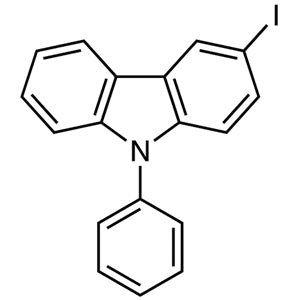
3-Iodo-9-phenylcarbazole TCI I0913
Regular price From Rp 1.008.000,00Regular priceRp 720.300,00Sale price From Rp 1.008.000,00 -
3-Bromo-6,9-diphenylcarbazole TCI B4795
Regular price From Rp 742.350,00Regular priceRp 534.450,00Sale price From Rp 742.350,00 -
2-Bromo-9-phenylcarbazole TCI B4439
Regular price From Rp 2.013.900,00Regular priceRp 1.423.800,00Sale price From Rp 2.013.900,00 -
3-Bromo-9-phenylcarbazole TCI B3908
Regular price From Rp 1.033.200,00Regular priceRp 738.150,00Sale price From Rp 1.033.200,00 -
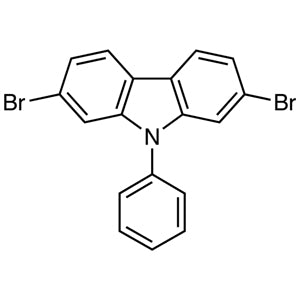
2,7-Dibromo-9-phenylcarbazole TCI D4832
Regular price From Rp 955.500,00Regular priceRp 683.550,00Sale price From Rp 955.500,00 -
3,6-Diiodo-9-phenylcarbazole TCI D4543
Regular price From Rp 1.618.050,00Regular priceRp 1.146.600,00Sale price From Rp 1.618.050,00 -
2-(2-Bromophenyl)-9-phenyl-9H-carbazole TCI B5437
Regular price From Rp 1.246.350,00Regular priceRp 887.250,00Sale price From Rp 1.246.350,00 -
9-(4-Bromophenyl)-3,6-di-tert-butylcarbazole TCI B5313
Regular price From Rp 2.969.400,00Regular priceRp 2.091.600,00Sale price From Rp 2.969.400,00