3-Bromo-9-phenylcarbazole is a chemical compound widely used in organic synthesis reactions, particularly in the formation of complex heterocyclic compounds. As a key building block in synthetic chemistry, it plays a crucial role in the development of new molecular structures with specific functional properties. Its unique chemical structure, featuring a bromo group at the 3-position and an aromatic carbazole core, makes it a versatile reagent for various synthetic strategies. This compound is commonly utilized in research settings to explore the reactivity and structural behavior of aromatic systems, supporting advancements in both academic and industrial chemistry.
The compound's stability under controlled conditions, combined with its reactivity in substitution, coupling, and electrophilic reactions, makes it a preferred choice for synthetic chemists. Its bromo substituent provides a reactive site for further functionalization, enabling the synthesis of a wide range of derivatives. The aromatic nature of the carbazole ring contributes to the molecule's overall stability, allowing it to be used in diverse experimental conditions. These characteristics make it a reliable and effective reagent for laboratory applications, especially in organic synthesis and material science.
In Indonesian laboratories, 3-Bromo-9-phenylcarbazole is frequently used in organic chemistry research, particularly in the development of new compounds with applications in pharmaceuticals, materials science, and environmental studies. Its role as a building block supports the creation of compounds with tailored properties, making it an essential component in the pursuit of scientific innovation and discovery.
TCI brochures (PDF)
- Carbazoles 2025-06-27 · p. 5
- Building Blocks for Organic Semiconductor 2026-03-24 · p. 18
Related TCI products
- TCI B4439 94994-62-4 2-Bromo-9-phenylcarbazole
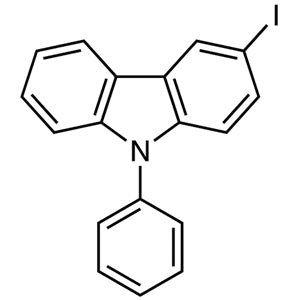
- TCI I0913 502161-03-7 3-Iodo-9-phenylcarbazole
- TCI B4795 1160294-85-8 3-Bromo-6,9-diphenylcarbazole
- TCI B4452 1028647-93-9 3-(4-Bromophenyl)-9-phenylcarbazole
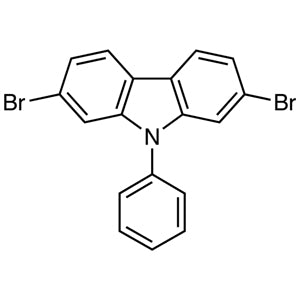
- TCI D4832 444796-09-2 2,7-Dibromo-9-phenylcarbazole
- TCI D4543 57103-21-6 3,6-Diiodo-9-phenylcarbazole
- Organic synthesis reactions where bromo substituents are needed for further functionalization
- Development of new heterocyclic compounds with specific structural and functional properties
- Research into the reactivity and stability of aromatic systems in synthetic chemistry
- Preparation of pharmaceutical intermediates requiring aromatic and brominated functionalities
- Investigation of material properties through the synthesis of complex organic structures
| Brand | TCI |
|---|---|
| CAS number | 1153-85-1 |
| Molecular formula | — |
| Purity | — |
| Category | Chemistry > Building Blocks > Heterocyclic Building Blocks |
| Pack sizes | Available in standard laboratory quantities |
| Physical form | Solid, crystalline |
| Storage | Store in a cool, dry place away from light |
3-Bromo-9-phenylcarbazole should be stored in a cool, dry environment, away from direct light and sources of heat. It is recommended to keep the compound in a sealed container to prevent moisture absorption and contamination. Due to its brominated nature, it should be handled with care, using appropriate personal protective equipment such as gloves and safety goggles. It is advisable to store it in a well-ventilated area to minimize exposure to vapors. The compound is generally stable under standard laboratory conditions but should be kept away from incompatible substances like strong oxidizers. Proper labeling and storage practices are essential to ensure safe handling and long-term preservation of the material.
—
Produk Terkait
-
2-Bromo-9-phenylcarbazole TCI B4439
Regular price From Rp 2.013.900,00Regular priceRp 1.423.800,00Sale price From Rp 2.013.900,00 -
3-Iodo-9-phenylcarbazole TCI I0913
Regular price From Rp 1.008.000,00Regular priceRp 720.300,00Sale price From Rp 1.008.000,00 -
3-Bromo-6,9-diphenylcarbazole TCI B4795
Regular price From Rp 742.350,00Regular priceRp 534.450,00Sale price From Rp 742.350,00 -
3-(4-Bromophenyl)-9-phenylcarbazole TCI B4452
Regular price From Rp 530.250,00Regular priceRp 386.400,00Sale price From Rp 530.250,00 -
2,7-Dibromo-9-phenylcarbazole TCI D4832
Regular price From Rp 955.500,00Regular priceRp 683.550,00Sale price From Rp 955.500,00 -
3,6-Diiodo-9-phenylcarbazole TCI D4543
Regular price From Rp 1.618.050,00Regular priceRp 1.146.600,00Sale price From Rp 1.618.050,00 -
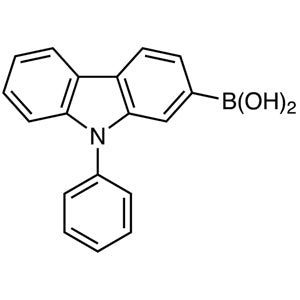
9-Phenylcarbazole-2-boronicAcid(containsvaryingamountsofAnhydride) TCI P2169
Regular price From Rp 530.250,00Regular priceRp 386.400,00Sale price From Rp 530.250,00 -
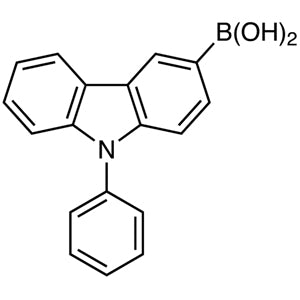
9-Phenylcarbazole-3-boronicAcid(containsvaryingamountsofAnhydride) TCI P2001
Regular price From Rp 1.723.050,00Regular priceRp 1.220.100,00Sale price From Rp 1.723.050,00