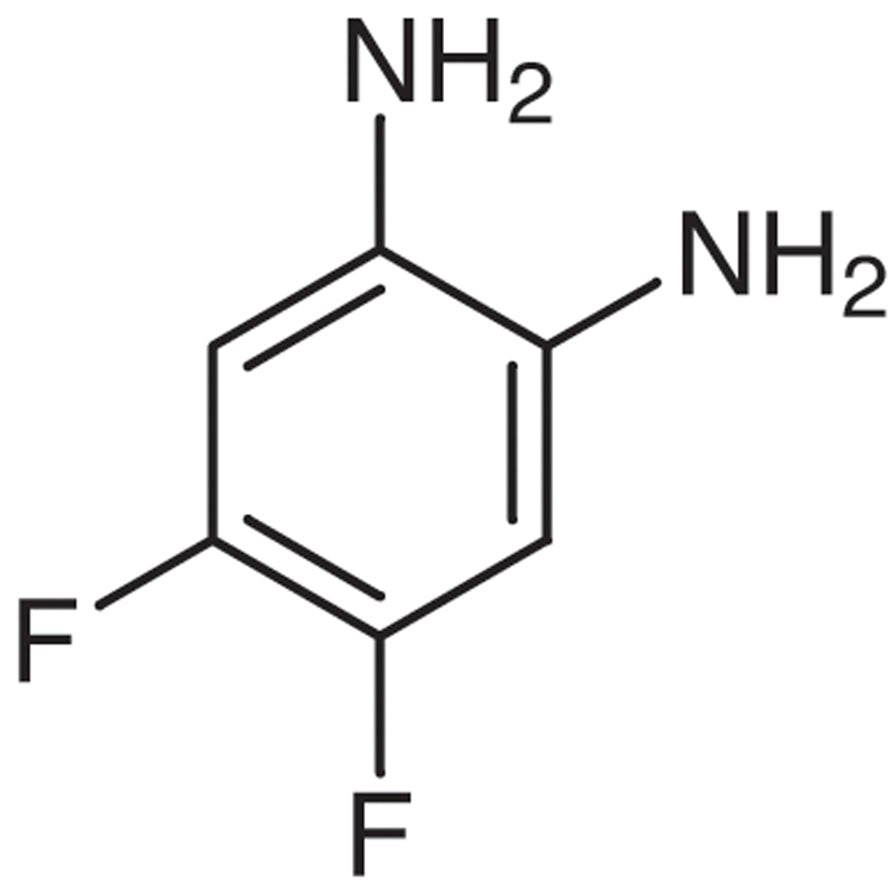
TCI D3729, or 4,5-Difluoro-1,2-phenylenediamine, is an ortho-phenylenediamine derivative that carries two adjacent fluorine atoms at positions 4 and 5 of the benzene ring. In the laboratory, this compound serves as a high-value fluorinated building block because it combines two features at once: an ortho amine pair that is ready to close a heterocyclic ring, and a difluorination pattern that markedly lowers the electron density of the ring. That combination is difficult to construct from simpler starting materials, so its availability as a ready-to-use starting material saves a considerable number of synthetic steps.
The property that makes it a frequently preferred choice is its ability to generate a strong electron-acceptor unit once condensed into a difluorinated quinoxaline. The difluoroquinoxaline unit is widely recognized in materials research as a component of donor–acceptor polymers for organic solar cells and transistors. In addition, the two fluorine atoms improve the oxidative stability as well as the metabolic stability of derivative compounds, influence solubility and molecular packing in the solid phase, and at the same time provide a distinctive 19F NMR signal that allows reaction tracking and confident structure determination.
In Indonesian laboratories, this compound is typically used in university and institutional research settings that work on organic synthesis, heterocyclic chemistry, and functional materials. It is normally purchased in small research quantities for multi-step route development rather than for bulk production, and it supports work in which a fluorinated aromatic diamine core would otherwise require an impractical in-house preparation. Researchers value having it on hand as a defined starting point for building fluorinated heterocycles.
TCI brochures (PDF)
- Fluorination Reagents, Fluorinated Building Blocks 2026-03-18 · p. 28
Related TCI products
- TCI B5057 115467-07-7 5-Bromo-1,3-difluoro-2-(trifluoromethoxy)benzene
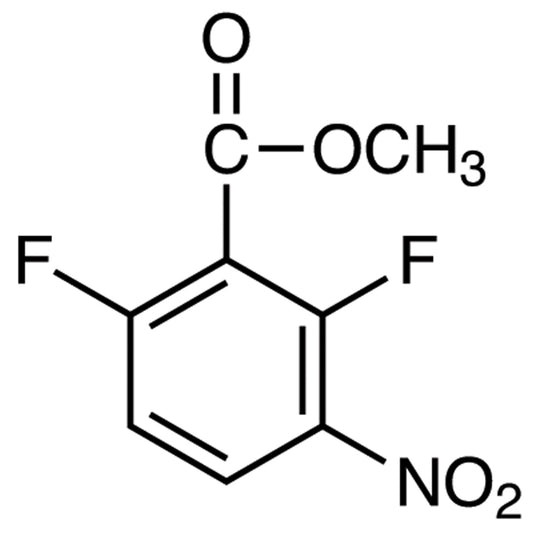
- TCI M2749 84832-01-9 Methyl 2,6-Difluoro-3-nitrobenzoate
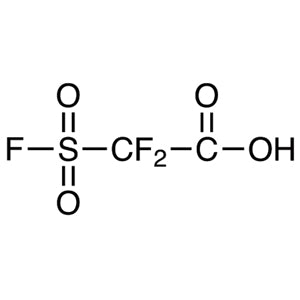
- TCI F0500 1717-59-5 2,2-Difluoro-2-(fluorosulfonyl)acetic Acid
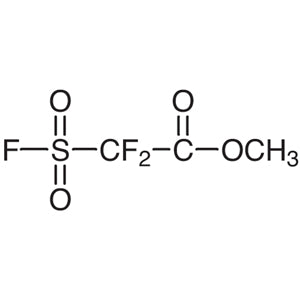
- TCI F0311 680-15-9 Methyl Difluoro(fluorosulfonyl)acetate
- TCI E0547 141546-97-6 Ethyl 3-Ethoxy-2,2-difluoro-3-hydroxypropionate
- TCI D6376 1380300-82-2 4,4-Difluoro-1-isobutylcyclohexan-1-amine Hydrochloride
- Difluoroquinoxaline synthesis — the ortho amine pair condenses directly to close the quinoxaline ring, giving the strong electron-acceptor unit needed for downstream conjugated systems without extra ring-forming steps.
- Donor–acceptor polymer research for organic solar cells — the difluoroquinoxaline unit derived from this diamine is widely used as the acceptor segment in conjugated polymers studied for organic photovoltaic devices.
- Organic transistor material development — the same difluorinated acceptor units are applied in polymer semiconductors for transistors, where the lowered ring electron density is central to the desired electronic behaviour.
- Fluorinated heterocycle route development — the compound provides a ready-made difluorinated aromatic diamine core that would otherwise be difficult to construct from simple starting materials, shortening multi-step synthetic sequences.
- Structure confirmation and reaction monitoring by 19F NMR — the two adjacent fluorine atoms give a distinctive 19F NMR signal used to follow reaction progress and confirm the structures of derivatives.
| Brand | TCI |
|---|---|
| CAS number | 76179-40-3 |
| Molecular formula | — |
| Purity | — |
| Category | Chemistry > Building Blocks > Fluorinated Building Blocks |
| Pack sizes | available in research-scale laboratory pack sizes; please confirm the currently offered pack size when ordering |
| Physical form | — |
| Storage | store in a tightly closed original container in a cool, dark, well-ventilated place, following the manufacturer's label and safety data sheet |
- Chemical class: ortho-phenylenediamine derivative with fluorine substitution at the 4 and 5 positions
Store the material in its tightly closed original container in a cool, dry, dark and well-ventilated place, away from heat, ignition sources and incompatible chemicals such as strong oxidizing agents. Aromatic diamines are sensitive to air and light, so keep the container properly sealed and minimize the time it remains open; amber glass or the supplier's original packaging is suitable, and transfers are best carried out promptly. Handle the compound in a functioning fume hood while wearing safety goggles, a laboratory coat and chemically resistant gloves, and avoid inhalation of dust as well as contact with skin and eyes. Weigh and transfer only the quantity required, label all secondary containers clearly, and clean spills immediately using approved laboratory procedures. Always consult the manufacturer's safety data sheet before use, and dispose of residues and contaminated materials as chemical waste in accordance with institutional and local regulations.
—
Produk Terkait
-
5-Bromo-1,3-difluoro-2-(trifluoromethoxy)benzene TCI B5057
Regular price From Rp 1.087.800,00Regular price -
Methyl2,6-Difluoro-3-nitrobenzoate TCI M2749
Regular price From Rp 557.550,00Regular price -
2,2-Difluoro-2-(fluorosulfonyl)aceticAcid TCI F0500
Regular price Rp 1.856.400,00Regular price -
MethylDifluoro(fluorosulfonyl)acetate TCI F0311
Regular price From Rp 1.273.650,00Regular price -
Ethyl3-Ethoxy-2,2-difluoro-3-hydroxypropionate TCI E0547
Regular price Rp 6.360.900,00Regular price -
4,4-Difluoro-1-isobutylcyclohexan-1-amineHydrochloride TCI D6376
Regular price Rp 5.910.450,00Regular price -
(5,6-Difluoro-3-oxo-2,3-dihydro-1H-inden-1-ylidene)malononitrile TCI D5815
Regular price Rp 9.539.250,00Regular price -
2,4-Difluoro-3-methoxybenzoicAcid TCI D5309
Regular price Rp 1.908.900,00Regular price