Diethyl 2,5-Dibromoadipate is an adipate diester that carries one bromine atom at each position alpha to the two ester groups. Its symmetrical structure, built on a six-carbon main chain, makes it a versatile non-heterocyclic building block in organic synthesis laboratories. Researchers use it as a starting material for double alkylation reactions, cyclization, and the construction of five-membered rings, because its two reactive ends can react sequentially with a single bifunctional nucleophile, allowing a cyclic framework to be assembled in a relatively compact sequence of steps.
The characteristic that makes this reagent a preferred choice is the high reactivity of the carbon-bromine bonds at the alpha position to the esters. The neighbouring carbonyl group stabilises both the substitution transition state and any radical species formed, so the material reacts readily with amines, thiols, alkoxides, and carbanions under conditions that are not extreme. The symmetry of the molecule ensures that the cyclization products formed carry two ester groups at equivalent positions, so subsequent transformations such as hydrolysis, decarboxylation, or reduction proceed uniformly. The alpha-bromoester motif is also well known as an initiator in polymerization work.
In Indonesian laboratories, this building block is typically used in university and institutional research groups working on organic synthesis, medicinal chemistry intermediates, and polymer studies. It suits benchtop-scale exploratory work, where a symmetrical difunctional electrophile shortens a synthetic route, as well as method development and teaching laboratories that demonstrate ring-forming reactions. Supplied under the TCI brand, it fits research groups that require a consistent, well-documented reagent for reproducible synthetic procedures.
Related TCI products
- TCI A0231 2049-80-1 Diethyl Allylmalonate
- TCI A0089 762-21-0 Diethyl Acetylenedicarboxylate
- TCI A0055 105-50-0 Diethyl 1,3-Acetonedicarboxylate
- TCI T1401 81172-89-6 Terephthalaldehyde Mono(diethyl Acetal)
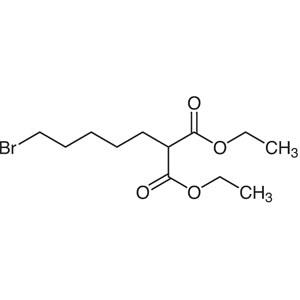
- TCI B2083 1906-95-2 Diethyl (5-Bromopentyl)malonate
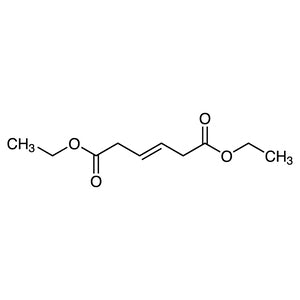
- TCI B1592 57042-08-7 Diethyl trans-3-Hexenedioate
- Double alkylation reactions: the two alpha-bromo positions act as independent electrophilic sites, allowing a single nucleophile or two different nucleophiles to be introduced in a controlled sequence.
- Five-membered ring construction: sequential reaction of both reactive ends with one bifunctional nucleophile closes a cyclic framework in a relatively short and efficient synthetic sequence.
- Cyclization with bifunctional nucleophiles: amines, thiols, and alkoxides react at both bromine-bearing carbons under moderate conditions, giving cyclic products with two equivalently placed ester groups.
- Preparation of symmetrical diester intermediates: the resulting ester pairs undergo hydrolysis, decarboxylation, or reduction uniformly, simplifying downstream transformation planning in multi-step synthetic routes.
- Polymerization initiation studies: the alpha-bromoester motif is a recognised initiator structure, making this compound useful for laboratories investigating controlled radical polymerization chemistry.
| Brand | TCI |
|---|---|
| CAS number | 869-10-3 |
| Molecular formula | — |
| Purity | — |
| Category | Chemistry > Building Blocks > Non-Heterocyclic Building Blocks |
| Pack sizes | available in standard TCI research and laboratory pack sizes; please confirm the required size when ordering. |
| Physical form | — |
| Storage | store in a cool, dry place in a tightly closed original container, away from light, heat, and incompatible reagents. |
- Product code: D3965
Store the container tightly closed in a cool, dry, and well-ventilated area, protected from direct sunlight, heat sources, and moisture. Keep the material in its original supplier packaging or in a compatible tightly sealed glass container, clearly labelled and segregated from strong bases, strong oxidising agents, and reactive nucleophiles. Handle in a fume hood using nitrile gloves, safety goggles, and a laboratory coat, since alpha-bromoesters are reactive alkylating species that may irritate skin, eyes, and the respiratory tract. Avoid generating vapours or aerosols, transfer with clean dry glassware to prevent hydrolysis, and close the container promptly after use. Dispose of residues and contaminated materials as halogenated organic waste in line with your institution's chemical waste procedures, and consult the manufacturer's safety data sheet before first use.
—
Produk Terkait
-
DiethylAllylmalonate TCI A0231
Regular price From Rp 2.068.500,00Regular price -
DiethylAcetylenedicarboxylate TCI A0089
Regular price From Rp 2.837.100,00Regular price -
Diethyl1,3-Acetonedicarboxylate TCI A0055
Regular price From Rp 1.140.300,00Regular price -
TerephthalaldehydeMono(diethylAcetal) TCI T1401
Regular price Rp 3.578.400,00Regular price -
Diethyl(5-Bromopentyl)malonate TCI B2083
Regular price From Rp 2.254.350,00Regular price -
Diethyltrans-3-Hexenedioate TCI B1592
Regular price Rp 5.062.050,00Regular price -
Diethyl2,2-Bis(hydroxymethyl)malonate TCI B1492
Regular price From Rp 3.021.900,00Regular price -
DiethylBromomalonate TCI B1205
Regular price From Rp 1.008.000,00Regular price