TCI D4345 2,6-Dimethylphenoxyacetic Acid is an aryloxyacetic acid built from a benzene ring bearing two methyl groups at the ortho positions, connected through an ether oxygen atom to an acetic acid chain. The compound is a classic building block in synthetic organic chemistry and frequently serves as the starting point for preparing amides, esters, and heterocyclic derivatives. Its role in the laboratory is to supply an aromatic framework that already carries a reaction-ready carboxylic acid group, allowing researchers to move directly to the coupling stage without first having to construct the aryl ether bond, a step that normally demands harsher reaction conditions.
The principal characteristic that makes this reagent a preferred choice is the steric effect of the two methyl groups at the ortho positions flanking the ether linkage. This spatial hindrance restricts free rotation and shields certain positions on the ring from electrophilic attack, producing a distinctive and predictable reactivity pattern that chemists can plan around. The carboxylic acid group itself is readily activated into an acid chloride, a mixed anhydride, or an active ester for amide bond formation. As a TCI reagent, lot-to-lot quality consistency is supported by analytical documentation, an important factor for work that must be reproducible.
In Indonesian laboratories, this building block is typically used in university and institutional research groups working on organic synthesis, medicinal chemistry, and materials development, as well as in industrial R&D units preparing derivative libraries. Because the aryl ether bond is already in place, teams with limited access to specialised high-temperature or metal-catalysed etherification equipment can still carry out multi-step syntheses efficiently, making it a practical choice for local research settings.
Related TCI products
- Amide bond formation — the carboxylic acid group is easily activated as an acid chloride, mixed anhydride, or active ester, letting researchers couple the sterically defined aryloxy framework to a wide range of amines.
- Ester synthesis — the same reaction-ready carboxylic acid allows straightforward esterification, giving access to derivatives that retain the hindered 2,6-dimethylphenoxy motif without additional protection strategies.
- Heterocyclic derivative preparation — the compound serves as a starting material for constructing heterocyclic scaffolds, since the acid function can be elaborated while the aryl ether portion remains intact throughout the sequence.
- Structure–activity relationship studies — the predictable reactivity created by ortho-methyl steric hindrance makes this an informative scaffold when systematically varying substituents across a series of analogues.
- Multi-step synthetic route development — supplying the aryl ether bond pre-formed removes a demanding step from the sequence, so method development work can concentrate on the later coupling and functionalisation stages.
| Brand | TCI (Tokyo Chemical Industry) |
|---|---|
| CAS number | 13335-71-2 |
| Molecular formula | — |
| Purity | — |
| Category | Chemistry > Building Blocks > Non-Heterocyclic Building Blocks |
| Pack sizes | available in standard TCI research pack sizes; please refer to the current catalogue listing |
| Physical form | — |
| Storage | keep in the tightly closed original container as directed on the product label and accompanying documentation |
- Chemical name: 2,6-Dimethylphenoxyacetic Acid
- Catalogue code: D4345
Store the container tightly closed in a cool, dry, well-ventilated area away from moisture, direct sunlight, and incompatible materials, following the conditions stated on the product label and safety data sheet. Keep the material in its original supplier container, or transfer it only to clean, chemically resistant, clearly labelled vessels. Handle in a fume hood using safety goggles, gloves, and a laboratory coat, and avoid generating dust during weighing. Close the container promptly after use, keep the accompanying analytical documentation with the lot for traceability, and dispose of residues and contaminated materials in accordance with institutional chemical waste procedures.
—
Produk Terkait
-
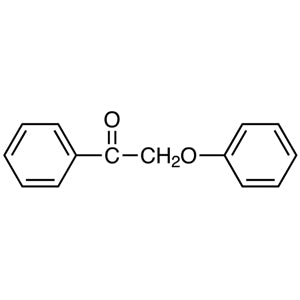
2-Phenoxyacetophenone TCI P2121
Regular price Rp 1.298.850,00Regular price -
2,4,6-TrichlorophenoxyaceticAcid TCI T1063
Regular price From Rp 3.232.950,00Regular price -
4-(4-Methylphenoxy)benzoicAcid TCI T3391
Regular price From Rp 2.889.600,00Regular price -
2-Bromo-4,5-dimethylphenol TCI B5394
Regular price From Rp 3.127.950,00Regular price -
4-Bromo-3-methylphenol TCI B3658
Regular price From Rp 1.644.300,00Regular price -
4-Bromo-3,5-dimethylphenol TCI B2146
Regular price From Rp 1.087.800,00Regular price -
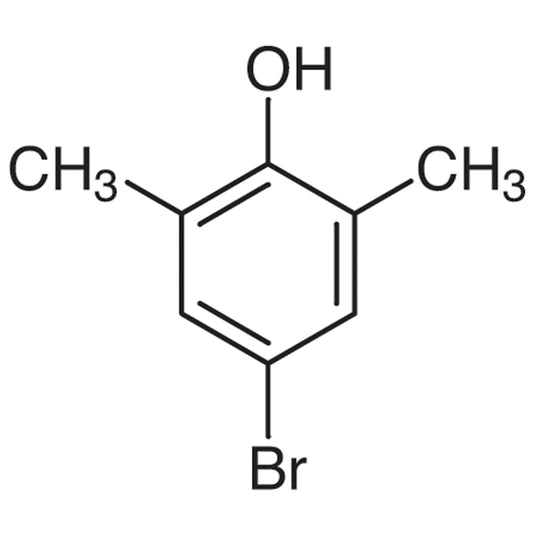
4-Bromo-2,6-dimethylphenol TCI B2060
Regular price From Rp 3.260.250,00Regular price -
2-tert-Butyl-4-ethylphenol TCI B1810
Regular price Rp 795.900,00Regular price