
![Dichloro[8-(diisopropylphosphino)-5-fluoro-2-(2-pyridinyl)quinoline]iron(II) (CAS 2247605-87-2) - TCI D5886 - AMI Scientific](http://amiscientific.com/cdn/shop/files/TCI2510D5886.jpg?v=1767109391&width=1946)
![Dichloro[8-(diisopropylphosphino)-5-fluoro-2-(2-pyridinyl)quinoline]iron(II) (CAS 2247605-87-2) - TCI D5886 - AMI Scientific](http://amiscientific.com/cdn/shop/files/TCI2510D5886.jpg?v=1767109391&width=1445)
TCI D5886 Dichloro[8-(diisopropylphosphino)-5-fluoro-2-(2-pyridinyl)quinoline]iron(II), CAS 2247605-87-2, is a divalent iron complex bound by a multidentate ligand built on a functionalised quinoline framework. The ligand brings three coordinating elements together within a single scaffold: an electron-rich diisopropylphosphine group, a quinoline nitrogen, and a pyridine nitrogen, together with a fluorine substituent on the aromatic backbone. The complex is classified under catalysis for C–H bond activation, a field that attracts considerable attention in modern synthetic chemistry because it allows new bonds to be formed directly from carbon–hydrogen bonds that are normally inert.
The added value of this catalyst lies in its use of iron as the metal centre. Iron is an abundant and relatively inexpensive metal with a milder toxicity profile than noble metals such as palladium, rhodium, or iridium, which makes it an attractive direction for more sustainable catalysis development. The rigid ligand framework, with its combined phosphorus and nitrogen donor arrangement, helps to control the geometry around the metal centre and to stabilise the active species throughout the catalytic cycle. The isopropyl substituents on phosphorus contribute to the steric environment surrounding the metal, while the fluorine substituent modulates the electronic character of the aromatic system.
In Indonesian laboratories, a well-defined complex of this type is typically used in university and institutional research settings where synthetic methodology and catalysis are studied. It suits work in organic synthesis groups, chemistry departments, and research institutes exploring earth-abundant metal catalysis as an alternative to precious metal systems. Because it arrives as a discrete, pre-formed complex, it removes the need for in-house ligand–metal assembly and gives researchers a reproducible starting point for comparative studies.
- C–H bond activation studies — the complex is supplied specifically for this catalysis category, giving researchers a defined iron-based system for converting normally inert carbon–hydrogen bonds into new functional groups.
- Earth-abundant metal catalysis research — iron's abundance, lower cost, and milder toxicity profile make this complex a direct comparison point against palladium, rhodium, or iridium catalyst systems in methodology work.
- Synthetic methodology development — the pre-formed, well-defined structure allows chemists to test and refine reaction conditions without first preparing and characterising the ligand–metal combination themselves.
- Ligand design and coordination chemistry investigations — the tridentate phosphine–quinoline–pyridine donor set offers a concrete example for studying how mixed P,N,N donors control geometry around a divalent iron centre.
- Structure–activity relationship experiments — the fluorine substituent on the aromatic backbone and the isopropyl groups on phosphorus provide defined electronic and steric handles for correlating ligand features with catalytic behaviour.
| Brand | TCI (Tokyo Chemical Industry) |
|---|---|
| CAS number | 2247605-87-2 |
| Molecular formula | — |
| Purity | — |
| Category | Chemistry > Catalysis and Inorganic Chemistry > C-H Activation [Catalysis] |
| Pack sizes | available in the research-scale pack sizes listed by the manufacturer for this catalogue number |
| Physical form | — |
| Storage | follow the storage conditions stated on the manufacturer's label and safety data sheet |
- Catalogue number: D5886
Store the material in its original tightly closed container in a cool, dry, and well-ventilated place, away from heat sources, direct sunlight, and incompatible chemicals, and follow the specific storage conditions printed on the manufacturer's label and safety data sheet. Phosphine-containing metal complexes are generally handled under an inert atmosphere and protected from moisture and air where the manufacturer indicates this is required. Handle in a fume hood using appropriate personal protective equipment, including safety glasses, gloves, and a laboratory coat. Keep containers clearly labelled, avoid generating dust, and dispose of residues in accordance with applicable laboratory waste regulations. Consult the safety data sheet before first use.
—
Produk Terkait
-
6-Bromo-2-chloroquinoline TCI B5628
Regular price From Rp 1.565.550,00Regular price -
Brequinar TCI B5707
Regular price From Rp 3.180.450,00Regular price -
BicinchoninicAcidDisodiumSalt[forProteinResearch] TCI B5838
Regular price Rp 5.565.000,00Regular price -
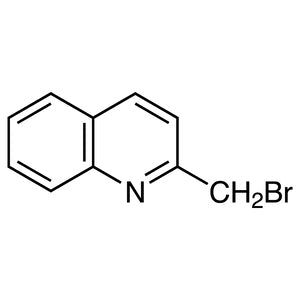
2-(Bromomethyl)quinoline TCI B6387
Regular price Rp 2.969.400,00Regular price -
DibucaineHydrochloride TCI B6467
Regular price From Rp 1.060.500,00Regular price -
SB222200 TCI B6551
Regular price Rp 4.584.300,00Regular price -
tert-Butyl7'-Fluoro-1',4'-dihydro-2'H-spiro[piperidine-4,3'-quinoline]-1-carboxylate TCI B6776
Regular price Rp 7.182.000,00Regular price -
tert-Butyl5'-Fluoro-1',4'-dihydro-2'H-spiro[piperidine-4,3'-quinoline]-1-carboxylate TCI B6777
Regular price Rp 7.182.000,00Regular price


![Bicinchoninic Acid Disodium Salt [for Protein Research] (CAS 979-88-4) - TCI B5838 - AMI Scientific](http://amiscientific.com/cdn/shop/files/TCI2510B5838.jpg?v=1769180237&width=533)

![tert-Butyl 7'-Fluoro-1',4'-dihydro-2'H-spiro[piperidine-4,3'-quinoline]-1-carboxylate (CAS 1402232-83-0) - TCI B6776 - AMI Scientific](http://amiscientific.com/cdn/shop/files/TCI2510B6776.jpg?v=1771058548&width=533)
![tert-Butyl 5'-Fluoro-1',4'-dihydro-2'H-spiro[piperidine-4,3'-quinoline]-1-carboxylate (CAS 1402232-95-4) - TCI B6777 - AMI Scientific](http://amiscientific.com/cdn/shop/files/TCI2510B6777.jpg?v=1768816103&width=533)