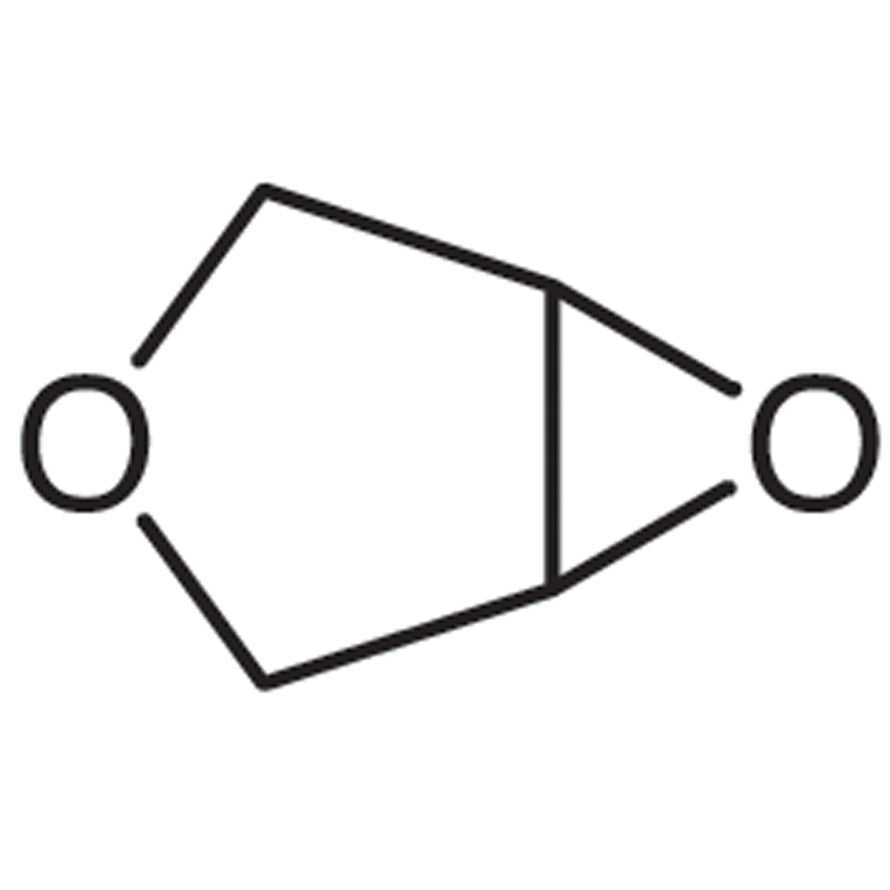
TCI E0795, 3,4-Epoxytetrahydrofuran with CAS number 285-69-8, is a bicyclic compound that combines a tetrahydrofuran ring with an epoxide ring fused at the three and four positions. Having two oxygen-containing rings within a single small molecule is precisely what makes it a highly sought-after heterocyclic building block in organic synthesis laboratories. The molecule offers a pre-formed oxolane framework together with a reactive site in the form of a strained epoxide, allowing researchers to introduce new functional groups onto a cyclic scaffold in a direct and well-directed manner.
The property that defines its usefulness is the high ring strain of the epoxide. That strain makes the epoxide readily opened by a wide range of nucleophiles — amines, alcohols, thiols, azides, and carbon nucleophiles alike — and the ring opening proceeds with clear regiochemical and stereochemical control, because attack occurs from the opposite face. The result is a tetrahydrofuran motif substituted at the three position bearing a hydroxyl group at the four position, a structural pattern that appears frequently in the design of bioactive compounds, nucleoside analogues, and antiviral drug intermediates. The efficiency of such a route is difficult for alternative approaches to match.
In Indonesian laboratories, this building block is typically used in university and institutional synthetic chemistry groups, in medicinal chemistry programmes exploring nucleoside-like scaffolds, and in pharmaceutical research units preparing intermediates on a research scale. It is generally ordered as a research-quantity reagent for exploratory route development rather than for bulk production, and it is handled alongside standard anhydrous techniques already established in most organic synthesis facilities.
Related TCI products
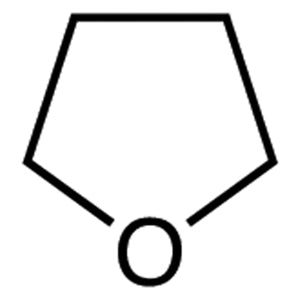
- TCI T0104 109-99-9 Tetrahydrofuran (stabilized with BHT)
- TCI E0314 3234-28-4 1,2-Epoxytetradecane
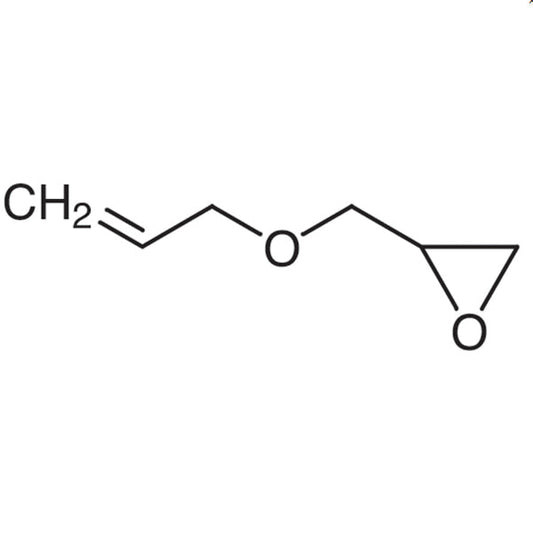
- TCI A0221 106-92-3 Allyl Glycidyl Ether
- TCI V0195 106-87-6 3-(Oxiran-2-yl)-7-oxabicyclo[410]heptane (mixture of isomers)
- TCI B4831 3101-60-8 4-tert-Butylphenyl Glycidyl Ether
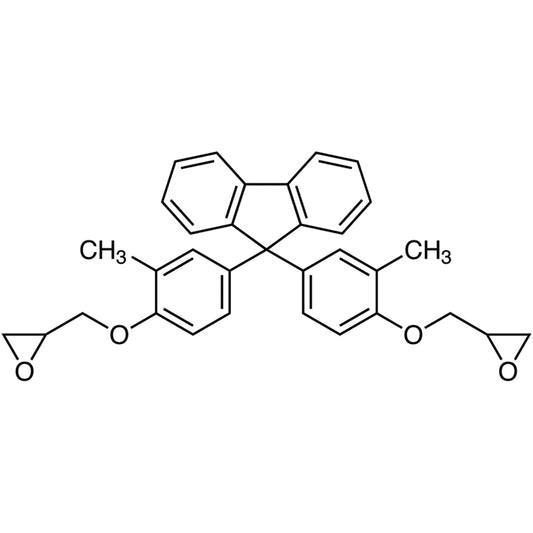
- TCI B4666 114205-89-9 9,9-Bis(4-glycidyloxy-3-methylphenyl)fluorene
- Nucleophilic ring-opening reactions — the strained epoxide is readily attacked by amines, alcohols, thiols, azides, and carbon nucleophiles, giving predictable regiochemical outcomes in a single synthetic step.
- Synthesis of nucleoside analogues — the pre-formed oxolane framework closely resembles the sugar core of nucleosides, letting researchers build analogue libraries without constructing the ring from scratch.
- Antiviral drug intermediate preparation — the three-substituted, four-hydroxy tetrahydrofuran motif generated on ring opening recurs widely among antiviral intermediates, shortening medicinal chemistry synthetic routes considerably.
- Stereocontrolled functionalisation studies — because nucleophilic attack proceeds from the face opposite the epoxide oxygen, the compound serves as a reliable substrate for teaching and probing stereochemical control.
- Bioactive compound scaffold construction — the combination of an intact heterocyclic ring and one defined reactive point makes it well suited to diversifying lead structures in discovery chemistry programmes.
| Brand | TCI (Tokyo Chemical Industry) |
|---|---|
| CAS number | 285-69-8 |
| Molecular formula | — |
| Purity | — |
| Category | Chemistry > Building Blocks > Heterocyclic Building Blocks |
| Pack sizes | research-scale catalogue pack sizes; please confirm currently available packaging when ordering |
| Physical form | — |
| Storage | — |
- Product code: E0795
- Chemical class: bicyclic heterocyclic building block containing a tetrahydrofuran ring with a fused epoxide
Store the container tightly closed in a cool, dry, well-ventilated place, away from heat sources, direct sunlight, and incompatible materials — particularly nucleophiles, acids, and bases, which can initiate ring opening of the strained epoxide. Keep the material in its original manufacturer container, or transfer it to a clean, chemically compatible, tightly sealed vessel; where anhydrous conditions are required, use septum-capped bottles under inert gas. All handling should take place in a functioning fume hood with appropriate personal protective equipment: safety goggles, chemically resistant gloves, and a laboratory coat. Avoid inhalation of vapours and contact with skin and eyes, and follow the manufacturer's safety data sheet together with local institutional chemical waste procedures for disposal.
—
Produk Terkait
-
Tetrahydrofuran(stabilizedwithBHT) TCI T0104
Regular price From Rp 477.750,00Regular price -
1,2-Epoxytetradecane TCI E0314
Regular price From Rp 903.000,00Regular price -
AllylGlycidylEther TCI A0221
Regular price From Rp 477.750,00Regular price -
3-(Oxiran-2-yl)-7-oxabicyclo[410]heptane(mixtureofisomers) TCI V0195
Regular price From Rp 3.870.300,00Regular price -
4-tert-ButylphenylGlycidylEther TCI B4831
Regular price From Rp 2.279.550,00Regular price -
9,9-Bis(4-glycidyloxy-3-methylphenyl)fluorene TCI B4666
Regular price From Rp 2.518.950,00Regular price -
9,9-Bis(4-glycidyloxyphenyl)fluorene TCI B4269
Regular price From Rp 1.035.300,00Regular price -
BenzylGlycidylEther TCI B2108
Regular price From Rp 1.510.950,00Regular price


![106-87-6 3-(Oxiran-2-yl)-7-oxabicyclo[4.1.0]heptane (mixture of isomers) - AMI Scientific](http://amiscientific.com/cdn/shop/files/TCI2510V0195.jpg?v=1767145750&width=533)