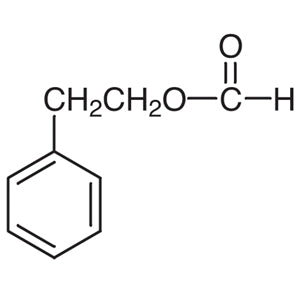
2-Phenylethyl Formate is a chemical compound widely used in organic synthesis reactions, particularly in the formation of aromatic compounds and esters. It serves as a crucial building block in laboratories, enabling the construction of complex molecular structures. This versatile reagent is essential for chemists working on a variety of synthetic pathways due to its ability to participate in esterification and hydrolysis reactions. Its stability and controlled reactivity make it a reliable choice for experimental work.
The compound’s molecular structure, consisting of a phenyl group and an ethyl group, contributes to its favorable reactivity in various chemical processes. Its stability under normal laboratory conditions ensures consistent performance in experiments. Additionally, its distinct aroma makes it suitable for applications in the fragrance and flavor industries. The compound’s resistance to degradation allows it to be stored for extended periods without losing its chemical activity.
In Indonesian laboratories, 2-Phenylethyl Formate is commonly used in pure chemical research, pharmaceutical development, and quality testing of raw materials. Its availability and reliability make it a preferred choice for both academic and industrial applications. The compound’s role in creating functional molecules supports its use in diverse scientific fields, including drug discovery and material science.
Related TCI products
- Organic synthesis reactions benefit from 2-Phenylethyl Formate due to its reactivity in esterification and hydrolysis processes.
- Pharmaceutical development utilizes this compound to create aromatic and ester-based compounds essential for drug formulations.
- Flavor and fragrance industry applications rely on its distinct aroma for the creation of synthetic aroma compounds.
- Quality control testing in chemical laboratories uses it as a standard reference for assessing purity and reactivity of similar compounds.
- Research in material science employs it for the synthesis of complex organic molecules with specific functional groups.
| Brand | TCI |
|---|---|
| CAS number | 104-62-1 |
| Molecular formula | — |
| Purity | — |
| Category | Chemistry > Building Blocks > Non-Heterocyclic Building Blocks |
| Pack sizes | Available in standard laboratory quantities |
| Physical form | Liquid |
| Storage | Store in a cool, dry place away from direct sunlight |
2-Phenylethyl Formate should be stored in a cool, dry place, away from direct sunlight and sources of heat. It is recommended to keep the compound in a tightly sealed container to prevent evaporation and contamination. Due to its chemical nature, it should be handled in a well-ventilated area to avoid inhalation of vapors. Proper personal protective equipment, such as gloves and safety goggles, should be worn when handling the compound. Avoid contact with skin and eyes, and ensure that spillage is cleaned up promptly with appropriate safety measures. The compound is non-hazardous under normal storage conditions but should be treated with care in accordance with standard laboratory safety protocols.
—
Produk Terkait
-
2-PhenylethylAcetate TCI A0692
Regular price From Rp 769.650,00Regular price -
N-(1-Phenylethyl)acetamide TCI P3170
Regular price From Rp 1.035.300,00Regular price -
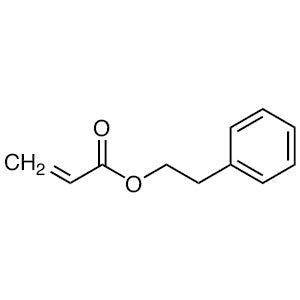
2-PhenylethylAcrylate TCI P2888
Regular price From Rp 1.538.250,00Regular price -
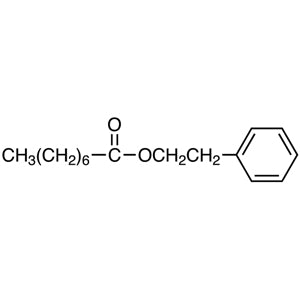
2-Phenylethyln-Octanoate TCI P2741
Regular price From Rp 1.298.850,00Regular price -
2-PhenylethylMethacrylate(stabilizedwithHQ) TCI P2714
Regular price From Rp 1.298.850,00Regular price -
2-PhenylethylIsovalerate TCI P2009
Regular price Rp 557.550,00Regular price -
2-PhenylethylIsobutyrate TCI P2008
Regular price From Rp 795.900,00Regular price -
2-PhenylethylPropionate TCI P1823
Regular price Rp 689.850,00Regular price