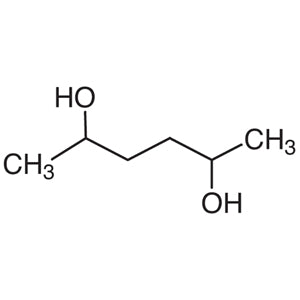
TCI H0100 2,5-Hexanediol is an aliphatic diol carrying two hydroxyl groups on the second and fifth carbon atoms of a six-carbon chain, and it presents as a liquid at room conditions. Unlike the 1,6-isomer, whose hydroxyl groups sit at the chain termini, the placement of the hydroxyl groups within the chain gives this compound two substituted carbon centres and therefore makes it chiral. As a non-heterocyclic building block, it is widely used by researchers to construct five-membered rings, chiral compounds, and a range of diol derivatives that cannot easily be obtained from other isomers.
The property that makes this material a preferred choice is the 1,4-spacing between the two hydroxyl groups, a geometry that is highly suited to cyclisation reactions that close onto a substituted tetrahydrofuran ring. This ring-closing reaction is one of the classical laboratory routes to dimethyltetrahydrofuran derivatives. The two secondary hydroxyl groups also offer reactivity that differs from that of primary alcohols — for example, slower esterification rates and oxidation products that are ketones rather than aldehydes. The presence of chiral centres further opens opportunities in asymmetric synthesis and in ligand preparation.
In Indonesian laboratories, this grade is typically drawn on in university and institutional research groups working on organic synthesis, where a well-characterised diol building block is needed for methodology studies and for preparing intermediates in-house. It suits synthesis laboratories that build small molecules step by step, teaching laboratories demonstrating alcohol reactivity, and research units exploring chiral compounds, where a consistent commercial building block is preferred over material prepared on site.
TCI brochures (PDF)
- Biomaterials Research Reagents 2025-02-19 · p. 20
- Monomers 2025-05-28 · p. 25
Related TCI products
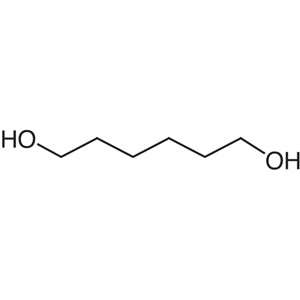
- TCI H0099 629-11-8 1,6-Hexanediol
- TCI D1167 110-03-2 2,5-Dimethyl-2,5-hexanediol
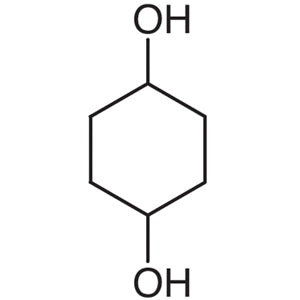
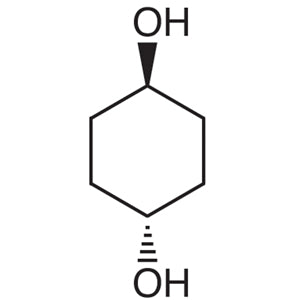
- TCI C0482 556-48-9 1,4-Cyclohexanediol (cis- and trans- mixture)
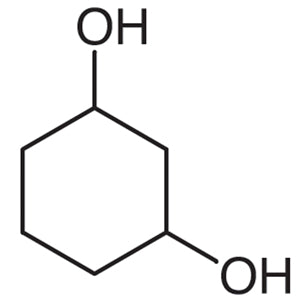
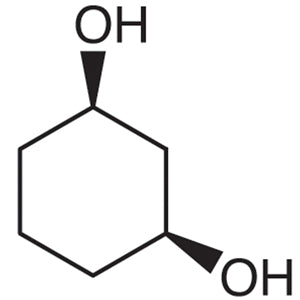
- TCI C0481 504-01-8 1,3-Cyclohexanediol (cis- and trans- mixture)
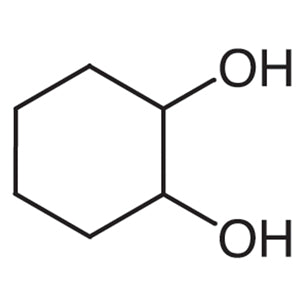
- TCI C0480 931-17-9 1,2-Cyclohexanediol (cis- and trans- mixture)
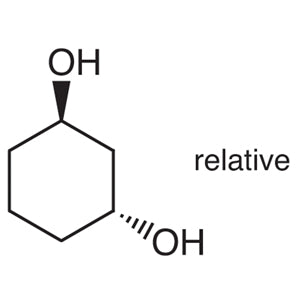
- TCI C2323 5515-64-0 trans-1,3-Cyclohexanediol
- Tetrahydrofuran ring synthesis — the 1,4-spacing between the hydroxyl groups gives exactly the geometry required for ring closure onto substituted five-membered oxygen heterocycles.
- Preparation of dimethyltetrahydrofuran derivatives — the compound serves as the direct precursor in the classical ring-closing route routinely carried out on the laboratory bench.
- Asymmetric synthesis studies — the two substituted carbon centres make the molecule chiral, allowing researchers to explore stereochemical outcomes in reactions and separations.
- Ligand preparation — the chiral diol framework provides a starting scaffold that can be elaborated into ligands for use in coordination and catalysis research.
- Secondary alcohol reactivity work — the two secondary hydroxyl groups give ketones on oxidation and esterify more slowly than primary alcohols, making the material useful for comparative reactivity and teaching experiments.
| Brand | TCI |
|---|---|
| CAS number | 2935-44-6 |
| Molecular formula | — |
| Purity | — |
| Category | Chemistry > Building Blocks > Non-Heterocyclic Building Blocks |
| Pack sizes | available in TCI standard research pack sizes; please confirm the size required when ordering |
| Physical form | liquid at room conditions |
| Storage | keep in a tightly closed container in a cool, dry, well-ventilated area |
Store the container tightly closed in a cool, dry and well-ventilated place, away from direct sunlight, heat sources and incompatible materials such as strong oxidising agents. Keep the material in its original supplier container, or transfer it to a clean, chemically compatible and clearly labelled bottle with a secure closure; because the product is a liquid, containers should be kept upright and secondary containment is advisable during transport within the laboratory. Handle in a fume hood or a well-ventilated working area, and wear standard laboratory personal protective equipment including safety goggles, chemically resistant gloves and a laboratory coat. Close the container immediately after dispensing to avoid moisture uptake and contamination, and always consult the manufacturer's safety data sheet before first use, including for waste disposal guidance.
—
Product Categories
Produk Terkait
-
1,6-Hexanediol TCI H0099
Regular price From Rp 477.750,00Regular price -
2,5-Dimethyl-2,5-hexanediol TCI D1167
Regular price From Rp 505.050,00Regular price -
1,4-Cyclohexanediol(cis-andtrans-mixture) TCI C0482
Regular price From Rp 530.250,00Regular price -
1,3-Cyclohexanediol(cis-andtrans-mixture) TCI C0481
Regular price From Rp 2.625.000,00Regular price -
1,2-Cyclohexanediol(cis-andtrans-mixture) TCI C0480
Regular price From Rp 2.199.750,00Regular price -
trans-1,3-Cyclohexanediol TCI C2323
Regular price Rp 10.229.100,00Regular price -
cis-1,3-Cyclohexanediol TCI C2322
Regular price From Rp 6.413.400,00Regular price -
trans-1,4-Cyclohexanediol TCI C2320
Regular price From Rp 3.127.950,00Regular price