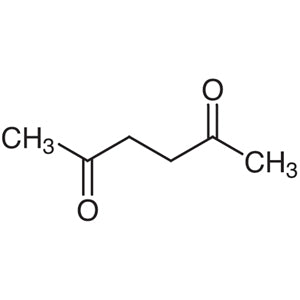
TCI H0101 Acetonylacetone, also known as 2,5-hexanedione, is a symmetrical aliphatic diketone supplied as a colourless to pale yellow liquid, featuring two carbonyl groups separated by two carbon atoms. It is precisely this 1,4-diketone arrangement that makes the compound one of the most valuable building blocks in heterocyclic synthesis, since it serves as the standard substrate for the Paal-Knorr reaction. Through that reaction, researchers can construct substituted pyrrole, furan, and thiophene rings in a single reaction step that is comparatively simple and dependable.
The properties that make this reagent a preferred choice are the dual reactivity of both carbonyl groups together with an inter-carbonyl spacing that is exactly right for five-membered ring closure. Both carbonyls can react with primary amines, dehydrating agents, or sulfur sources to deliver different heterocyclic products from one and the same starting material. The compound is also miscible with water and with many organic solvents, making it flexible to use across a wide range of reaction conditions. In addition, the alpha protons located between the two carbonyl groups open up condensation and alkylation pathways that are useful in synthetic design.
In Indonesian laboratories, this material is typically used in academic and industrial organic synthesis settings where heterocyclic scaffolds must be prepared reliably from commercially available precursors. It suits university research groups working on methodology and ring-formation chemistry, as well as laboratories preparing intermediates for further functionalisation. Because it is supplied by TCI under the item code H0101, it fits routine use where consistent reagent identity across repeated experiments is important to the work.
- Paal-Knorr pyrrole synthesis — the 1,4-diketone framework condenses directly with primary amines to close a five-membered nitrogen ring in one reliable step.
- Furan ring construction — treatment with a dehydrating agent converts both carbonyl groups into a substituted furan, using the correct carbonyl spacing for cyclisation.
- Thiophene preparation — reaction with a sulfur source allows the same starting material to be redirected toward sulfur heterocycles instead of nitrogen or oxygen rings.
- Condensation chemistry at the alpha position — the protons situated between the two carbonyls provide accessible sites for condensation reactions in multi-step synthetic design.
- Alkylation and further functionalisation — the activated alpha carbons permit alkylation routes, letting chemists elaborate the diketone backbone before or after ring closure.
| Brand | TCI |
|---|---|
| CAS number | 110-13-4 |
| Molecular formula | — |
| Purity | — |
| Category | Chemistry > Building Blocks > Non-Heterocyclic Building Blocks |
| Pack sizes | available in the standard TCI catalogue pack sizes for this item |
| Physical form | colourless to pale yellow liquid |
| Storage | keep in a tightly closed container in a cool, well-ventilated area |
- Item Code: H0101
Store TCI H0101 Acetonylacetone in its original tightly closed container, kept in a cool and well-ventilated area away from heat sources, open flames, and incompatible reagents such as strong oxidising agents. Chemically resistant glass bottles with secure closures are appropriate for both storage and dispensing, and containers should be clearly labelled at all times. Handle the material inside a fume hood, wearing safety goggles, chemical-resistant gloves, and a laboratory coat. Because the compound is miscible with water and many organic solvents, spills spread readily and should be contained promptly with an inert absorbent. Always consult the manufacturer's safety data sheet before first use.
—
Produk Terkait
-
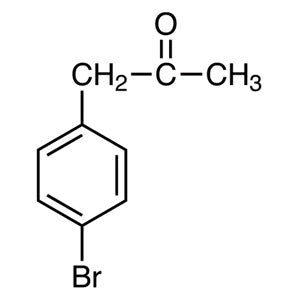
4-Bromophenylacetone TCI B4387
Regular price From Rp 2.782.500,00Regular price -
2-Bromophenylacetone TCI B3842
Regular price From Rp 903.000,00Regular price -
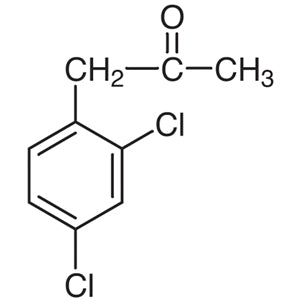
2,4-Dichlorophenylacetone TCI D2928
Regular price Rp 2.254.350,00Regular price -
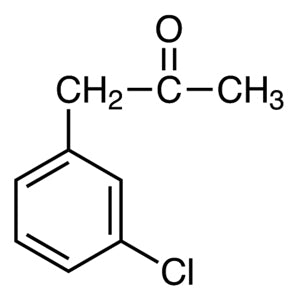
3-Chlorophenylacetone TCI C2895
Regular price From Rp 2.332.050,00Regular price -
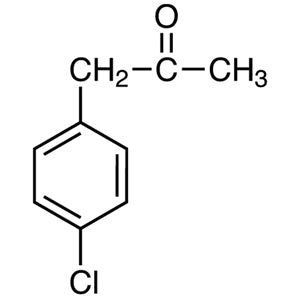
4-Chlorophenylacetone TCI C2526
Regular price From Rp 1.035.300,00Regular price -
3,4-Dimethoxyphenylacetone TCI V0052
Regular price From Rp 1.193.850,00Regular price -
2-Methoxyphenylacetone TCI M0794
Regular price Rp 1.670.550,00Regular price -
4-Methoxyphenylacetone TCI M0675
Regular price From Rp 1.565.550,00Regular price