


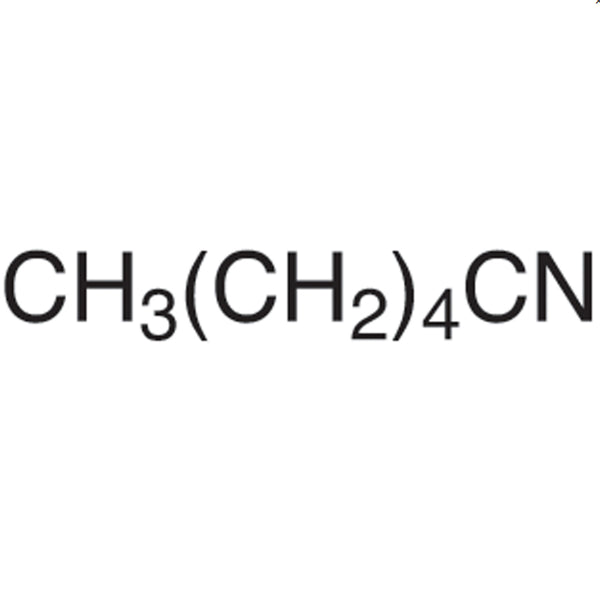
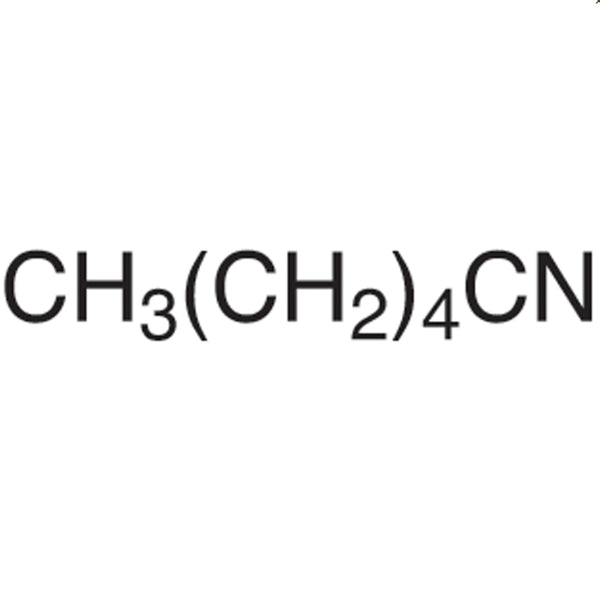
Hexanenitrile, also known as capronitrile or pentyl cyanide, is an organic compound belonging to the nitrile family, characterized by a six-carbon chain bearing a nitrile functional group. In the chemistry laboratory, this compound serves as an important building block and intermediate raw material in a wide range of organic synthesis pathways, primarily for constructing more complex molecules such as amines, amides, carboxylic acids, and ketones through hydrolysis, reduction, or substitution reactions. Beyond its role as a synthetic precursor, hexanenitrile is frequently employed as a relatively polar aprotic solvent and as a reaction medium in studies of reaction kinetics and mechanisms. Its presence within the non-heterocyclic building blocks category makes it a dependable choice for researchers who require a simple yet versatile alkyl nitrile precursor.
The main advantage of hexanenitrile lies in the reactivity of its nitrile group, which can be transformed into a variety of other functional groups under controlled reaction conditions. This versatility allows chemists to plan multi-step synthetic routes with confidence, knowing that the compound can be converted selectively depending on the reagents and conditions applied. The compound typically appears as a clear liquid with a characteristic volatile nature, which makes it easy to weigh and transfer using standard laboratory glassware or syringes in reactions conducted on a laboratory scale. Its relatively straightforward handling and predictable behavior in common transformations reinforce its status as a practical and reliable reagent for routine organic chemistry work.
In Indonesian laboratories, hexanenitrile is typically stocked as a standard reagent within the organic chemistry section, where it supports both teaching and research activities at universities, research institutes, and industrial analytical facilities. It is commonly drawn upon when researchers are developing synthetic routes toward pharmaceutical intermediates, agrochemical building blocks, or fine chemical precursors. Students and laboratory technicians alike appreciate its ease of handling during practical sessions on nitrile chemistry, while experienced researchers rely on it for mechanistic studies and solvent-dependent reactions. Its availability as a commercial catalog product ensures that Indonesian laboratories can obtain consistent quality for reproducible experimental work.
Related TCI products
- TCI A3525 2432-74-8 6-Aminohexanenitrile
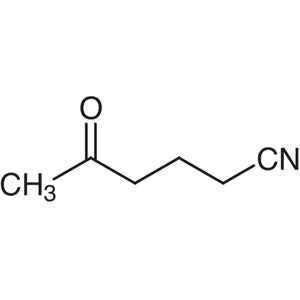
- TCI K0029 10412-98-3 5-Ketohexanenitrile
- TCI D4166 55897-65-9 2,2-Dimethylhexanenitrile
- TCI D5223 120903-40-4 2,2,3,3,4,4,5,5,6,6-Decafluoro-6-[(1,2,2-trifluorovinyl)oxy]hexanenitrile
- TCI U0044 2244-07-7 Undecanenitrile
- TCI T3700 7391-28-8 3-Oxo-3-(p-tolyl)propanenitrile
- Synthesis of primary amines: Hexanenitrile undergoes reduction with lithium aluminum hydride or catalytic hydrogenation to yield hexylamine, making it a straightforward precursor for primary amine synthesis in organic methodology studies.
- Preparation of carboxylic acids: Acidic or basic hydrolysis of the nitrile group converts hexanenitrile into hexanoic acid, offering a clean route to long-chain carboxylic acids for esterification and derivatization experiments.
- Formation of amides and ketones: Through controlled hydration or reaction with organometallic reagents, hexanenitrile can be transformed into amides or ketones, supporting multi-step construction of more complex molecular frameworks.
- Aprotic polar solvent for kinetic studies: As a relatively polar aprotic liquid, hexanenitrile serves as a useful reaction medium for studying reaction kinetics, solvent effects, and mechanistic pathways under carefully controlled laboratory conditions.
- Building block in non-heterocyclic synthesis: Its simple straight-chain structure makes it a reliable alkyl nitrile precursor for building larger aliphatic molecules without introducing unwanted ring systems or heteroatom complexity.
| Brand | TCI |
|---|---|
| CAS number | 628-73-9 |
| Molecular formula | — |
| Purity | — |
| Category | Chemistry > Building Blocks > Non-Heterocyclic Building Blocks |
| Pack sizes | — |
| Physical form | Clear liquid with a characteristic volatile nature |
| Storage | Store in a tightly closed container in a cool, well-ventilated area away from ignition sources |
- Product code: H0102
Hexanenitrile should be stored in its original tightly sealed container, kept in a cool, dry, and well-ventilated area away from direct sunlight, heat sources, and open flames, since the compound is volatile and flammable. Glass containers with secure closures are suitable, and the material should be kept away from strong oxidizing agents and acids to prevent undesirable reactions. When handling the compound, always work inside a fume hood and wear appropriate personal protective equipment, including chemical-resistant gloves, safety goggles, and a laboratory coat, to avoid skin contact and inhalation of vapors. Transfer the liquid using clean glass syringes or pipettes, and promptly reseal the container after each use to minimize evaporation. In case of spills, absorb the liquid with inert material and dispose of it in accordance with local hazardous waste regulations.
—
Produk Terkait
-
6-Aminohexanenitrile TCI A3525
Regular price Rp 4.001.550,00Regular price -
5-Ketohexanenitrile TCI K0029
Regular price From Rp 1.776.600,00Regular price -
2,2-Dimethylhexanenitrile TCI D4166
Regular price Rp 3.100.650,00Regular price -
2,2,3,3,4,4,5,5,6,6-Decafluoro-6-[(1,2,2-trifluorovinyl)oxy]hexanenitrile TCI D5223
Regular price From Rp 3.922.800,00Regular price -
Undecanenitrile TCI U0044
Regular price Rp 3.710.700,00Regular price -
3-Oxo-3-(p-tolyl)propanenitrile TCI T3700
Regular price Rp 1.273.650,00Regular price -
Tridecanenitrile TCI T0819
Regular price Rp 2.016.000,00Regular price -
2-Phenylbutanenitrile TCI P1664
Regular price From Rp 1.087.800,00Regular price


![2,2,3,3,4,4,5,5,6,6-Decafluoro-6-[(1,2,2-trifluorovinyl)oxy]hexanenitrile (CAS 120903-40-4) - TCI D5223 - AMI Scientific](http://amiscientific.com/cdn/shop/files/TCI2510D5223.jpg?v=1768818332&width=533)


