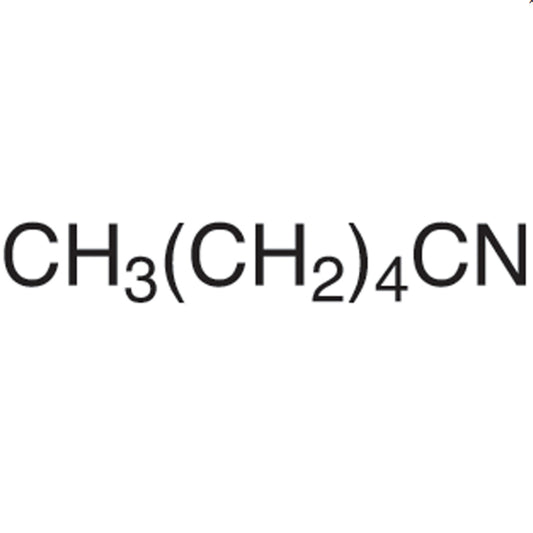
Tridecanenitrile is a chemical compound widely used as a foundational material in various chemical reactions, especially in the synthesis of complex organic compounds. Its nitrile group enables it to act as an electron donor, making it a valuable reagent in nucleophilic substitution and addition reactions. This compound plays a crucial role in organic chemistry research, where it is used to create specific molecular structures essential for drug development, industrial chemicals, and new material synthesis. Its chemical stability under controlled conditions ensures reliable performance in laboratory settings.
Tridecanenitrile is preferred for its high boiling point, which facilitates heating and evaporation processes in the lab. It exhibits good solubility in organic solvents such as ethyl acetate and chloroform, making it ideal for reactions requiring non-aqueous solvents. Its inert nature also contributes to its safety profile, as it does not react spontaneously under normal conditions. These properties make it a versatile and reliable choice for a wide range of chemical applications.
In Indonesian laboratories, Tridecanenitrile is commonly used in organic chemistry research, particularly by educational institutions and research organizations. It is a key component in the development of new compounds and materials, supporting both academic and industrial research efforts. Its availability and reliability make it a staple in many laboratory workflows across the country.
- Organic synthesis is a primary application where Tridecanenitrile is used to create complex molecular structures essential for drug development and material science.
- Industrial chemical production benefits from its stability and solubility, allowing it to be integrated into large-scale manufacturing processes.
- Research in material science utilizes its nitrile group for creating polymers and advanced materials with specific properties.
- Educational institutions use it in teaching and experimental settings to demonstrate chemical reactions and synthesis techniques.
- Pharmaceutical research leverages its reactivity to develop new compounds with therapeutic applications.
| Brand | TCI |
|---|---|
| CAS number | 629-60-7 |
| Molecular formula | — |
| Purity | — |
| Category | Chemistry > Building Blocks > Non-Heterocyclic Building Blocks |
| Pack sizes | Available in various sizes as per supplier specifications |
| Physical form | Liquid |
| Storage | Store in a cool, dry place away from direct sunlight |
Tridecanenitrile should be stored in a cool, dry environment, away from direct sunlight and sources of heat. It is recommended to use sealed containers made of materials compatible with organic solvents, such as glass or high-density polyethylene. Due to its chemical stability, it does not require special refrigeration but should be kept in a well-ventilated area to prevent any potential exposure. Always handle with appropriate personal protective equipment, including gloves and safety goggles, to ensure safe laboratory practices. Regular inspection of storage containers is advised to maintain the integrity of the compound.
—
Produk Terkait
-
Decanenitrile TCI D2426
Regular price From Rp 1.192.800,00Regular priceRp 849.450,00Sale price From Rp 1.192.800,00 -
Undecanenitrile TCI U0044
Regular price Rp 3.763.200,00Regular priceRp 2.647.050,00Sale price Rp 3.763.200,00 -
Nonadecanenitrile TCI N0458
Regular price Rp 2.199.750,00Regular priceRp 1.554.000,00Sale price Rp 2.199.750,00 -
Nonanenitrile TCI P0020
Regular price Rp 1.801.800,00Regular priceRp 1.275.750,00Sale price Rp 1.801.800,00 -
Octanenitrile TCI O0221
Regular price From Rp 1.881.600,00Regular priceRp 1.331.400,00Sale price From Rp 1.881.600,00 -
Hexanenitrile TCI H0102
Regular price From Rp 1.220.100,00Regular priceRp 868.350,00Sale price From Rp 1.220.100,00 -
3-Oxo-3-(p-tolyl)propanenitrile TCI T3700
Regular price Rp 1.326.150,00Regular priceRp 942.900,00Sale price Rp 1.326.150,00 -
Heptanenitrile TCI H0883
Regular price Rp 4.531.800,00Regular priceRp 3.184.650,00Sale price Rp 4.531.800,00