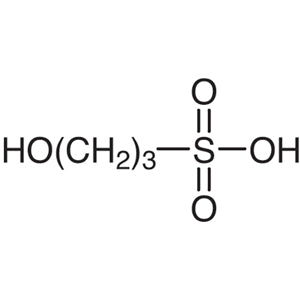
TCI H0597 3-Hydroxypropanesulfonic Acid is an aliphatic sulfonic acid that carries a hydroxyl group at the terminus of its propyl chain, supplied as an aqueous solution containing approximately 80 percent of the acid together with a quantity of 3,3'-Oxydipropanesulfonic Acid as an accompanying component. Its bifunctional structure makes the compound an attractive building block in the laboratory, because one end of the molecule is strongly acidic and highly hydrophilic, while the other end provides a hydroxyl group that can be esterified, etherified, or converted into a leaving group. This combination is frequently exploited to introduce a permanent negative charge and water solubility into organic molecules that were originally difficult to dissolve.
The property that makes this material a preferred choice is the strong acidity of the sulfonate function, which is not readily reprotonated across the pH ranges encountered in biological or industrial work, so the group remains charged under nearly all laboratory conditions. The aqueous solution form simplifies volumetric dispensing and avoids the hygroscopicity problems commonly associated with solid sulfonic acids. The presence of the terminal hydroxyl group opens further derivatization routes, including the formation of sultone derivatives and attachment onto polymers and other supports, so a single reagent serves several synthetic directions.
In Indonesian laboratories this reagent is typically found in synthetic chemistry groups at universities and research institutes, in analytical and materials development units, and in industrial research and development settings where charged, water-soluble intermediates are required. Because it arrives as a ready-to-use aqueous solution, it fits well into workflows that lack glovebox facilities or rigorous dry-handling infrastructure, and it is straightforward to measure out with ordinary pipettes and volumetric glassware.
Related TCI products
- TCI S0136 89-08-7 4-Sulfophthalic Acid (contains 3-Sulfophthalic Acid) (ca 50% in Water)
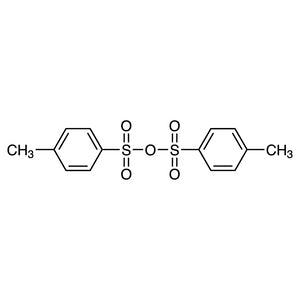
- TCI T1485 4124-41-8 p-Toluenesulfonic Anhydride
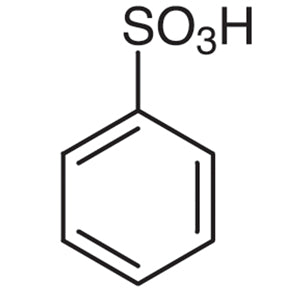
- TCI B3408 98-11-3 Benzenesulfonic Acid Anhydrous
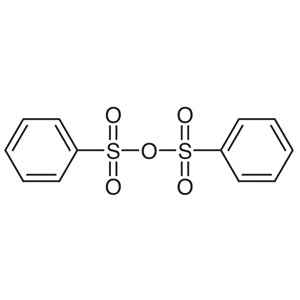
- TCI B1931 512-35-6 Benzenesulfonic Anhydride
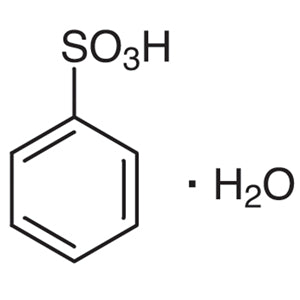
- TCI B0030 26158-00-9 Benzenesulfonic Acid Monohydrate
- TCI T0267 6192-52-5 p-Toluenesulfonic Acid Monohydrate
- Building block synthesis: the compound serves as a non-heterocyclic building block that delivers both a sulfonate anchor and a reactive hydroxyl terminus in a single small molecule, shortening synthetic sequences.
- Solubilizing group introduction: chemists attach the sulfopropyl fragment to poorly soluble organic scaffolds, because the permanently charged sulfonate confers water solubility without requiring a pH-sensitive ionizable group.
- Sultone precursor chemistry: the terminal hydroxyl can be converted toward sultone derivatives, giving access to reactive electrophiles used for sulfoalkylation of amines, thiols, and other nucleophiles.
- Polymer and surface modification: the hydroxyl end allows grafting onto polymers and supports, while the sulfonate imparts permanent anionic character to the resulting material surface.
- Charged intermediate preparation: laboratories use it to prepare anionic intermediates for further transformation, since the aqueous solution format allows direct volumetric addition into aqueous reaction mixtures.
| Brand | TCI |
|---|---|
| CAS number | 15909-83-8 |
| Molecular formula | — |
| Purity | — |
| Category | Chemistry > Building Blocks > Non-Heterocyclic Building Blocks |
| Pack sizes | available in the catalogue pack sizes supplied by TCI for this item |
| Physical form | aqueous solution |
| Storage | keep containers tightly closed and store according to the manufacturer's stated conditions |
- Composition: approximately 80 percent in water, containing varying amounts of 3,3'-Oxydipropanesulfonic Acid
Store the product in its original tightly closed container, kept upright in a cool, well-ventilated area away from incompatible materials such as strong bases and oxidizing agents. Glass or chemically resistant plastic containers are suitable for aliquots, and caps should be resealed immediately after dispensing to limit water loss and contamination. Because the material is a strong acid in aqueous solution, handle it in a fume hood with safety goggles, acid-resistant gloves, and a laboratory coat. Avoid contact with skin and eyes, dispense using dedicated pipettes or glassware, and rinse spills with ample water after neutralization following your institution's waste procedures. Always consult the manufacturer's safety data sheet before first use.
—
Produk Terkait
-
4-SulfophthalicAcid(contains3-SulfophthalicAcid)(ca50%inWater) TCI S0136
Regular price From Rp 557.550,00Regular price -
p-ToluenesulfonicAnhydride TCI T1485
Regular price From Rp 1.749.300,00Regular price -
BenzenesulfonicAcidAnhydrous TCI B3408
Regular price Rp 1.565.550,00Regular price -
BenzenesulfonicAnhydride TCI B1931
Regular price From Rp 5.062.050,00Regular price -
BenzenesulfonicAcidMonohydrate TCI B0030
Regular price From Rp 743.400,00Regular price -
p-ToluenesulfonicAcidMonohydrate TCI T0267
Regular price From Rp 477.750,00Regular price -
1-PropanesulfonylChloride TCI P0693
Regular price Rp 2.359.350,00Regular price -
Sodium1-Propanesulfonate TCI P0347
Regular price From Rp 1.696.800,00Regular price