


Sodium 1-Propanesulfonate is a chemical compound widely used as a foundational material in various laboratory reactions. It serves as a key reagent in organic synthesis, playing a crucial role in the development of sulfonate derivatives. Its simple yet essential chemical structure makes it a versatile building block for chemists working in diverse research fields. In the laboratory, this compound is often employed as a catalyst or intermediate in the preparation of other sulfonate-based compounds, supporting the creation of complex molecules with specific functional groups.
The chemical properties of Sodium 1-Propanesulfonate make it a preferred choice for laboratory use. It exhibits chemical stability and controlled reactivity, which ensures predictable outcomes during chemical reactions. Its solubility in organic solvents facilitates efficient mixing and separation processes, enhancing the reproducibility of experimental results. These characteristics make it a reliable and effective reagent for both academic and industrial chemical applications, where consistency and performance are critical.
In Indonesian laboratories, Sodium 1-Propanesulfonate is extensively used in chemical research, particularly in the synthesis of organic compounds and the development of new chemical products. It is a fundamental component of laboratory supplies that support scientific innovation and research in educational and research institutions. Its availability and performance make it a go-to material for chemists seeking reliable and effective reagents for their experiments.
- Organic synthesis applications benefit from Sodium 1-Propanesulfonate due to its role in creating sulfonate derivatives with precise functional groups.
- It is widely used in pharmaceutical research for the development of drug compounds requiring sulfonate functionalities.
- In material science, this compound supports the synthesis of polymers and surfactants with tailored chemical properties.
- Its controlled reactivity makes it suitable for catalytic reactions in industrial chemical processes.
- It is commonly employed in analytical chemistry for the preparation of standard solutions and reagents.
| Brand | TCI |
|---|---|
| CAS number | 14533-63-2 |
| Molecular formula | — |
| Purity | — |
| Category | Chemistry > Building Blocks > Non-Heterocyclic Building Blocks |
| Pack sizes | Available in various quantities as per supplier specifications |
| Physical form | Solid or powder, depending on the packaging |
| Storage | Store in a cool, dry place away from moisture and direct sunlight |
Sodium 1-Propanesulfonate should be stored in a cool, dry environment to maintain its chemical stability and prevent degradation. It is recommended to use airtight containers to protect the material from moisture and contaminants. Due to its chemical nature, it should be handled with care, using appropriate personal protective equipment such as gloves and safety goggles. In laboratory settings, it is important to ensure proper ventilation when working with this compound to minimize exposure. Storage conditions should avoid direct sunlight and high humidity to preserve its effectiveness and safety. Regular inspection of storage containers is advised to ensure they remain intact and secure.
—
Produk Terkait
-
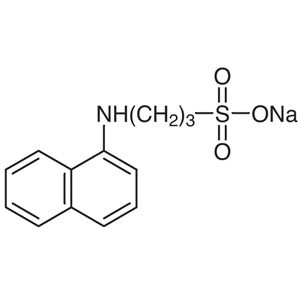
Sodium3-(1-Naphthylamino)propanesulfonate TCI N0495
Regular price Rp 6.599.250,00Regular price -
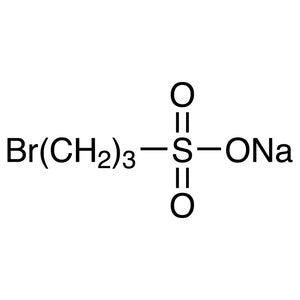
Sodium3-Bromopropanesulfonate TCI B1707
Regular price From Rp 2.862.300,00Regular price -
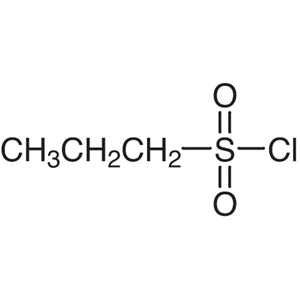
1-PropanesulfonylChloride TCI P0693
Regular price Rp 2.359.350,00Regular price -
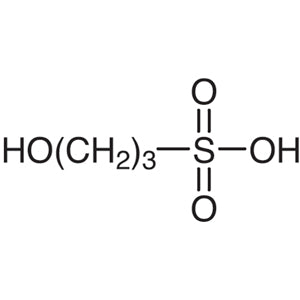
3-HydroxypropanesulfonicAcid(containsvaryingamountsof3,3'-OxydipropanesulfonicAcid)(ca80%inWater,ca78mol/L) TCI H0597
Regular price From Rp 1.353.450,00Regular price -
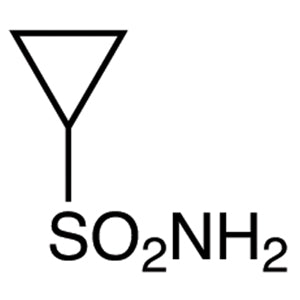
Cyclopropanesulfonamide TCI C2628
Regular price From Rp 584.850,00Regular price -
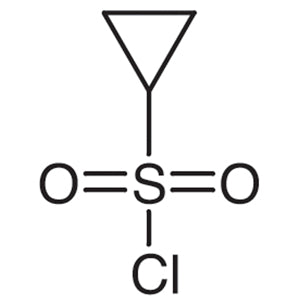
CyclopropanesulfonylChloride TCI C2187
Regular price Rp 1.008.000,00Regular price -
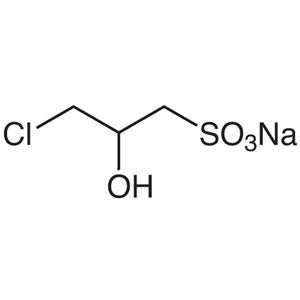
Sodium3-Chloro-2-hydroxypropanesulfonate TCI C1144
Regular price From Rp 505.050,00Regular price -
Sodium3-(N-Ethylanilino)propanesulfonate[forBiochemicalResearch] TCI S0817
Regular price From Rp 875.700,00Regular price
![82611-85-6 Sodium 3-(N-Ethylanilino)propanesulfonate [for Biochemical Research] - AMI Scientific](http://amiscientific.com/cdn/shop/files/TCI2510S0817.jpg?v=1769057699&width=533)