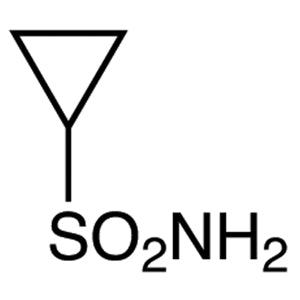
Cyclopropanesulfonamide (TCI C2628), with CAS number 154350-29-5, is a chemical compound widely used as a building block in the synthesis of complex molecules. Its unique molecular structure, featuring a three-membered cyclopropane ring, imparts distinct reactivity and stability characteristics that make it valuable in laboratory settings. This compound is commonly employed in organic chemistry research to facilitate controlled chemical reactions, particularly those requiring high reactivity and precise reaction conditions. Its versatility allows it to be integrated into various synthetic pathways, making it a key component in advanced chemical experimentation.
The compound's reactivity stems from its strained cyclopropane ring, which is inherently less stable than larger ring structures. This strain makes it highly reactive towards electrophilic and nucleophilic reagents, enabling it to participate in a wide range of chemical transformations. Its ability to undergo ring-opening reactions with alkyl halides, acids, and bases makes it a preferred choice for chemists aiming to synthesize functionalized derivatives. The compound's predictable behavior under controlled conditions ensures reliable results in both academic and industrial research environments.
In Indonesian laboratories, Cyclopropanesulfonamide is frequently utilized in organic synthesis and pharmaceutical research. It plays a crucial role in the development of new drugs, polymers, and other organic compounds. Its reactivity and structural versatility make it an essential tool for researchers working on complex molecular structures. The compound is often used in projects related to drug discovery, material science, and chemical process optimization, contributing to the advancement of scientific knowledge in the region.
Related TCI products
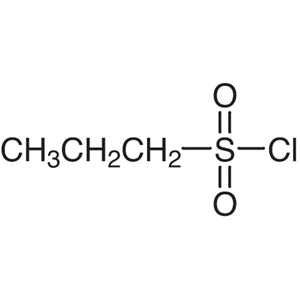
- TCI P0693 10147-36-1 1-Propanesulfonyl Chloride
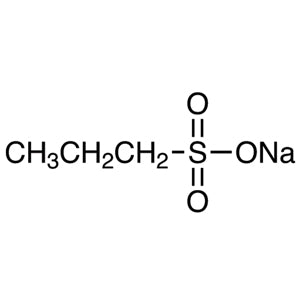
- TCI P0347 14533-63-2 Sodium 1-Propanesulfonate
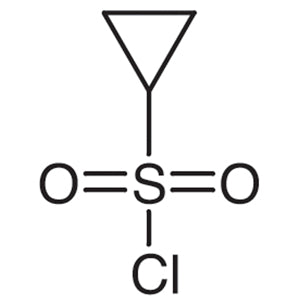
- TCI C2187 139631-62-2 Cyclopropanesulfonyl Chloride
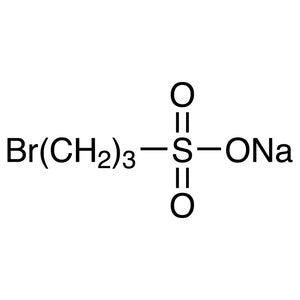
- TCI B1707 55788-44-8 Sodium 3-Bromopropanesulfonate
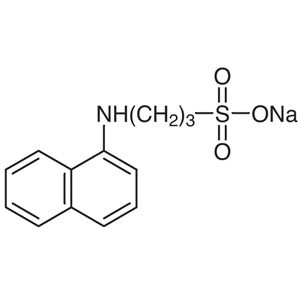
- TCI N0495 104484-71-1 Sodium 3-(1-Naphthylamino)propanesulfonate
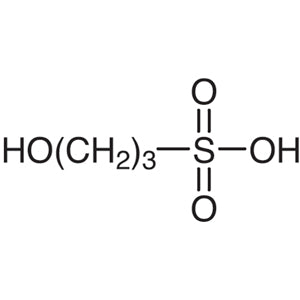
- TCI H0597 15909-83-8 3-Hydroxypropanesulfonic Acid (contains varying amounts of 3,3'-Oxydipropanesulfonic Acid) (ca 80% in Water, ca 78mol/L)
- Organic synthesis projects benefit from Cyclopropanesulfonamide due to its reactivity and ability to form complex molecular structures.
- Pharmaceutical research utilizes this compound for the development of new drug molecules through targeted chemical modifications.
- Polymer science applications leverage its ring-opening properties to create functionalized polymers with specific chemical characteristics.
- Material development studies incorporate Cyclopropanesulfonamide to design novel materials with enhanced chemical and physical properties.
- Chemical process optimization relies on its predictable reactivity to improve reaction efficiency and yield in industrial-scale syntheses.
| Brand | TCI |
|---|---|
| CAS number | 154350-29-5 |
| Molecular formula | — |
| Purity | — |
| Category | Chemistry > Building Blocks > Non-Heterocyclic Building Blocks |
| Pack sizes | Available in various quantities as per standard laboratory supply standards |
| Physical form | Solid (exact form may vary based on supplier specifications) |
| Storage | Store in a cool, dry place away from direct sunlight and incompatible materials |
Cyclopropanesulfonamide should be stored in a cool, dry environment to maintain its chemical stability. It is recommended to keep the compound in a sealed container to prevent exposure to moisture and air, which may affect its reactivity. Suitable storage containers include glass or high-density polyethylene (HDPE) bottles with tight-fitting lids. In laboratory settings, it is important to handle the compound with care, using appropriate personal protective equipment such as gloves and safety goggles. Avoid contact with incompatible substances like strong acids or bases. Ensure proper ventilation when working with the compound to minimize inhalation risks. Regular monitoring of storage conditions helps maintain the integrity and effectiveness of the material in research applications.
—
Produk Terkait
-
1-PropanesulfonylChloride TCI P0693
Regular price Rp 2.359.350,00Regular price -
Sodium1-Propanesulfonate TCI P0347
Regular price From Rp 1.696.800,00Regular price -
CyclopropanesulfonylChloride TCI C2187
Regular price Rp 1.008.000,00Regular price -
Sodium3-Bromopropanesulfonate TCI B1707
Regular price From Rp 2.862.300,00Regular price -
Sodium3-(1-Naphthylamino)propanesulfonate TCI N0495
Regular price Rp 6.599.250,00Regular price -
3-HydroxypropanesulfonicAcid(containsvaryingamountsof3,3'-OxydipropanesulfonicAcid)(ca80%inWater,ca78mol/L) TCI H0597
Regular price From Rp 1.353.450,00Regular price -
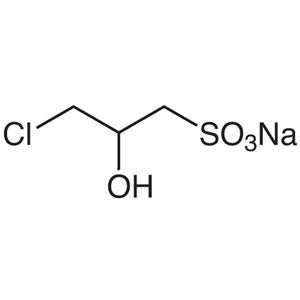
Sodium3-Chloro-2-hydroxypropanesulfonate TCI C1144
Regular price From Rp 505.050,00Regular price -
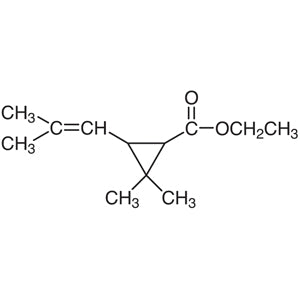
Ethyl2,2-Dimethyl-3-(2-methyl-1-propenyl)cyclopropane-1-carboxylate TCI D2112
Regular price From Rp 1.298.850,00Regular price