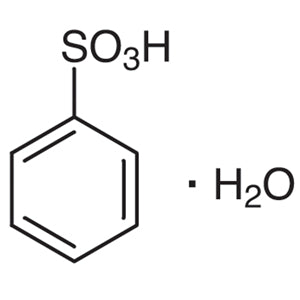
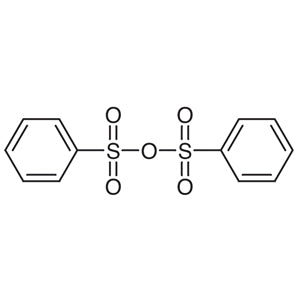
Benzenesulfonic acid anhydrous (B3408), with CAS number 98-11-3, is a solid chemical compound widely used in laboratory settings for its reactivity and versatility. It is a fundamental building block in organic chemistry, particularly in the synthesis of various organic compounds. Its structure is based on a benzene ring functionalized with a sulfonate group, making it a key reagent in electrophilic substitution reactions. This compound plays a crucial role in the development of new chemical compounds and is essential for researchers in both academic and industrial environments.
The compound's high reactivity, combined with its ability to form stable bonds with various ligands, makes it a preferred choice in controlled chemical environments. It is particularly effective in reactions requiring dry conditions due to its sensitivity to moisture and polar solvents. Its chemical stability under specific conditions allows it to be used in a wide range of applications, from pharmaceutical research to material science. The presence of the sulfonate group enhances its utility in substitution and condensation reactions, making it a valuable reagent in synthetic chemistry.
In Indonesian laboratories, benzenesulfonic acid anhydrous is commonly used in organic chemistry research, especially in higher education institutions and research centers. Its availability and chemical stability make it a reliable choice for both teaching and experimental purposes. The compound is often incorporated into laboratory protocols where controlled and precise chemical reactions are required, supporting scientific innovation and discovery in the region.
Related TCI products
- Organic synthesis applications benefit from benzenesulfonic acid anhydrous due to its reactivity in electrophilic substitution reactions, making it ideal for creating complex organic molecules.
- Pharmaceutical research utilizes this compound as a building block for synthesizing various drug compounds, leveraging its sulfonate group for functional group modification.
- Material science experiments often incorporate this reagent to develop new polymers and functional materials through controlled chemical reactions.
- Analytical chemistry procedures may use it as a reagent for specific functional group analysis, providing a reliable source of sulfonate functionality.
- Industrial chemical processes rely on its stability and reactivity to facilitate the production of specialty chemicals and intermediates.
| Brand | TCI |
|---|---|
| CAS number | 98-11-3 |
| Molecular formula | — |
| Purity | — |
| Category | Chemistry > Building Blocks > Non-Heterocyclic Building Blocks |
| Pack sizes | — |
| Physical form | Solid |
| Storage | Store in a dry, cool place away from moisture and polar solvents |
Benzenesulfonic acid anhydrous should be stored in a dry, cool environment to maintain its chemical stability and prevent degradation. It is recommended to use airtight containers made of materials such as glass or polyethylene to minimize exposure to moisture and air. Due to its reactivity with water and polar solvents, it is essential to handle the compound in a controlled laboratory setting, avoiding contact with moisture or reactive substances. Proper ventilation should be maintained during handling to ensure a safe working environment. Laboratory personnel should wear appropriate personal protective equipment, including gloves and safety goggles, to prevent direct contact with the compound. Regular monitoring of storage conditions is advised to ensure the compound remains in optimal condition for use.
—
Produk Terkait
-
BenzenesulfonicAcidMonohydrate TCI B0030
Regular price From Rp 743.400,00Regular priceRp 519.750,00Sale price From Rp 743.400,00 -
p-ToluenesulfonicAcidMonohydrate TCI T0267
Regular price From Rp 477.750,00Regular priceRp 333.900,00Sale price From Rp 477.750,00 -
4-(2-Bromoethyl)benzenesulfonicAcid TCI B2006
Regular price From Rp 2.571.450,00Regular priceRp 1.797.600,00Sale price From Rp 2.571.450,00 -
BenzenesulfonicAnhydride TCI B1931
Regular price From Rp 5.062.050,00Regular priceRp 3.539.550,00Sale price From Rp 5.062.050,00 -
3-AminobenzenesulfonicAcid TCI A0265
Regular price From Rp 505.050,00Regular priceRp 352.800,00Sale price From Rp 505.050,00 -
2-AminobenzenesulfonicAcid TCI A0266
Regular price From Rp 769.650,00Regular priceRp 537.600,00Sale price From Rp 769.650,00 -
2-Amino-1-naphthalenesulfonicAcid TCI A0343
Regular price From Rp 477.750,00Regular priceRp 333.900,00Sale price From Rp 477.750,00 -
5-Amino-2-naphthalenesulfonicAcid TCI A0346
Regular price From Rp 717.150,00Regular priceRp 500.850,00Sale price From Rp 717.150,00