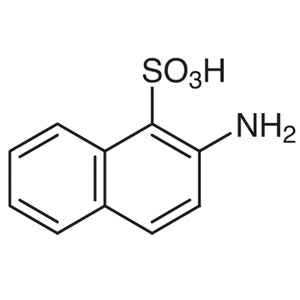
p-Toluenesulfonic Acid Monohydrate is a chemical compound widely used in laboratory settings for its versatile reactivity and functional properties. It belongs to the category of non-heterocyclic building blocks and is commonly employed in organic synthesis reactions. This compound serves as a catalyst, reagent, or auxiliary material in various chemical processes, including addition, substitution, and acid-catalyzed reactions. Its molecular structure, consisting of a toluene group attached to a sulfonic acid group, makes it highly reactive and suitable for a broad range of chemical transformations.
One of the key properties that make p-Toluenesulfonic Acid Monohydrate a preferred choice is its strong acidic character. As a sulfonic acid, it provides a stable and efficient acidic environment for reactions that require such conditions. Additionally, it has excellent physical stability, allowing for easy storage and handling under standard laboratory conditions. The monohydrate form of the compound further simplifies its use, as it does not require additional water for dissolution, making it convenient for both research and industrial applications.
In Indonesian laboratories, p-Toluenesulfonic Acid Monohydrate is a commonly used reagent in chemical research. It is employed in the synthesis of heterocyclic compounds, aromatic compound modifications, and acid-base reactions for compound separation. Its reliability and effectiveness make it an essential component in various chemical processes, supporting both academic and industrial research activities.
TCI brochures (PDF)
Related TCI products
- Organic synthesis reactions benefit from the strong acidic properties of p-Toluenesulfonic Acid Monohydrate, making it an effective catalyst for various functional group transformations.
- Acid-catalyzed esterification and sulfonation processes are commonly performed using this compound due to its ability to provide a stable acidic environment.
- In the preparation of heterocyclic compounds, its reactivity and availability make it a preferred reagent for ring formation and functional group modification.
- It is widely used in acid-base extraction techniques for the separation of organic compounds from aqueous solutions due to its solubility and reactivity.
- The compound is also utilized in the modification of aromatic compounds, where its sulfonic acid group facilitates substitution reactions and structural changes.
| Brand | TCI |
|---|---|
| CAS number | 6192-52-5 |
| Molecular formula | — |
| Purity | — |
| Category | Chemistry > Building Blocks > Non-Heterocyclic Building Blocks |
| Pack sizes | Available in various quantities as per supplier specifications |
| Physical form | White crystalline solid |
| Storage | Store in a cool, dry place away from moisture and direct sunlight |
p-Toluenesulfonic Acid Monohydrate should be stored in a cool, dry environment to maintain its stability and prevent degradation. It is recommended to keep the compound in airtight containers to avoid moisture absorption, which could affect its purity and reactivity. Due to its acidic nature, it should be handled with appropriate personal protective equipment, such as gloves and safety goggles, to prevent skin or eye contact. It is also advisable to store it away from incompatible materials like strong bases or oxidizing agents to ensure safety in the laboratory. Regular inspection of storage conditions and container integrity is essential to maintain the compound's quality and usability.
—
Product Categories
Produk Terkait
-
TrifluoromethanesulfonicAcid TCI T0751
Regular price From Rp 980.700,00Regular priceRp 685.650,00Sale price From Rp 980.700,00 -
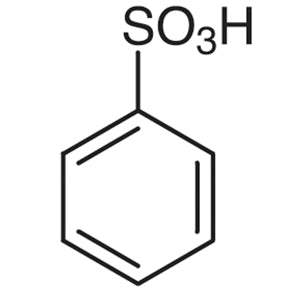
BenzenesulfonicAcidAnhydrous TCI B3408
Regular price Rp 1.565.550,00Regular priceRp 1.094.100,00Sale price Rp 1.565.550,00 -
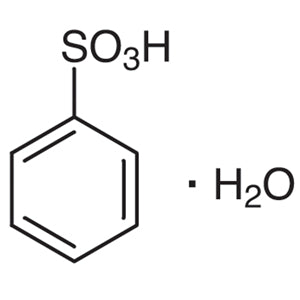
BenzenesulfonicAcidMonohydrate TCI B0030
Regular price From Rp 743.400,00Regular priceRp 519.750,00Sale price From Rp 743.400,00 -
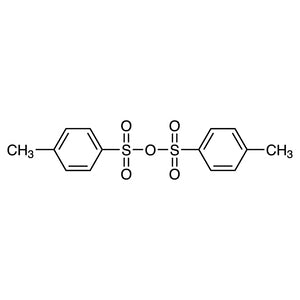
p-ToluenesulfonicAnhydride TCI T1485
Regular price From Rp 1.749.300,00Regular priceRp 1.223.250,00Sale price From Rp 1.749.300,00 -
TrifluoromethanesulfonicAnhydride TCI T1100
Regular price From Rp 1.670.550,00Regular priceRp 1.167.600,00Sale price From Rp 1.670.550,00 -
3-AminobenzenesulfonicAcid TCI A0265
Regular price From Rp 505.050,00Regular priceRp 352.800,00Sale price From Rp 505.050,00 -
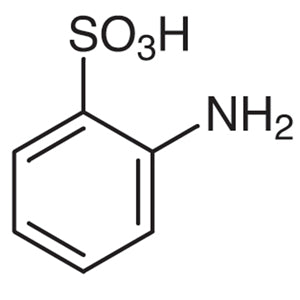
2-AminobenzenesulfonicAcid TCI A0266
Regular price From Rp 769.650,00Regular priceRp 537.600,00Sale price From Rp 769.650,00 -
2-Amino-1-naphthalenesulfonicAcid TCI A0343
Regular price From Rp 477.750,00Regular priceRp 333.900,00Sale price From Rp 477.750,00