TCI T1100 is Trifluoromethanesulfonic Anhydride, CAS number 358-23-6, widely known as triflic anhydride or Tf2O. It is the anhydride of trifluoromethanesulfonic acid and is one of the most widely used triflating reagents in organic synthesis. In the TCI catalogue it is listed under Glycoscience because of its broad use in carbohydrate chemistry, particularly as an activator in glycosylation reactions. In the laboratory it serves as a high-reactivity reagent for introducing the triflate group and for activating other functional groups, so it is typically handled by teams that already work with demanding synthetic methods.
The properties that make Tf2O a preferred choice stem from the triflate group, which is an excellent leaving group. This is why the reagent is chosen to convert alcohols into triflates that are highly reactive toward nucleophilic substitution. Triflic anhydride is also used to activate amides and sulfoxides, and to prepare enol triflates from ketones, which can then be used in transition-metal-catalysed coupling reactions. This high reactivity is what makes it a go-to reagent, and it is also the reason the material must be handled with great care.
In Indonesian laboratories, Tf2O is normally used by organic synthesis and carbohydrate chemistry groups that are already experienced with reactive reagents. The product is supplied as a liquid in 10 g, 25 g, and 250 g packs, so a laboratory can choose a size that matches the scale of its work. Teams typically use it in research settings where the demands of glycosylation or triflation chemistry justify a specialised reagent and where proper handling procedures are already established.
Advantages (TCI brochure)
- Triflation reagent for protection of phenolic hydroxyl groups
TCI brochures (PDF)
- Safe and Easy-to-handle Trifluoromethoxylating Agent TFNf 2026-08-07 · p. 1
- Sulfonylation Reagents 2023-01-20 · p. 2
- Condensing Agents 2025-11-18 · p. 8
- Glycosidation 2026-04-14 · p. 2
- Protecting Agents 2025-03-25 · p. 11
- Reagents for Glyco Chemistry & Biology 5th Edition · p. 150
Related TCI products
- TCI B1871 145100-50-1 N-(2-Pyridyl)bis(trifluoromethanesulfonimide) [Triflating Reagent]
- TCI P1257 37595-74-7 N-Phenylbis(trifluoromethanesulfonimide) [Triflating Reagent]
- TCI B0078 93-97-0 Benzoic Anhydride
- TCI T0751 1493-13-6 Trifluoromethanesulfonic Acid
- TCI T0267 6192-52-5 p-Toluenesulfonic Acid Monohydrate
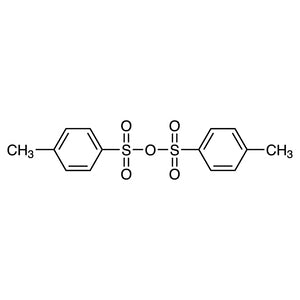
- TCI T1485 4124-41-8 p-Toluenesulfonic Anhydride
- Glycosylation activation: Tf2O is widely used as an activator in glycosylation reactions, which is why TCI classifies it under Glycoscience and why it suits carbohydrate chemistry laboratories.
- Conversion of alcohols to triflates: because the triflate group is an excellent leaving group, this reagent turns alcohols into triflates that react readily in nucleophilic substitution, making it suitable for synthetic route design.
- Amide activation: triflic anhydride is used to activate amides, and its strong reactivity makes it a dependable choice for synthetic chemists who need to transform these functional groups under controlled conditions.
- Sulfoxide activation: the reagent is also employed to activate sulfoxides, where its high electrophilic reactivity is the reason it is selected over milder reagents in organic synthesis.
- Enol triflate preparation: Tf2O converts ketones into enol triflates, which can then be used in transition-metal-catalysed coupling reactions, so it suits laboratories building more complex molecular structures.
From the TCI brochure
- Triflation of aryl hydroxyl with an amine base
| Brand | TCI |
|---|---|
| CAS number | 358-23-6 |
| Molecular formula | — |
| Purity | — |
| Category | Chemistry > Chemical Biology > Glycoscience |
| Pack sizes | 10 g, 25 g, and 250 g |
| Physical form | liquid |
| Storage | — |
- Product code: T1100
Triflic anhydride is a very reactive reagent and should be handled with great caution. Follow the safety data sheet supplied with the product and the laboratory's own procedures for reactive and corrosive chemicals. Work in a well-ventilated area or fume hood, and wear suitable protective equipment such as gloves, eye protection, and a laboratory coat. Keep the product in its original, tightly closed container and store it in a designated chemical storage area, away from incompatible materials. Check the label and the safety data sheet for the exact storage conditions recommended by the manufacturer. Only personnel experienced with reactive reagents should use this product.
—
Product Categories
Produk Terkait
-
N-(2-Pyridyl)bis(trifluoromethanesulfonimide)[TriflatingReagent] TCI B1871
Regular price Rp 5.141.850,00Regular priceRp 3.610.950,00Sale price Rp 5.141.850,00 -
N-Phenylbis(trifluoromethanesulfonimide)[TriflatingReagent] TCI P1257
Regular price From Rp 1.908.900,00Regular priceRp 1.350.300,00Sale price From Rp 1.908.900,00 -
BenzoicAnhydride TCI B0078
Regular price Rp 637.350,00Regular priceRp 460.950,00Sale price Rp 637.350,00 -
TrifluoromethanesulfonicAcid TCI T0751
Regular price From Rp 980.700,00Regular priceRp 685.650,00Sale price From Rp 980.700,00 -
p-ToluenesulfonicAcidMonohydrate TCI T0267
Regular price From Rp 477.750,00Regular priceRp 333.900,00Sale price From Rp 477.750,00 -
p-ToluenesulfonicAnhydride TCI T1485
Regular price From Rp 1.749.300,00Regular priceRp 1.223.250,00Sale price From Rp 1.749.300,00 -
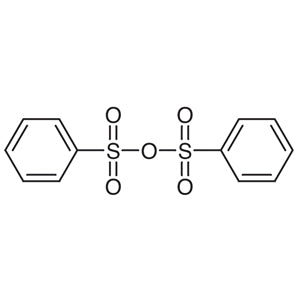
BenzenesulfonicAnhydride TCI B1931
Regular price From Rp 5.062.050,00Regular priceRp 3.539.550,00Sale price From Rp 5.062.050,00 -
N-(2,2,2-Trichloroethoxycarbonyloxy)succinimide TCI T2713
Regular price Rp 2.173.500,00Regular priceRp 1.535.100,00Sale price Rp 2.173.500,00