![TCI P1257 37595-74-7 N-Phenylbis(trifluoromethanesulfonimide) [Triflating Reagent]](http://amiscientific.com/cdn/shop/files/TCI2510P1257_77e3aa2b-6ee6-40b7-b861-c08060404a53.jpg?v=1792652774&width=1946)
![37595-74-7 N-Phenylbis(trifluoromethanesulfonimide) [Triflating Reagent] - AMI Scientific](http://amiscientific.com/cdn/shop/files/TCI2510P1257.jpg?v=1769143293&width=1946)
![TCI P1257 37595-74-7 N-Phenylbis(trifluoromethanesulfonimide) [Triflating Reagent]](http://amiscientific.com/cdn/shop/files/TCI2510P1257_77e3aa2b-6ee6-40b7-b861-c08060404a53.jpg?v=1792652774&width=1445)
![37595-74-7 N-Phenylbis(trifluoromethanesulfonimide) [Triflating Reagent] - AMI Scientific](http://amiscientific.com/cdn/shop/files/TCI2510P1257.jpg?v=1769143293&width=1445)
N-Phenylbis(trifluoromethanesulfonimide), also known as Triflating Reagent, is a synthetic chemistry reagent used to facilitate substitution and functional group activation in chemical reactions. It is widely applied in the synthesis of complex compounds, particularly in coupling reactions that require substrate activation through electrophilic mechanisms. In laboratory settings, this reagent acts as an activation agent, modifying molecular reactivity to enable the formation of new bonds with high efficiency. Its role is critical in organic chemistry, where precise control over reaction conditions is essential for successful synthesis outcomes.
The key properties that make Triflating Reagent a preferred choice include its ability to form highly reactive electrophilic complexes and its stability under various reaction conditions. These characteristics allow it to maintain reactivity without undergoing premature decomposition, ensuring consistent performance in synthetic processes. Additionally, its non-volatile and non-degradable nature makes it suitable for use in a wide range of laboratory environments. This stability and reactivity make it an ideal choice for applications requiring precision and control.
In Indonesian laboratories, Triflating Reagent is commonly used in organic chemistry research, particularly in academic institutions and research centers focused on the synthesis of complex compounds. Its application is especially prevalent in projects involving coupling reactions and functional group modifications. The reagent’s reliability and effectiveness make it a valuable tool for researchers aiming to achieve high-quality synthetic results.
TCI brochures (PDF)
- Sulfonylation Reagents 2023-01-20 · p. 2
- Condensing Agents 2025-11-18 · p. 8
- Protecting Agents 2025-03-25 · p. 11
Related TCI products
- TCI B1871 145100-50-1 N-(2-Pyridyl)bis(trifluoromethanesulfonimide) [Triflating Reagent]
- TCI T1100 358-23-6 Trifluoromethanesulfonic Anhydride
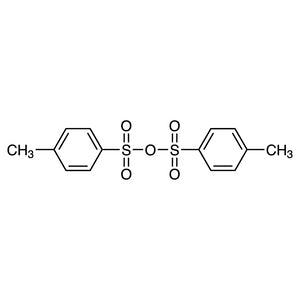
- TCI T1485 4124-41-8 p-Toluenesulfonic Anhydride
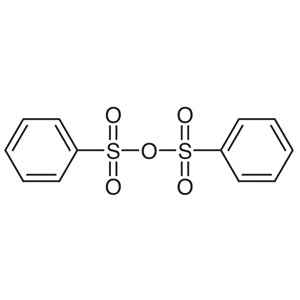
- TCI B1931 512-35-6 Benzenesulfonic Anhydride
- TCI T3177 29540-81-6 1-(Trifluoromethanesulfonyl)imidazole
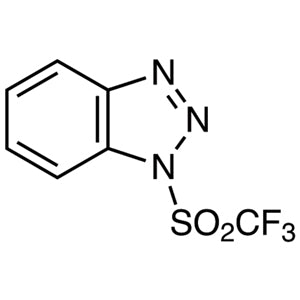
- TCI T3167 117632-84-5 1-(Trifluoromethanesulfonyl)-1H-benzotriazole
- Organic synthesis applications benefit from Triflating Reagent’s ability to activate substrates and promote efficient coupling reactions.
- Functional group modification processes utilize its electrophilic complex formation to enhance reactivity and selectivity.
- Coupling reactions in complex molecule synthesis rely on its stability and reactivity for consistent results.
- Research in pharmaceutical chemistry often employs this reagent for the development of new drug compounds.
- Academic and industrial laboratories use it to advance synthetic methodologies in advanced chemical research.
| Brand | TCI |
|---|---|
| CAS number | 37595-74-7 |
| Molecular formula | — |
| Purity | — |
| Category | Chemistry > Synthetic Reagents > Coupling [Synthetic Reagents] |
| Pack sizes | Available in various quantities as per standard laboratory supply |
| Physical form | Solid powder |
| Storage | Store in a cool, dry place away from moisture and direct sunlight |
Triflating Reagent should be stored in a cool, dry environment to maintain its stability and reactivity. It is recommended to keep it in airtight containers to prevent exposure to moisture and air, which could affect its performance. Due to its chemical nature, it should be handled in a well-ventilated area, and appropriate personal protective equipment should be worn when handling. The reagent is non-volatile and non-degradable, but care should be taken to avoid contamination. Storage conditions should be controlled to ensure long-term usability and safety in laboratory settings.
—
Produk Terkait
-
N-(2-Pyridyl)bis(trifluoromethanesulfonimide)[TriflatingReagent] TCI B1871
Regular price Rp 5.141.850,00Regular priceRp 3.610.950,00Sale price Rp 5.141.850,00 -
TrifluoromethanesulfonicAnhydride TCI T1100
Regular price From Rp 1.670.550,00Regular priceRp 1.167.600,00Sale price From Rp 1.670.550,00 -
p-ToluenesulfonicAnhydride TCI T1485
Regular price From Rp 1.749.300,00Regular priceRp 1.223.250,00Sale price From Rp 1.749.300,00 -
BenzenesulfonicAnhydride TCI B1931
Regular price From Rp 5.062.050,00Regular priceRp 3.539.550,00Sale price From Rp 5.062.050,00 -
1-(Trifluoromethanesulfonyl)imidazole TCI T3177
Regular price From Rp 3.127.950,00Regular priceRp 2.202.900,00Sale price From Rp 3.127.950,00 -
1-(Trifluoromethanesulfonyl)-1H-benzotriazole TCI T3167
Regular price From Rp 1.670.550,00Regular priceRp 1.183.350,00Sale price From Rp 1.670.550,00 -
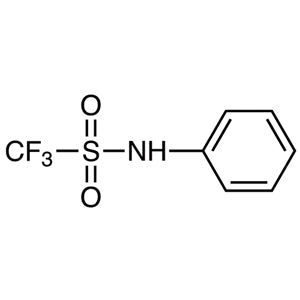
Trifluoromethanesulfonanilide TCI T2985
Regular price From Rp 2.093.700,00Regular priceRp 1.479.450,00Sale price From Rp 2.093.700,00 -
TrifluoromethanesulfonylChloride TCI T1027
Regular price From Rp 2.174.550,00Regular priceRp 1.520.400,00Sale price From Rp 2.174.550,00
![TCI B1871 145100-50-1 N-(2-Pyridyl)bis(trifluoromethanesulfonimide) [Triflating Reagent]](http://amiscientific.com/cdn/shop/files/TCI2510B1871_90611800-4f85-4350-b9da-afbd170c19dc.jpg?v=1792660192&width=533)
![145100-50-1 N-(2-Pyridyl)bis(trifluoromethanesulfonimide) [Triflating Reagent] - AMI Scientific](http://amiscientific.com/cdn/shop/files/TCI2510B1871.jpg?v=1768204104&width=533)