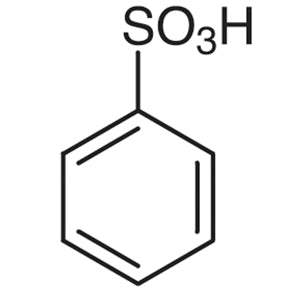
Benzenesulfonic Acid Monohydrate is a chemical compound widely used in laboratory settings for its versatility and reactivity. As a sulfonic acid derivative with an aromatic structure, it plays a crucial role in organic synthesis, particularly in substitution and replacement reactions. Its ability to form stable bonds with various functional groups makes it a valuable reagent in the development of complex organic molecules. This compound is commonly found in chemical laboratories where researchers are engaged in the creation of new compounds or the modification of existing ones.
One of the key properties that make Benzenesulfonic Acid Monohydrate a preferred choice is its solubility in water and its strong acidic nature. These characteristics allow it to be used in reactions that require an acidic environment, making it suitable for a wide range of chemical processes. Additionally, its physical stability under controlled conditions ensures that it remains effective for extended periods, which is essential for consistent experimental results. The compound’s reactivity and compatibility with different functional groups further enhance its utility in synthetic chemistry.
In Indonesian laboratories, Benzenesulfonic Acid Monohydrate is extensively used in chemical research, especially in the field of organic chemistry. It is a common reagent in both academic and industrial research settings, where it supports the development of new compounds and the optimization of chemical processes. Its availability and reliability make it a go-to material for chemists working on various synthetic and analytical projects.
Related TCI products
- Organic synthesis reactions benefit from Benzenesulfonic Acid Monohydrate due to its ability to participate in substitution and functional group transformations.
- It is ideal for acid-catalyzed reactions, providing a stable and reactive environment for the formation of complex organic molecules.
- In the development of pharmaceutical compounds, this reagent is used to modify molecular structures and enhance reactivity in targeted chemical processes.
- It supports the preparation of sulfonated derivatives, which are essential in the synthesis of dyes, surfactants, and other industrial chemicals.
- Its solubility and reactivity make it suitable for analytical chemistry applications, including pH control and reaction monitoring in laboratory experiments.
| Brand | TCI |
|---|---|
| CAS number | 26158-00-9 |
| Molecular formula | — |
| Purity | — |
| Category | Chemistry > Building Blocks > Non-Heterocyclic Building Blocks |
| Pack sizes | Available in various quantities as per standard laboratory supply |
| Physical form | Solid, crystalline |
| Storage | Store in a cool, dry place away from moisture and direct sunlight |
Benzenesulfonic Acid Monohydrate should be stored in a cool, dry environment to maintain its chemical integrity. It is recommended to use airtight containers to prevent exposure to moisture, which can affect its stability. Due to its acidic nature, it should be handled with appropriate personal protective equipment, such as gloves and safety goggles. Avoid contact with skin and eyes, and ensure proper ventilation when working with this compound. It is important to store it away from incompatible materials, such as strong bases, to prevent any potential chemical reactions. Regular inspection of storage conditions ensures that the material remains suitable for use in laboratory applications.
—
Produk Terkait
-
BenzenesulfonicAcidAnhydrous TCI B3408
Regular price Rp 1.565.550,00Regular priceRp 1.094.100,00Sale price Rp 1.565.550,00 -
p-ToluenesulfonicAcidMonohydrate TCI T0267
Regular price From Rp 477.750,00Regular priceRp 333.900,00Sale price From Rp 477.750,00 -
4-(2-Bromoethyl)benzenesulfonicAcid TCI B2006
Regular price From Rp 2.571.450,00Regular priceRp 1.797.600,00Sale price From Rp 2.571.450,00 -
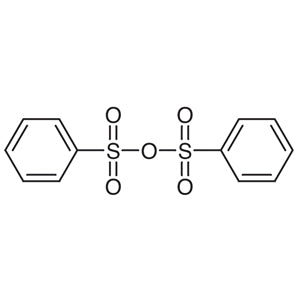
BenzenesulfonicAnhydride TCI B1931
Regular price From Rp 5.062.050,00Regular priceRp 3.539.550,00Sale price From Rp 5.062.050,00 -
3-AminobenzenesulfonicAcid TCI A0265
Regular price From Rp 505.050,00Regular priceRp 352.800,00Sale price From Rp 505.050,00 -
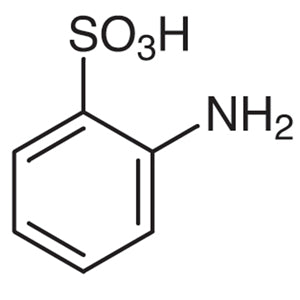
2-AminobenzenesulfonicAcid TCI A0266
Regular price From Rp 769.650,00Regular priceRp 537.600,00Sale price From Rp 769.650,00 -
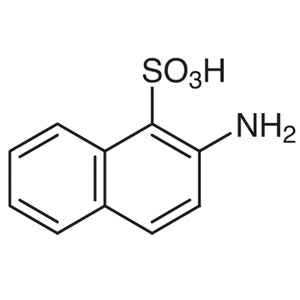
2-Amino-1-naphthalenesulfonicAcid TCI A0343
Regular price From Rp 477.750,00Regular priceRp 333.900,00Sale price From Rp 477.750,00 -
5-Amino-2-naphthalenesulfonicAcid TCI A0346
Regular price From Rp 717.150,00Regular priceRp 500.850,00Sale price From Rp 717.150,00