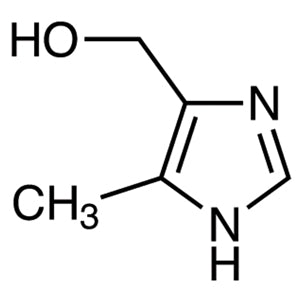
4-Hydroxymethyl-5-methylimidazole is a heterocyclic compound built on an imidazole ring that carries a hydroxymethyl group and a methyl group at adjacent positions on the ring. The combination of an imidazole ring with a primary alcohol function makes this compound a versatile building block in organic synthesis and medicinal chemistry. In the laboratory it is recognised as an important intermediate in the preparation of drug compounds belonging to the histamine receptor antagonist class, and equally as a starting scaffold for constructing the various imidazole derivatives studied in pharmaceutical and catalysis research.
The property that makes this compound a preferred choice is the presence of two reactive sites with distinctly different characters. The imidazole ring is amphoteric, able to act as a weak base as well as a hydrogen-bond donor, and it is a motif frequently encountered in bioactive molecules because of its resemblance to the histidine side chain. The hydroxymethyl group, meanwhile, provides a straightforward derivatisation route through substitution reactions, oxidation to the aldehyde or the acid, and the formation of ethers and esters. The methyl group on the ring adds electronic and steric influence that affects the regioselectivity of reactions.
In Indonesian laboratories this material is typically handled in university research groups, pharmaceutical development units, and contract synthesis facilities working on heterocyclic chemistry. It is normally used at small scale for exploratory route development, reference synthesis, and the preparation of derivative libraries, where a well-defined building block shortens the work compared with preparing the scaffold in house. The TCI packaging format suits this pattern of use, allowing the compound to be drawn on across several experiments over an extended working period.
Related TCI products
- TCI H1370 17334-08-6 2-Hydroxymethyl-1-methylimidazole
- TCI H0625 38585-62-5 4-Hydroxymethyl-5-methylimidazole Hydrochloride
- TCI B0867 13750-62-4 1-Benzyl-2-methylimidazole
- TCI M2176 13750-81-7 1-Methylimidazole-2-carboxaldehyde
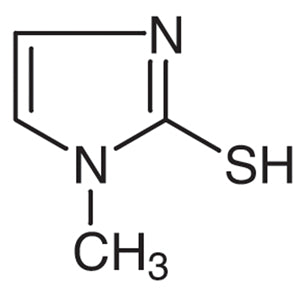
- TCI M0868 60-56-0 2-Mercapto-1-methylimidazole
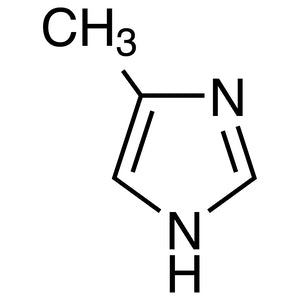
- TCI M0636 822-36-6 4-Methylimidazole
- Synthesis of histamine receptor antagonist intermediates, where the compound serves as an established scaffold that carries the imidazole core already substituted and ready for onward elaboration.
- Preparation of imidazole derivative libraries, because the hydroxymethyl handle allows a single starting material to branch into esters, ethers, and substitution products for structure-activity studies.
- Medicinal chemistry scaffold work, since the imidazole ring mimics the histidine side chain and is a recurring motif in bioactive molecules targeted during early-stage drug discovery programmes.
- Oxidation chemistry studies, as the primary alcohol can be converted stepwise to the corresponding aldehyde or carboxylic acid to generate further heterocyclic intermediates for downstream coupling.
- Catalysis research on heterocyclic ligands, where the amphoteric imidazole ring acts as a weak base and hydrogen-bond donor while the ring methyl group modulates steric and electronic behaviour.
| Brand | TCI (Tokyo Chemical Industry), catalogue number H0976 |
|---|---|
| CAS number | 29636-87-1 |
| Molecular formula | — |
| Purity | — |
| Category | Chemistry > Building Blocks > Heterocyclic Building Blocks |
| Pack sizes | available in the standard research-scale pack sizes listed by TCI for this catalogue number |
| Physical form | — |
| Storage | store in a tightly closed container in a cool, dry place as indicated on the product label |
- Chemical name: 4-Hydroxymethyl-5-methylimidazole
Store the container tightly closed in a cool, dry, and well-ventilated area, away from sources of heat, ignition, and direct sunlight, and follow the storage conditions stated on the manufacturer's label and safety data sheet. Keep the material in its original TCI container or in a chemically compatible, clearly labelled amber glass or plastic vessel that protects it from moisture. Handle inside a fume hood while wearing safety goggles, chemically resistant gloves, and a laboratory coat. Avoid inhaling dust and avoid contact with skin and eyes. Close the container immediately after weighing, keep it separate from strong oxidising agents and strong acids, and dispose of residues and contaminated materials through the laboratory's chemical waste procedure.
—
Produk Terkait
-
2-Hydroxymethyl-1-methylimidazole TCI H1370
Regular price From Rp 505.050,00Regular price -
4-Hydroxymethyl-5-methylimidazoleHydrochloride TCI H0625
Regular price Rp 743.400,00Regular price -
1-Benzyl-2-methylimidazole TCI B0867
Regular price Rp 2.306.850,00Regular price -
1-Methylimidazole-2-carboxaldehyde TCI M2176
Regular price From Rp 980.700,00Regular price -
2-Mercapto-1-methylimidazole TCI M0868
Regular price Rp 2.147.250,00Regular price -
4-Methylimidazole TCI M0636
Regular price From Rp 1.060.500,00Regular price -
1-Methylimidazole TCI M0508
Regular price From Rp 505.050,00Regular price -
2-Methylimidazole TCI M0345
Regular price From Rp 584.850,00Regular price