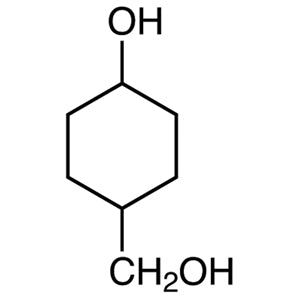
trans-4-(Hydroxymethyl)cyclohexanol is a cyclic aliphatic diol with CAS number 3685-27-6 that serves as an important building block in organic synthesis work in the laboratory. Its molecular structure combines a secondary hydroxyl group bonded directly to the cyclohexane ring with a primary hydroxymethyl group at the para position, presenting two reaction points with different levels of reactivity within the same framework. The trans configuration of this compound provides a clearly defined geometry, an aspect highly valued by researchers when constructing target molecules that demand a particular spatial arrangement.
The characteristic that makes this material a frequent choice is the presence of two hydroxyl groups that are not chemically equivalent, enabling selective protection strategies and stepwise functionalisation without the need to separate complicated product mixtures. The saturated cyclohexane framework provides a conformational scaffold that is relatively rigid compared with open aliphatic chains, so the distance between functional groups becomes more predictable. This diol character also makes the compound a common precursor for the formation of diesters and diethers, where each hydroxyl group can be addressed in a controlled sequence.
In Indonesian laboratories, this building block is typically used in university research groups, synthetic and medicinal chemistry laboratories, and industrial research units that develop new molecules. It is generally handled at bench scale for exploratory reaction work, route development, and the preparation of intermediates that are carried forward into subsequent synthesis stages. The TCI grade is chosen because it fits routine laboratory-scale needs where consistent material quality and a defined stereochemistry matter to the outcome of a reaction sequence.
- Organic synthesis building block: the two chemically distinct hydroxyl groups allow researchers to introduce functionality in a controlled sequence within a single rigid cyclohexane framework.
- Selective protection studies: the difference in reactivity between the primary hydroxymethyl group and the secondary ring hydroxyl supports protecting-group strategies without producing complicated product mixtures requiring separation.
- Diester preparation: both hydroxyl groups can be esterified, either together or stepwise, making the compound a convenient precursor for symmetrical and unsymmetrical diester targets.
- Diether synthesis: the diol functionality serves as a common starting point for etherification chemistry where each hydroxyl can be addressed under separately chosen reaction conditions.
- Stereochemically defined intermediates: the trans configuration gives a predictable spatial arrangement, valuable when building target molecules that require a specific three-dimensional relationship between substituents.
| Brand | TCI |
|---|---|
| CAS number | 3685-27-6 |
| Molecular formula | — |
| Purity | — |
| Category | Chemistry > Building Blocks > Non-Heterocyclic Building Blocks |
| Pack sizes | available in standard TCI laboratory catalogue pack sizes; please confirm the required size when ordering |
| Physical form | — |
| Storage | store in a cool, dry place in a tightly closed container as described below |
- Product code: H1258
Store this material in a tightly closed original container, kept in a cool, dry and well-ventilated area away from direct sunlight, moisture and sources of ignition. Containers should be resistant to the material and clearly labelled, and should be reclosed promptly after each use to limit exposure to atmospheric moisture. Handle the compound in a fume hood or a well-ventilated working area, wearing a laboratory coat, safety goggles and chemically resistant gloves. Avoid contact with skin and eyes as well as inhalation of dust. Always consult the manufacturer's safety data sheet before use, and follow institutional procedures for chemical waste disposal.
—
Produk Terkait
-
4-(Hydroxymethyl)cyclohexanol(cis-andtrans-mixture) TCI H1257
Regular price From Rp 6.758.850,00Regular price -
4-(2-Hydroxyethyl)cyclohexanol(cis-andtrans-mixture) TCI H1253
Regular price From Rp 2.995.650,00Regular price -
4,4'-Bicyclohexanol(mixtureofisomers) TCI B1621
Regular price From Rp 1.565.550,00Regular price -
1,8-Bis(hydroxymethyl)anthracene TCI B1904
Regular price Rp 9.673.650,00Regular price -
2,2'-Bis(hydroxymethyl)diphenylEther TCI B1643
Regular price From Rp 3.763.200,00Regular price -
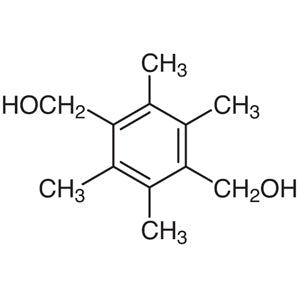
3,6-Bis(hydroxymethyl)durene TCI B0493
Regular price Rp 1.510.950,00Regular price -
3-(Hydroxymethyl)-1-adamantanol TCI H1415
Regular price From Rp 1.326.150,00Regular price -
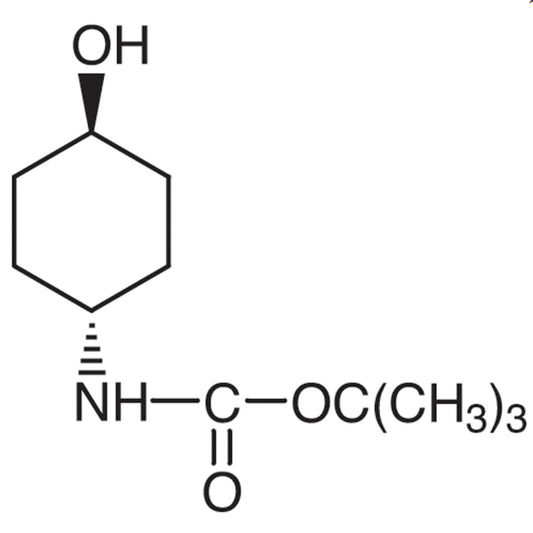
trans-4-(tert-Butoxycarbonylamino)cyclohexanol TCI B3564
Regular price From Rp 1.829.100,00Regular price