TCI H1299 5-(4-Hydroxybenzyl)-2,4-thiazolidinedione is a heterocyclic compound that combines a thiazolidine-2,4-dione core with a 4-hydroxybenzyl group at the 5-position. The thiazolidinedione ring is widely recognised as the central pharmacophore of the thiazolidinedione class of compounds, which is why this material is frequently used as a building block in synthesis and medicinal chemistry research. In the laboratory it serves as an intermediate that is ready for further derivatisation, particularly through the phenolic hydroxyl group, which can be alkylated, acylated, or coupled by etherification reactions to construct the framework of a target molecule.
The characteristic that makes this compound a preferred choice is the presence of two complementary reactive points within a single molecule. The phenolic hydroxyl group is moderately nucleophilic and is readily converted into an ether or an ester, while the amide nitrogen of the thiazolidinedione ring and the C-5 carbon offer additional opportunities for modification. The thiazolidinedione ring itself is appreciably acidic at its original methylene position and is capable of forming distinctive hydrogen bonds, a property that is important when designing interactions with a target protein.
It is handled as a solid on the milligram scale, which suits the way it is normally used in Indonesian laboratories: in university research groups, medicinal chemistry laboratories, and synthesis units that prepare target compounds in small quantities. Under these conditions the material is typically weighed out for individual reaction steps or derivatisation experiments rather than consumed in bulk, making it appropriate for exploratory synthetic work and for structure-oriented research programmes.
- Building block in heterocyclic synthesis — the intact thiazolidine-2,4-dione ring provides a ready-made heterocyclic core, saving the effort of constructing that ring from simpler precursors in the laboratory.
- Medicinal chemistry research — the thiazolidinedione ring is a recognised pharmacophore of its compound class, making this material a natural starting point for preparing and studying analogue series.
- Phenolic etherification and alkylation work — the moderately nucleophilic phenolic hydroxyl group is readily converted into ethers, allowing side chains to be attached when building a target molecular framework.
- Acylation and ester formation studies — the same phenolic hydroxyl can be acylated to give esters, giving chemists a straightforward handle for introducing new functionality onto the scaffold.
- Structure-oriented derivatisation at the ring — the amide nitrogen and the C-5 carbon give additional modification points, so a single compound supports several independent routes of structural variation.
| Brand | TCI |
|---|---|
| CAS number | 74772-78-4 |
| Molecular formula | — |
| Purity | — |
| Category | Chemistry > Building Blocks > Heterocyclic Building Blocks |
| Pack sizes | supplied in TCI catalogue pack sizes; please confirm the available size when ordering |
| Physical form | solid, handled on the milligram scale |
| Storage | store according to the manufacturer's instructions on the product label and safety data sheet |
Keep the container tightly closed and store it in a cool, dry place away from direct sunlight, moisture, and incompatible chemicals, following the storage conditions stated on the product label and in the manufacturer's safety data sheet. Use tightly sealed glass or chemically compatible containers, and keep the material in its original packaging where possible so that the identifying information stays with the compound. Because the compound is a solid handled on the milligram scale, weigh it out carefully to limit dust generation, preferably in a fume hood or a well-ventilated area. Wear a laboratory coat, safety glasses, and suitable gloves when handling it, avoid contact with skin and eyes, and review the safety data sheet before use.
—
Produk Terkait
-
2,4-Thiazolidinedione TCI T1990
Regular price From Rp 795.900,00Regular price -
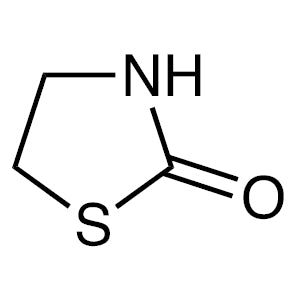
Thiazolidin-2-one TCI T3926
Regular price From Rp 1.060.500,00Regular price -
3-Ethyl(-)-Thiazolidine-3,4-dicarboxylate TCI T1974
Regular price Rp 557.550,00Regular price -
Thiazolidine-2,4-dicarboxylicAcid TCI T1325
Regular price Rp 1.961.400,00Regular price -
Thiazolidine-2-carboxylicAcid TCI T1324
Regular price From Rp 769.650,00Regular price -
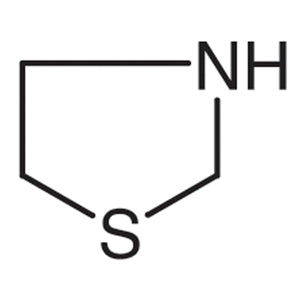
Thiazolidine TCI T0793
Regular price From Rp 1.565.550,00Regular price -
tert-Butyl3-(4-Methoxybenzyl)-3-(4,4,5,5-tetramethyl-1,3,2-dioxaborolan-2-yl)azetidine-1-carboxylate TCI M3369
Regular price From Rp 2.227.050,00Regular price -
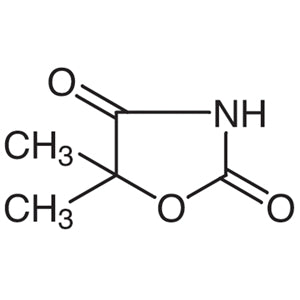
5,5-Dimethyl-2,4-oxazolidinedione TCI D0003
Regular price From Rp 1.510.950,00Regular price