TCI H1323, CAS 4433-40-3, is 5-Hydroxymethyluracil, a pyrimidine derivative carrying a hydroxymethyl group at the fifth position of the uracil ring. The compound holds an important place both as a heterocyclic building block and as a biological marker, because inside the cell it is formed from the oxidation of thymine as well as through enzymatic pathways that modify DNA bases. In the laboratory, this material is used as a starting material for the synthesis of nucleoside analogues, as a comparison standard in the analysis of oxidative DNA damage, and as a reference material in epigenetics research that traces modified bases.
The property that makes this compound a frequent choice is the combination of two reactive points on a single small framework. The uracil ring provides a characteristic hydrogen-bonding pattern and can be deprotonated or alkylated in a directed manner, while the free hydroxymethyl group serves as a handle for esterification, etherification, halogenation, or conversion into a reactive leaving group. Its form is a crystalline solid that is stable at room temperature, so it is easy to weigh and store, and it has adequate solubility in polar solvents such as hot water, dimethyl sulfoxide, and dimethylformamide.
In Indonesian laboratories, this building block is typically handled in university research groups and institutional laboratories working on medicinal chemistry, nucleoside chemistry, and DNA damage studies. Because it arrives as a stable crystalline solid, it suits facilities where materials pass through shipping and storage before use. It is normally weighed out in small portions for synthetic steps or dissolved to prepare reference solutions for analytical comparison work.
- Nucleoside analogue synthesis — the free hydroxymethyl group and the modifiable uracil ring give two independent reactive sites, letting chemists build modified nucleosides from one small, well-defined starting framework.
- Oxidative DNA damage analysis — because the compound is the known oxidation product of thymine, it serves as a comparison standard against which damage markers detected in biological samples can be identified and quantified.
- Epigenetics research on modified bases — laboratories tracing enzymatically modified DNA bases use this material as a reference compound, since it arises from the same enzymatic base-modification pathways being studied.
- Heterocyclic derivatisation chemistry — the hydroxymethyl handle supports esterification, etherification, halogenation, and conversion into reactive leaving groups, making it a convenient entry point for preparing a family of uracil derivatives.
- Directed ring functionalisation — the uracil ring can be deprotonated or alkylated in a controlled, directed manner, which allows selective modification of the heterocycle while the hydroxymethyl substituent is retained or separately protected.
| Brand | TCI |
|---|---|
| CAS number | 4433-40-3 |
| Molecular formula | — |
| Purity | — |
| Category | Chemistry > Building Blocks > Heterocyclic Building Blocks |
| Pack sizes | available in standard TCI research-scale packaging; please confirm the available size when ordering |
| Physical form | crystalline solid, stable at room temperature |
| Storage | — |
- Solubility: adequate solubility in polar solvents including hot water, dimethyl sulfoxide, and dimethylformamide
Store the material in its original tightly closed container, kept in a cool, dry place away from direct sunlight and sources of moisture. Amber glass or the supplier's original bottle is suitable, and the cap should be reclosed promptly after each use to limit exposure to humid air. Weigh the solid in a well-ventilated area or fume hood using a clean spatula, and avoid generating dust. Wear a laboratory coat, safety glasses, and chemical-resistant gloves during handling. Keep the container clearly labelled, record the date of opening, and consult the manufacturer's safety data sheet before first use and before disposal of any residues.
—
Produk Terkait
-
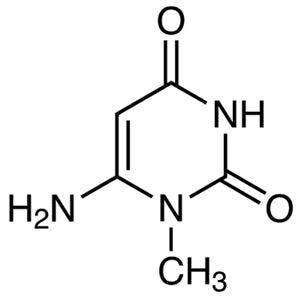
6-Amino-1-methyluracil TCI A2449
Regular price Rp 717.150,00Regular price -
1-Methyluracil TCI M3726
Regular price Rp 6.042.750,00Regular price -
3-Methyluracil TCI M3675
Regular price Rp 5.432.700,00Regular price -
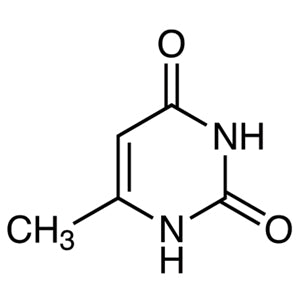
6-Methyluracil TCI M0454
Regular price Rp 1.431.150,00Regular price -
5,6-Diamino-1-methyluracil TCI D5010
Regular price From Rp 1.298.850,00Regular price -
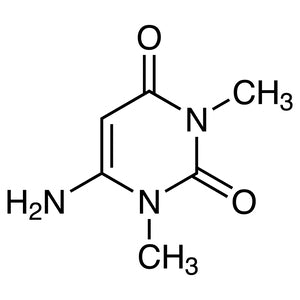
6-Amino-1,3-dimethyluracil TCI A1420
Regular price From Rp 1.936.200,00Regular price -
5,6-Dimethyluracil TCI D1136
Regular price From Rp 1.193.850,00Regular price -
1,3-Dimethyluracil TCI D0808
Regular price From Rp 1.035.300,00Regular price