6-Amino-1-methyluracil is a chemical compound widely utilized in organic synthesis reactions, particularly in the formation of heterocyclic compounds. This versatile building block plays a crucial role in the development of complex molecular structures within laboratory settings. Its unique chemical properties make it an essential component for researchers working on nucleotide analogs and bioactive compounds. In the field of medicinal chemistry, it serves as a foundational material for the synthesis of pharmaceuticals and biologically active substances.
The compound is valued for its solubility in organic solvents, which simplifies processing and purification steps in laboratory workflows. Its molecular structure enables it to participate effectively in substitution and ring-opening reactions, making it a preferred choice for synthetic chemists. The stability of 6-Amino-1-methyluracil under standard laboratory conditions further enhances its utility in various synthetic pathways. Its availability in solid form also facilitates easy handling and use across different experimental scales.
In Indonesian laboratories, 6-Amino-1-methyluracil is commonly used in organic chemistry research, especially in the study of heterocyclic synthesis and drug development. It is frequently employed in academic and research institutions to explore new chemical structures and biological activities. Its role in advancing chemical innovation makes it a vital component in the toolkit of Indonesian scientists and researchers.
TCI brochures (PDF)
- Nucleosides, Nucleotides, Nucleic Acids and Related Reagents 2026-03-23 · p. 8
- Organic synthesis of heterocyclic compounds due to its structural versatility and reactivity in ring-opening and substitution reactions.
- Development of nucleotide analogs for pharmaceutical and biotechnology applications, leveraging its nucleobase-like structure.
- Investigation of bioactive molecules in medicinal chemistry, supporting the creation of compounds with therapeutic potential.
- Purification and processing of complex chemical mixtures through its solubility in organic solvents.
- Educational and research purposes in Indonesian universities and research centers focusing on chemical structure and function.
| Brand | TCI |
|---|---|
| CAS number | 2434-53-9 |
| Molecular formula | — |
| Purity | — |
| Category | Chemistry > Building Blocks > Heterocyclic Building Blocks |
| Pack sizes | Available in various quantities as per standard laboratory supply specifications |
| Physical form | Solid |
| Storage | Store in a cool, dry place away from moisture and direct sunlight |
6-Amino-1-methyluracil should be stored in a cool, dry environment to maintain its chemical integrity. It is recommended to keep the compound in a sealed container to prevent exposure to moisture and air. Due to its solid form, it is suitable for storage in glass or plastic containers with tight-fitting lids. Laboratory personnel should handle the compound with care, using appropriate personal protective equipment when necessary. It is important to ensure that storage conditions are consistent and free from contaminants to preserve the material's effectiveness in chemical reactions. Proper labeling of containers is essential for safe handling and identification in the laboratory setting.
—
Produk Terkait
-
1-Methyluracil TCI M3726
Regular price Rp 6.095.250,00Regular priceRp 4.277.700,00Sale price Rp 6.095.250,00 -
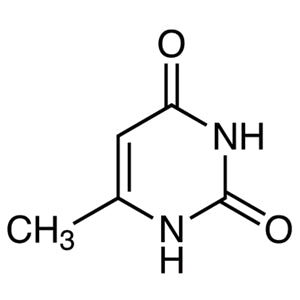
6-Methyluracil TCI M0454
Regular price Rp 1.483.650,00Regular priceRp 1.053.150,00Sale price Rp 1.483.650,00 -
5,6-Dimethyluracil TCI D1136
Regular price From Rp 1.246.350,00Regular priceRp 887.250,00Sale price From Rp 1.246.350,00 -
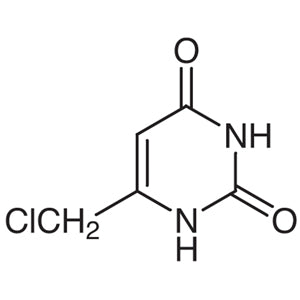
6-Chloromethyluracil TCI C1057
Regular price Rp 1.060.500,00Regular priceRp 757.050,00Sale price Rp 1.060.500,00 -
3-Methyluracil TCI M3675
Regular price Rp 5.485.200,00Regular priceRp 3.851.400,00Sale price Rp 5.485.200,00 -
5,6-Diamino-1-methyluracil TCI D5010
Regular price From Rp 1.351.350,00Regular priceRp 960.750,00Sale price From Rp 1.351.350,00 -
6-Chloro-3-methyluracil TCI C2300
Regular price From Rp 1.140.300,00Regular priceRp 812.700,00Sale price From Rp 1.140.300,00 -
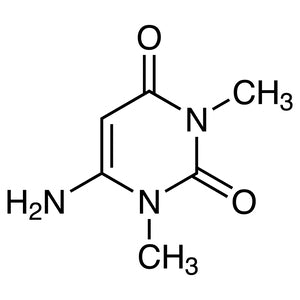
6-Amino-1,3-dimethyluracil TCI A1420
Regular price From Rp 1.988.700,00Regular priceRp 1.405.950,00Sale price From Rp 1.988.700,00