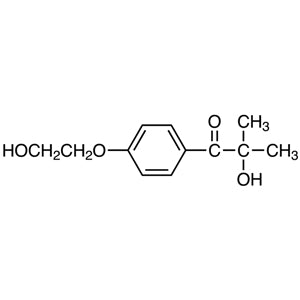
2-Hydroxy-4'-(2-hydroxyethoxy)-2-methylpropiophenone is a free-radical photoinitiator belonging to the alpha-hydroxyketone class, widely recognised in light-induced polymerisation research. When irradiated with an ultraviolet lamp at a suitable wavelength range, the molecule undergoes bond cleavage and generates radicals that immediately initiate chain reactions in acrylate monomers, methacrylate monomers, and other macromers. In the laboratory its role is decisive, because without an appropriate initiator a monomer mixture will not harden even after prolonged irradiation, which makes this compound a key component in almost every photopolymerisation experiment.
The property that makes it especially sought after is the hydroxyethoxy group on the aromatic ring, which confers far better water solubility than comparable photoinitiators that are purely lipophilic. This advantage opens the way to forming hydrogels from aqueous solution without having to add organic solvents that could disturb biological systems. The compound is also classified as a Type I initiator that works through direct cleavage, so it does not require an additional amine co-initiator. The combination of water solubility, initiation efficiency, and simple single-component formulation makes it a practical default choice for researchers preparing photocurable systems.
In Indonesian laboratories, this photoinitiator is typically used by materials science, polymer chemistry, and biomaterials research groups working on UV-curable formulations. It is commonly dissolved directly in the monomer or aqueous precursor solution before exposure under a UV lamp or curing chamber. University research centres and industrial R&D laboratories use it for developing coatings, adhesives, and hydrogel matrices, where the ability to work in aqueous media without organic co-solvents simplifies sample preparation considerably.
Advantages (TCI brochure)
- Generates radical species by UV light (<370 nm)
TCI brochures (PDF)
- Water-soluble Photo-radical Polymerization Initiators 2024-05-28 · p. 1
- Polymerization Initiators 2025-09-17 · p. 4
- Biomaterials Research Reagents 2025-02-19 · p. 25
Related TCI products
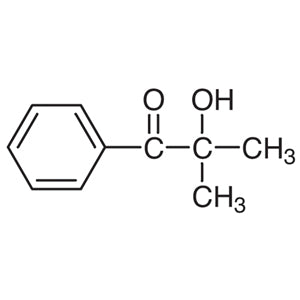
- TCI H0991 7473-98-5 2-Hydroxy-2-methylpropiophenone
- TCI B6768 474510-57-1 1,1'-[Methylenebis(4,1-phenylene)]bis(2-hydroxy-2-methylpropan-1-one)
- TCI M2028 71868-10-5 2-Methyl-4'-(methylthio)-2-morpholinopropiophenone
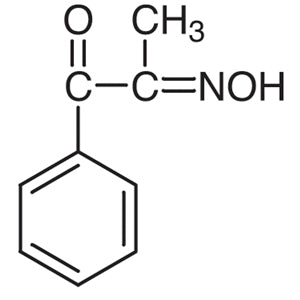
- TCI P0211 119-51-7 2-Isonitrosopropiophenone
- TCI A0104 121-71-1 3'-Hydroxyacetophenone
- TCI A0502 84-65-1 Anthraquinone
- Hydrogel synthesis from aqueous precursor solutions, where its good water solubility allows gelation to be initiated without adding organic solvents that could compromise biological compatibility.
- UV-curable coating development, in which direct photocleavage generates radicals rapidly so that acrylate and methacrylate films harden under controlled ultraviolet irradiation during formulation screening experiments.
- Photopolymerisation kinetics studies, because as a Type I initiator it cleaves cleanly without an amine co-initiator, giving a simpler and more interpretable radical generation mechanism.
- Preparation of polymer networks from macromers, where the compound initiates chain growth across a range of unsaturated building blocks used in crosslinked material research.
- Biomaterials and tissue scaffold research, where aqueous-phase curing is essential and the absence of organic co-solvents keeps the formulation suitable for work alongside biological systems.
From the TCI brochure
- Polymerization of the drawn acrylamide monomer with a drawn bis-acrylamide cross-linker to cross-linked Polyacrylamide in H2O under UV light (365 nm)
| Brand | TCI |
|---|---|
| CAS number | 106797-53-9 |
| Molecular formula | — |
| Purity | — |
| Category | Materials Science > Polymer/Macromolecule Reagents > Polymerization Reagents |
| Pack sizes | available in standard TCI research pack sizes; please confirm the size required when ordering |
| Physical form | — |
| Storage | store protected from light in a cool, well-closed container |
- Catalogue number: H1361
Data from the TCI brochure
| Wavelength for radical generation | <370 nm (UV light) |
|---|
Source: TCI brochure FF050 (2024-05-28)
As a photoinitiator, this compound must be protected from light at all times. Keep it in the original amber or otherwise light-shielded container, tightly closed, and store it in a cool, dry place away from heat sources and direct sunlight. Premature exposure to ultraviolet or strong ambient light can degrade the material and reduce initiation efficiency. Handle in a well-ventilated area or fume hood, wearing safety glasses, gloves, and a laboratory coat. Weigh out portions quickly under subdued lighting and return the container to storage promptly. Avoid contact with skin and eyes, and consult the manufacturer's safety data sheet before use and disposal.
—
Product Categories
Produk Terkait
-
2-Hydroxy-2-methylpropiophenone TCI H0991
Regular price From Rp 610.050,00Regular price -
1,1'-[Methylenebis(4,1-phenylene)]bis(2-hydroxy-2-methylpropan-1-one) TCI B6768
Regular price From Rp 1.458.450,00Regular price -
2-Methyl-4'-(methylthio)-2-morpholinopropiophenone TCI M2028
Regular price From Rp 689.850,00Regular price -
2-Isonitrosopropiophenone TCI P0211
Regular price Rp 1.510.950,00Regular price -
3'-Hydroxyacetophenone TCI A0104
Regular price From Rp 1.060.500,00Regular price -
Anthraquinone TCI A0502
Regular price From Rp 477.750,00Regular price -
SodiumAnthraquinone-2-sulfonateMonohydrate TCI A0508
Regular price From Rp 769.650,00Regular price -
Acetophenone TCI A0061
Regular price From Rp 769.650,00Regular price
![1,1'-[Methylenebis(4,1-phenylene)]bis(2-hydroxy-2-methylpropan-1-one) (CAS 474510-57-1) - TCI B6768 - AMI Scientific](http://amiscientific.com/cdn/shop/files/TCI2510B6768.jpg?v=1767094201&width=533)