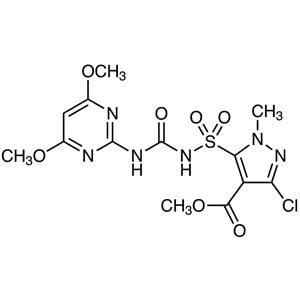
Halosulfuron-methyl is a sulfonylurea-class compound that carries a sulfonylurea bridging group between a chlorinated pyrazole ring and a methoxy-substituted pyrimidine ring. In the laboratory it is used as a research chemical and reference material in studies examining how active compounds affect biological systems, metabolic pathways, and the occurrence of residues in environmental and food samples. Its role is important because food safety research and residue monitoring both depend on comparison compounds whose identity and structure have been clearly established by a research chemical supplier, giving analysts a defined starting point for method development and confirmation work.
The properties that make this compound a preferred choice begin with its distinctive molecular structure, which contains several heteroatoms and therefore produces an easily recognizable fragmentation pattern in mass spectrometry as well as clear absorbance on ultraviolet detectors. The sulfonylurea class is also known to act through inhibition of the enzyme acetolactate synthase, a pathway that is itself an object of study in plant and microbial biochemistry research. Because this mechanism of action has been studied extensively, the compound serves as a useful model when researchers want to trace how a defined active structure behaves within a biological system.
In Indonesian laboratories this material fits naturally into the workflows of university research groups, food safety testing units, and environmental laboratories that analyse residues in agricultural commodities, water, and soil. Analysts typically use it to prepare working standards, to verify that chromatographic and spectrometric instruments respond as expected, and to support method validation where a structurally defined comparison compound is required before routine sample testing can begin.
TCI brochures (PDF)
- Agrochemical Ingredients for Research and Experimental Use 2026-01-08 · p. 3
- Plant Research Reagents 2026-02-24 · p. 10
- Reagents for Biological Research 2025-03-11 · p. 56
- Pesticide residue analysis in food commodities, where a clearly identified reference compound is needed to confirm peak identity and support quantitative reporting of findings.
- Environmental monitoring of water and soil samples, since the compound's defined structure allows analysts to trace its presence and behaviour across different sample matrices.
- Analytical method development for chromatographic separation, because the molecule gives clear ultraviolet absorbance and a recognizable fragmentation pattern that simplify detector optimisation.
- Biochemical studies of acetolactate synthase inhibition, as the sulfonylurea mechanism is well documented and makes this compound a useful model in plant and microbial research.
- Metabolic pathway investigations in biological systems, where researchers need a structurally defined active compound to follow transformation products and interpret experimental outcomes reliably.
| Brand | TCI |
|---|---|
| CAS number | 100784-20-1 |
| Molecular formula | — |
| Purity | — |
| Category | Life Science > Cell Biology > Nutrition Research |
| Pack sizes | available in standard research pack sizes as listed by the manufacturer |
| Physical form | — |
| Storage | follow the storage condition stated on the manufacturer's label and safety data sheet |
- Catalogue number: H1374
Store the container tightly closed in a cool, dry, well-ventilated area away from direct sunlight, moisture, and incompatible materials, following the storage condition printed on the manufacturer's label. Keep the material in its original supplier container, or in a clean, chemically compatible and clearly labelled vessel if transfer is required. Handle inside a fume hood using a laboratory coat, gloves, and eye protection, avoid generating dust or aerosols, and wash hands thoroughly after use. Consult the manufacturer's safety data sheet before handling, and dispose of residues and contaminated materials in accordance with applicable laboratory waste procedures. For research use only.
—
Produk Terkait
-
Pyrazosulfuron-ethyl TCI P2901
Regular price From Rp 2.466.450,00Regular price -
Nicosulfuron TCI N1224
Regular price From Rp 1.458.450,00Regular price -
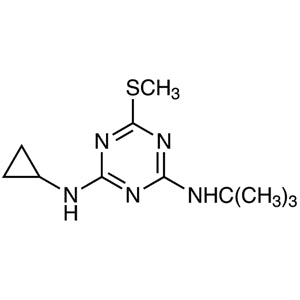
2-(tert-Butylamino)-4-(cyclopropylamino)-6-(methylthio)-1,3,5-triazine TCI I0842
Regular price From Rp 1.644.300,00Regular price -
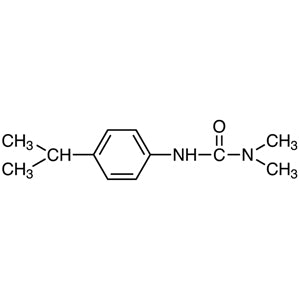
Isoproturon TCI I0843
Regular price From Rp 1.298.850,00Regular price -
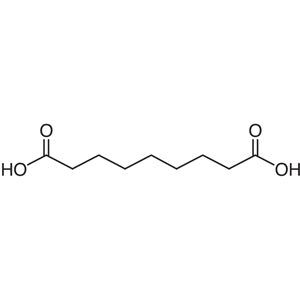
AzelaicAcid TCI A0561
Regular price From Rp 505.050,00Regular price -
AbieticAcid TCI A0001
Regular price From Rp 1.510.950,00Regular price -
Sulfentrazone TCI U0110
Regular price From Rp 2.411.850,00Regular price -
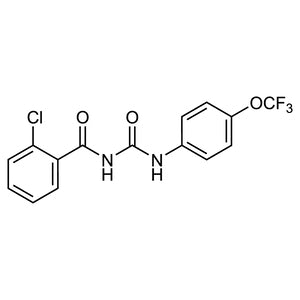
Triflumuron TCI T4364
Regular price From Rp 1.220.100,00Regular price