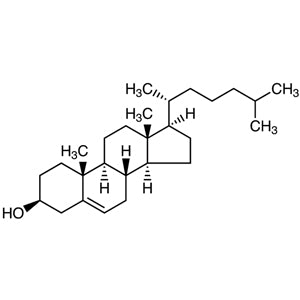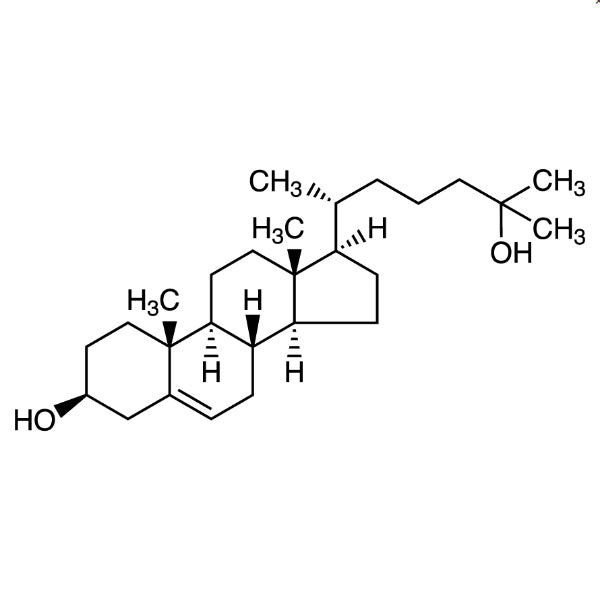
TCI H1872 is 25-Hydroxycholesterol, an oxysterol formed from cholesterol through the addition of a hydroxyl group at the twenty-five position of the side chain. It ranks among the most extensively studied oxysterols in lipid biochemistry because of its role as a regulatory molecule in pathways that control cholesterol synthesis and in other cellular responses. In the laboratory, this purified material serves as a test compound in cell culture work, as a reference standard for oxysterol analysis, and as a research tool for tracing the molecular mechanisms that connect lipid metabolism to cell function.
The properties that make this compound a preferred choice begin with its lipophilic steroid backbone, which allows the molecule to cross cell membranes readily. Combined with this is the side-chain hydroxyl group, which confers the distinctive recognition characteristics that sterol-binding proteins respond to. It is precisely this small structural difference relative to the parent cholesterol molecule that produces markedly different biological behaviour, and that difference makes 25-hydroxycholesterol an ideal comparator in paired experiments where cholesterol and its oxidised counterpart are evaluated side by side under otherwise identical conditions.
In Indonesian laboratories, the compound is typically handled as a nonpolar solid from which stock solutions are prepared in ethanol or another organic solvent compatible with cell culture. These stocks are then diluted into culture medium at the working concentration chosen for the experiment. This workflow suits academic biochemistry groups, university research centres, and institutional life science laboratories that investigate lipid metabolism and cellular regulation, where a well-characterised oxysterol reference material is required for reproducible results.
Related TCI products
- Cell culture treatment studies, where the lipophilic steroid framework allows the compound to cross cell membranes and reach intracellular sterol-binding targets in live cultures.
- Analytical reference standard for oxysterol determination, providing a defined comparison material against which oxysterol content in experimental or biological samples can be assessed.
- Investigation of cholesterol synthesis regulation, since this oxysterol acts as a regulatory molecule within the pathways that control how cells govern sterol production.
- Paired comparison experiments against parent cholesterol, where the single side-chain hydroxyl difference yields distinct biological behaviour under otherwise identical experimental conditions.
- Mechanistic research linking lipid metabolism to cell function, using the compound as a defined chemical tool to probe sterol-mediated cellular signalling and response.
| Brand | TCI |
|---|---|
| CAS number | 2140-46-7 |
| Molecular formula | — |
| Purity | — |
| Category | Life Science > Biochemicals and Reagents > Steroids |
| Pack sizes | as supplied by the manufacturer for this catalogue item; refer to the manufacturer documentation accompanying the product |
| Physical form | — |
| Storage | — |
- Chemical class: oxysterol derived from cholesterol by hydroxylation at the twenty-five position of the side chain
- Solubility behaviour: nonpolar; stock solutions are normally prepared in ethanol or a comparable organic solvent compatible with cell culture
Store the container according to the conditions stated in the manufacturer documentation supplied with the product, keeping it tightly closed and protected from light, moisture, and elevated temperature. Use clean, dry glassware or solvent-compatible containers when preparing and holding stock solutions, and label all prepared solutions with the solvent and the date of preparation. Handle the material in a well-ventilated area or within a fume hood, wearing gloves, a laboratory coat, and eye protection, and avoid generating dust when weighing the solid. Prepare organic stock solutions away from ignition sources, and allow refrigerated containers to reach room temperature before opening to reduce condensation. Dispose of residues in accordance with institutional chemical waste procedures.
—
Produk Terkait
-
Cholesterol(stabilizedwithalpha-Tocopherol) TCI C0318
Regular price From Rp 1.326.150,00Regular price -
Cholesterol-5alpha,6alpha-epoxide TCI C1222
Regular price Rp 5.803.350,00Regular price -
beta-Sitosterol(containsCampesterol) TCI S0040
Regular price Rp 1.510.950,00Regular price -
CholesterylBromide TCI C0695
Regular price Rp 4.559.100,00Regular price -
CholesterylChloride TCI C0610
Regular price Rp 2.625.000,00Regular price -
CholesterolHexanoate TCI C0673
Regular price Rp 3.976.350,00Regular price -
CholesterolLaurate TCI C0620
Regular price Rp 4.001.550,00Regular price -
CholesterolOleate TCI C0559
Regular price Rp 2.969.400,00Regular price