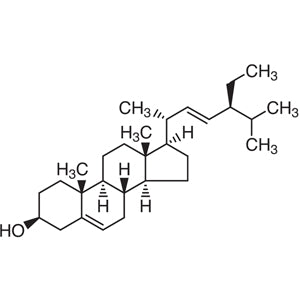
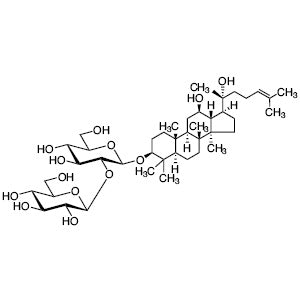
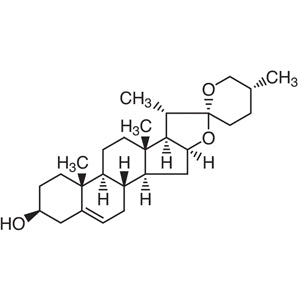
Beta-Sitosterol (83-46-5), also known as TCI S0040, is a naturally occurring compound belonging to the sterol group, commonly found in various plants and living organisms. It serves as a key research material in laboratories, particularly in the fields of biochemistry, pharmacology, and organic chemistry. This compound is widely used in scientific experiments to study the biological effects of natural substances and their potential applications in pharmaceutical development. Its structural similarity to cholesterol makes it an essential tool for investigating lipid metabolism and the physiological roles of sterols in biological systems.
Beta-Sitosterol is valued for its chemical stability and resistance to degradation under normal conditions, which ensures consistent performance in experimental settings. Its high purity and distinct structural characteristics make it a preferred choice for researchers requiring reliable and reproducible results. The presence of campesterol in this product adds to its utility, enabling studies on complex natural compound mixtures. This combination of purity and structural diversity supports a wide range of scientific investigations, making it a versatile reagent for both academic and industrial research.
In Indonesian laboratories, beta-sitosterol is commonly used in health-related, pharmaceutical, and biotechnology research. It plays a crucial role in the development of natural health products, the analysis of plant-derived compounds, and the testing of pharmacological activities. Its application spans across various research areas, contributing to advancements in both basic and applied sciences. The compound's stability and availability make it an essential component in the research toolkit of Indonesian scientific institutions.
TCI brochures (PDF)
- Electrophilic Sulfur Introducing Reagent for Fused Thiophene Derivative Synthesis 2025-01-06 · p. 1
- Ruthenium Complex Catalysts for Asymmetric Hydrogenation of Ketons 2024-12-16 · p. 2
- Cyanation Reagents 2024-09-17 · p. 1
- Carbon Homologation / Degradation Reagents 2021-09-09 · p. 2
- Formylation Reagents 2024-07-08 · p. 1
- Trifluoromethylating Reagents 2024-08-27 · p. 1
- Used in pharmacological studies to evaluate the biological activity of natural compounds due to its structural similarity to cholesterol and its presence in plant-based extracts.
- Applied in biochemical research for lipid metabolism studies, as it serves as a model compound for understanding sterol-related metabolic pathways.
- Utilized in the development of natural health products for its potential therapeutic applications in conditions such as prostate disorders and cardiovascular health.
- Employed in analytical chemistry for the characterization of plant-derived materials, providing a reference standard for qualitative and quantitative analysis.
- Integrated into biotechnology research to explore the role of sterols in cellular functions and their impact on biological processes.
| Brand | TCI |
|---|---|
| CAS number | 83-46-5 |
| Molecular formula | — |
| Purity | — |
| Category | Life Science > Biochemicals and Reagents > Crude Medicine Ingredients for Research and Experimental Use |
| Pack sizes | — |
| Physical form | — |
| Storage | Store in a cool, dry place away from direct sunlight |
Beta-Sitosterol should be stored in a cool, dry environment to maintain its chemical stability and prevent degradation. It is recommended to keep the material in a tightly sealed container to minimize exposure to moisture and air, which could affect its integrity over time. While specific physical form and pack sizes are not provided, it is essential to handle the compound with care, following standard laboratory safety protocols. Avoid prolonged exposure to high temperatures or direct sunlight to ensure long-term usability. Proper labeling and storage conditions help maintain the quality and reliability of the material for research applications. Always ensure that the compound is stored in a secure location, away from incompatible substances to prevent any potential chemical interactions.
—
Product Categories
- Biochemicals and ReagentsCrude Medicine Ingredients for Research and Experimental Use
- Biochemicals and ReagentsSteroidsPhytosteroids [Steroids]
- Cell BiologyCancer ResearchChemopreventive Agents [Cancer Research]
- Cell BiologyCell Signaling and NeuroscienceCytokines, Growth Factors and Hormones
- Cell BiologyCell Signaling and NeuroscienceLipids in Cell Signaling
- Cell BiologyMetabolomicsMetabolic Pathways
- Cell BiologyNutrition ResearchPhytochemicals
- Pharmaceutical Development and Drug Discovery ResearchCrude Medicine Ingredients for Research and Experimental Use
Produk Terkait
-
beta-SitosterolAcetate(containsCampesterolAcetate) TCI S0221
Regular price From Rp 2.359.350,00Regular priceRp 1.649.550,00Sale price From Rp 2.359.350,00 -
Stigmasterol TCI S0088
Regular price From Rp 928.200,00Regular priceRp 664.650,00Sale price From Rp 928.200,00 -
UrsodeoxycholicAcid TCI U0030
Regular price Rp 1.167.600,00Regular priceRp 831.600,00Sale price Rp 1.167.600,00 -
(20S)-Protopanaxadiol TCI P2651
Regular price Rp 5.988.150,00Regular priceRp 4.203.150,00Sale price Rp 5.988.150,00 -
20(S)-GinsenosideRg3 TCI G0568
Regular price Rp 2.597.700,00Regular priceRp 1.832.250,00Sale price Rp 2.597.700,00 -
20(R)-GinsenosideRh2 TCI G0567
Regular price From Rp 4.293.450,00Regular priceRp 3.017.700,00Sale price From Rp 4.293.450,00 -
20(R)-GinsenosideRg3 TCI G0536
Regular price Rp 5.194.350,00Regular priceRp 3.647.700,00Sale price Rp 5.194.350,00 -
Diosgenin TCI D1474
Regular price From Rp 1.298.850,00Regular priceRp 924.000,00Sale price From Rp 1.298.850,00