

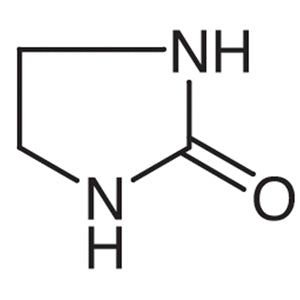
2-Imidazolidinone, more commonly known as ethylene urea, is a five-membered cyclic urea in which a carbonyl group sits between two nitrogen atoms. This simple yet stable structure makes it a highly versatile heterocyclic building block in synthesis laboratories. The compound serves as a starting point for preparing a wide range of imidazolidinone derivatives, including chiral auxiliaries and drug scaffolds, while also functioning as a reagent in polymer chemistry. Its presence on a laboratory shelf usually signals work related to resin modification, formaldehyde chemistry, or the stepwise construction of saturated nitrogen rings.
The reason this compound is so widely chosen lies in its balance between stability and directed reactivity. Its urea carbonyl group is considerably more resistant to hydrolysis than an ordinary amide, so the ring survives intact under many reaction conditions, while both N–H nitrogen atoms remain available for alkylation, acylation, or condensation with aldehydes. It comes as an easy-to-handle solid, soluble in water and polar solvents, and is hygroscopic, so it must be protected from moisture. Its ability to react with formaldehyde to form methylol derivatives further extends its usefulness in applied chemistry.
In Indonesian laboratories, 2-Imidazolidinone is typically encountered in organic synthesis groups at universities and research institutes, in polymer and textile-finishing research units, and in industrial laboratories working on resin formulation. Because ambient humidity is consistently high across most of Indonesia, the material is usually kept in tightly closed containers and weighed out promptly. It is generally purchased in modest quantities for exploratory work on nitrogen heterocycles and for scale-up trials once a route has been established.
Related TCI products
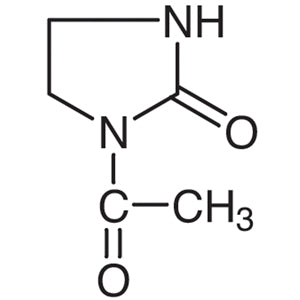
- TCI A1945 5391-39-9 1-Acetyl-2-imidazolidinone
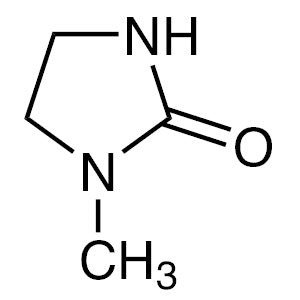
- TCI M3422 694-32-6 1-Methylimidazolidin-2-one
- TCI M2553 41730-79-4 1-Methanesulfonyl-2-imidazolidinone
- TCI I1127 52099-72-6 1-Isopropenyl-2-benzimidazolidinone
- TCI D1477 80-73-9 1,3-Dimethyl-2-imidazolidinone
- TCI M1053 161171-06-8 trans-1-Methyl-4-carboxy-5-(3-pyridyl)-2-pyrrolidinone
- Heterocyclic scaffold synthesis — the intact five-membered cyclic urea ring provides a ready-made saturated nitrogen framework, sparing chemists the effort of constructing the ring from acyclic precursors.
- Preparation of imidazolidinone derivatives — both N–H positions are open to alkylation and acylation, allowing systematic derivatisation toward chiral auxiliaries and pharmaceutical scaffolds from a single inexpensive starting material.
- Formaldehyde condensation chemistry — the compound reacts readily with formaldehyde to give methylol derivatives, making it a standard substrate when studying or preparing methylolated urea systems.
- Resin modification and polymer research — its function as a reagent in polymer chemistry supports laboratory work on resin formulation, crosslinking studies, and the modification of existing polymer backbones.
- Reference and model substrate studies — the hydrolysis-resistant urea carbonyl makes it a dependable model compound for probing cyclic urea reactivity under conditions that would degrade ordinary amides.
| Brand | TCI |
|---|---|
| CAS number | 120-93-4 |
| Molecular formula | — |
| Purity | — |
| Category | Chemistry > Building Blocks > Heterocyclic Building Blocks |
| Pack sizes | available in standard TCI research pack sizes; please confirm the currently listed options when ordering |
| Physical form | solid, soluble in water and polar solvents |
| Storage | hygroscopic — keep tightly closed and protected from moisture |
Store 2-Imidazolidinone in a tightly closed original container in a cool, dry place away from direct sunlight and sources of moisture. Because the material is hygroscopic, containers should be resealed immediately after use, and weighing is best carried out quickly or inside a dry environment such as a desiccator or glove box to prevent water uptake. Use amber glass or the supplier's original packaging rather than loosely covered vessels for long-term storage. Handle the solid in a well-ventilated area or fume hood, wear standard laboratory personal protective equipment including gloves, safety glasses, and a laboratory coat, and avoid generating or inhaling dust. Keep the compound separate from strong oxidising agents and strong acids, and always consult the manufacturer's safety data sheet before first use.
—
Produk Terkait
-
1-Acetyl-2-imidazolidinone TCI A1945
Regular price From Rp 1.326.150,00Regular price -
1-Methylimidazolidin-2-one TCI M3422
Regular price From Rp 1.644.300,00Regular price -
1-Methanesulfonyl-2-imidazolidinone TCI M2553
Regular price Rp 1.565.550,00Regular price -
1-Isopropenyl-2-benzimidazolidinone TCI I1127
Regular price From Rp 1.696.800,00Regular price -
1,3-Dimethyl-2-imidazolidinone TCI D1477
Regular price From Rp 477.750,00Regular price -
trans-1-Methyl-4-carboxy-5-(3-pyridyl)-2-pyrrolidinone TCI M1053
Regular price From Rp 505.050,00Regular price -
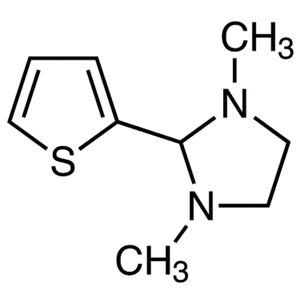
1,3-Dimethyl-2-(2-thienyl)imidazolidine TCI D2289
Regular price Rp 2.359.350,00Regular price -
3-Trimethylsilyl-2-oxazolidinone[TrimethylsilylatingReagent] TCI T1535
Regular price Rp 2.571.450,00Regular price


![43112-38-5 3-Trimethylsilyl-2-oxazolidinone [Trimethylsilylating Reagent] - AMI Scientific](http://amiscientific.com/cdn/shop/files/TCI2510T1535.jpg?v=1767141788&width=533)