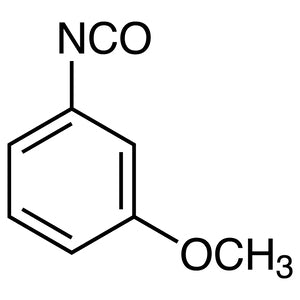
3-Methoxyphenyl Isocyanate is an aryl isocyanate bearing a methoxy group at the meta position relative to the isocyanate group on the benzene ring. In organic synthesis laboratories, this material serves both as a non-heterocyclic building block and as a highly efficient derivatization reagent for forming urea and carbamate linkages. The isocyanate group reacts rapidly with amines to give substituted ureas, and with alcohols or phenols to give carbamates, in both cases without requiring any additional coupling reagent. This operational simplicity is precisely why the compound is so widely used in preparing libraries of test compounds as well as in the synthesis of pharmaceutical and agrochemical intermediates.
The property that distinguishes this reagent from other aryl isocyanates is the electronic character of the methoxy group, which donates electron density through resonance. Because the substituent sits at the meta position, its resonance-donating influence on the isocyanate group is not as strong as it would be from the para position. The result is a material whose reactivity remains high yet is more controlled than that of isocyanates carrying strongly electron-withdrawing substituents. The methoxy group also contributes an additional molecular recognition point that is useful in the design of bioactive compounds, while at the same time providing a characteristic signal in analytical work.
In Indonesian laboratories, this reagent is typically found in university and institutional organic synthesis groups, in medicinal chemistry and natural product derivatization work, and in analytical method development where a stable, easily identified derivative is required. It is generally purchased in small research quantities alongside other building blocks used in a given synthetic route, and is handled under the same anhydrous-reagent practices already applied to other moisture-sensitive materials on the bench.
- Substituted urea synthesis: direct addition of primary or secondary amines to the isocyanate group gives ureas cleanly, with no coupling reagent, activator, or base required for the transformation.
- Carbamate formation: alcohols and phenols add across the isocyanate to furnish aryl carbamates, making this an efficient route to protected or derivatized hydroxyl-containing substrates in multi-step sequences.
- Compound library preparation: the rapid, reagent-free addition chemistry and predictable single-product outcome make this material well suited to preparing arrays of test compounds for screening.
- Pharmaceutical and agrochemical intermediate synthesis: it introduces a methoxy-substituted aryl fragment that also serves as a molecular recognition point in the design of bioactive target molecules.
- Analytical derivatization: reaction with amine or hydroxyl analytes converts them into stable derivatives, and the methoxy group contributes a characteristic signal that assists identification during analysis.
| Brand | TCI |
|---|---|
| CAS number | 18908-07-1 |
| Molecular formula | — |
| Purity | — |
| Category | Chemistry > Building Blocks > Non-Heterocyclic Building Blocks |
| Pack sizes | available in research-scale synthesis quantities; please confirm the currently listed pack options when ordering |
| Physical form | — |
| Storage | keep in a tightly closed container, protected from moisture, per the supplier's stated storage conditions on the label and safety data sheet |
- Catalogue number: I0551
Store the container tightly closed in a cool, dry, well-ventilated area, away from moisture, amines, alcohols, and other protic materials with which the isocyanate group reacts readily. Original supplier packaging or tightly sealed glass bottles with chemically resistant closures are appropriate; storing under an inert atmosphere and dispensing with dry glassware and dry syringes or cannulas helps preserve reagent quality over repeated use. Handle only in a functioning fume hood, wearing chemical-resistant gloves, safety goggles, and a laboratory coat, as isocyanates are respiratory and skin sensitizers. Allow cold containers to warm to ambient temperature before opening to prevent condensation of atmospheric moisture inside the bottle. Follow the supplier's safety data sheet and your institution's chemical waste procedures for spill response and disposal.
—
Produk Terkait
-
4-MethoxyphenylIsocyanate TCI I0440
Regular price From Rp 1.115.100,00Regular price -
2-MethoxyphenylIsocyanate TCI I0439
Regular price From Rp 1.008.000,00Regular price -
4-ButylphenylIsocyanate TCI B3205
Regular price From Rp 1.087.800,00Regular price -
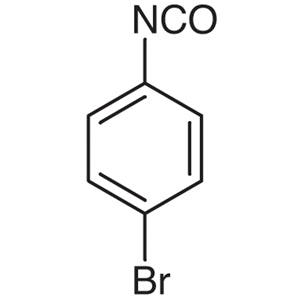
4-BromophenylIsocyanate TCI B0636
Regular price From Rp 2.279.550,00Regular price -
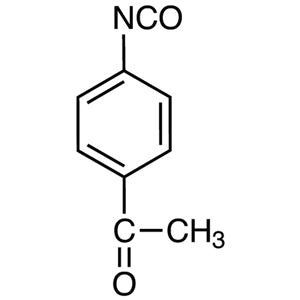
4-AcetylphenylIsocyanate TCI A2933
Regular price From Rp 2.094.750,00Regular price -
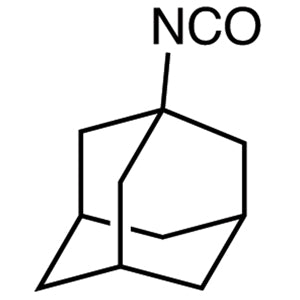
1-AdamantylIsocyanate TCI A1706
Regular price From Rp 1.298.850,00Regular price -
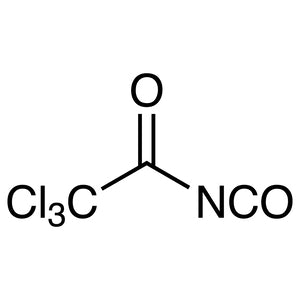
TrichloroacetylIsocyanate TCI T1047
Regular price From Rp 769.650,00Regular price -
p-ToluenesulfonylIsocyanate TCI T0998
Regular price Rp 530.250,00Regular price