


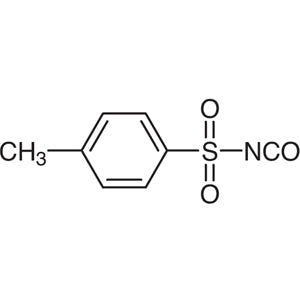
p-Toluenesulfonyl Isocyanate (TCI T0998) is a chemical compound widely used as a building block in organic synthesis. It plays a crucial role in laboratory settings where the formation of carbon-nitrogen bonds is required, particularly in isocyanate reactions. This compound is essential for the development of complex organic molecules, including heterocyclic compounds, pharmaceuticals, and industrial chemicals. Its presence in chemical reactions enables the creation of specific and efficient chemical transformations.
The compound is known for its stable molecular structure and high reactivity, making it a preferred choice for chemists. Its ability to participate in substitution reactions and bond formation makes it highly versatile. These properties allow researchers to achieve precise chemical outcomes in various synthetic pathways. The reactivity of p-Toluenesulfonyl Isocyanate ensures that it remains a key reagent in organic chemistry, especially in applications requiring high reactivity and specificity.
In Indonesian laboratories, p-Toluenesulfonyl Isocyanate is commonly used by researchers and scientists in both academic and industrial settings. It is a fundamental component of chemical supplies needed for experiments in higher education institutions and research organizations. Its role in the synthesis of new drugs and other complex compounds makes it an essential material for chemical research and development activities in Indonesia.
- Synthesis of heterocyclic compounds for pharmaceutical development due to its ability to form carbon-nitrogen bonds efficiently.
- Organic reaction intermediates in the creation of complex molecules requiring high reactivity and specificity.
- Industrial chemical production where stable molecular structures and controlled reactivity are essential.
- Research in medicinal chemistry for the development of new drug candidates through targeted chemical modifications.
- Educational experiments in chemical synthesis to demonstrate key reaction mechanisms and functional group transformations.
| Brand | TCI |
|---|---|
| CAS number | 4083-64-1 |
| Molecular formula | — |
| Purity | — |
| Category | Chemistry > Building Blocks > Non-Heterocyclic Building Blocks |
| Pack sizes | Available in various quantities as per standard chemical supply specifications |
| Physical form | Liquid |
| Storage | Store in a cool, dry place away from direct sunlight and incompatible materials |
p-Toluenesulfonyl Isocyanate should be stored in a cool, dry environment to maintain its chemical stability. It is recommended to keep it in a tightly sealed container to prevent exposure to moisture and air. Due to its reactivity, it should be stored away from incompatible substances such as strong bases or reducing agents. Appropriate personal protective equipment, including gloves and safety goggles, should be used when handling this compound. Regular monitoring of storage conditions is essential to ensure the integrity of the material. In laboratory settings, proper ventilation should be maintained to minimize potential exposure risks.
—